Commercial Clearance Singapore: The Complete Guide to Emptying Your Office, Retail Unit or Warehouse Before the Deadline
By Junk Express Team
Your lease ends on the 30th. The reinstatement contractor can't start until the space is empty. And the space is still full of cubicle partitions, filing cabinets, a server rack nobody's touched since 2019, and forty-odd ergonomic chairs that procurement bought during the pandemic.
That gap between "still full" and "contractor-ready" is what commercial clearance solves. In our 10+ years of clearing Singapore offices, retail units and warehouse spaces, we've learned that the deadline is always the real client. Everything we do works backwards from the date you need the keys handed over.
This page maps the full decision — what commercial clearance covers, how it differs from reinstatement, what you need to sort with building management, and what happens to all that furniture. Where a topic goes deeper than we can cover here, we'll point you to the detailed guide.
What Does a Commercial Clearance Actually Cover?
Commercial clearance means stripping a tenanted space of all movable contents so it can be handed back to the landlord, handed to a reinstatement contractor, or prepared for a new fit-out. The scope depends on the space.
For a typical office, that includes desks, chairs, partitions, whiteboards, storage units, IT equipment, pantry appliances, and anything bolted to furniture systems rather than to the building structure. A CBD office clearance adds layers of access complexity — loading-bay booking windows, freight-lift scheduling, security clearance for crew — that a suburban office park doesn't.
For larger operations, clearance shades into office decommissioning: disconnecting workstation clusters, removing raised-floor panels that sit on adjustable pedestals, and clearing cable trays. Decommissioning is clearance with a technical layer on top.
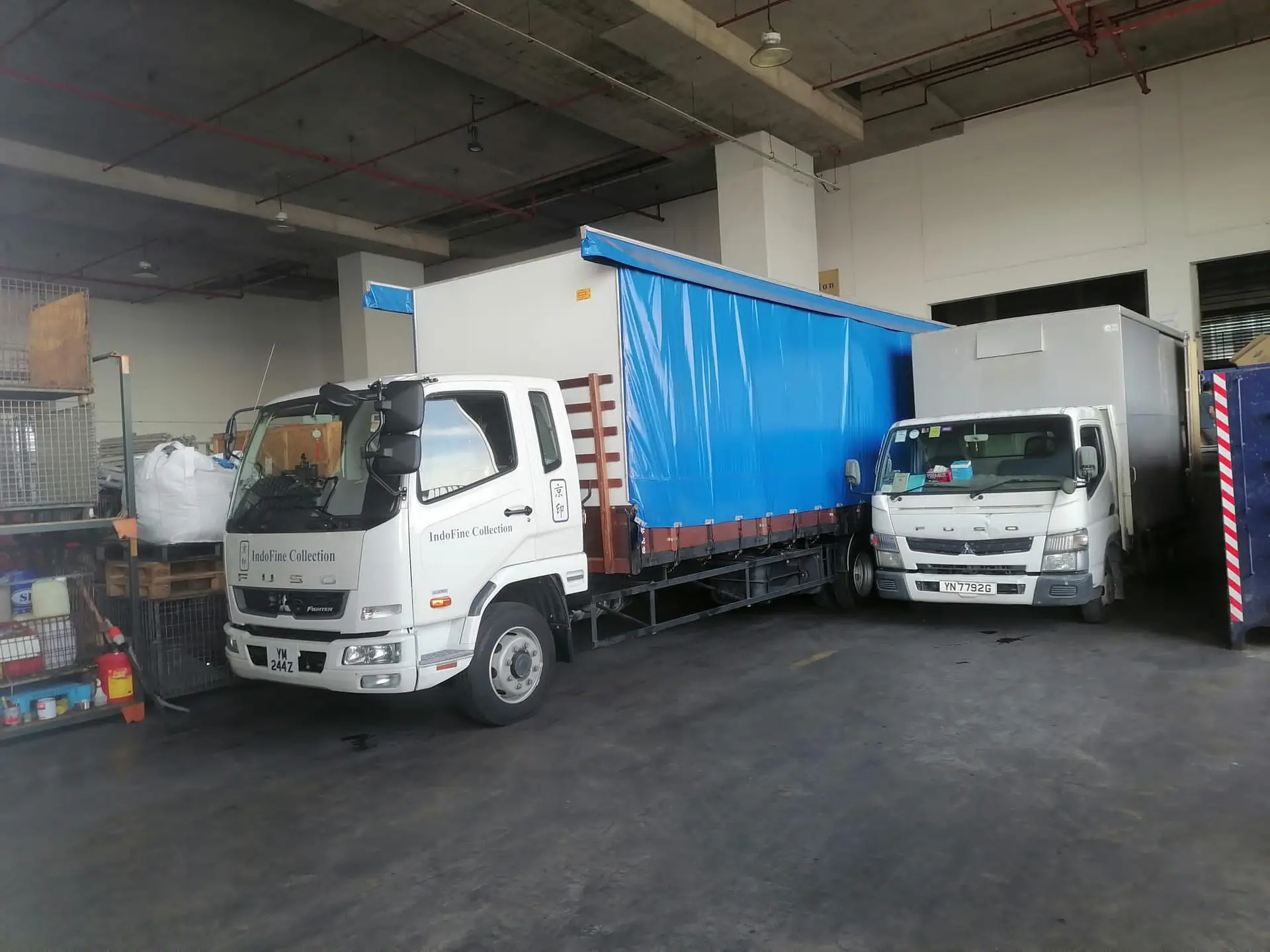
We handle the physical removal, loading and disposal routing. Crews of two to four, depending on scale, working from vans, lorries or larger trucks matched to the volume. Items that still have reuse value get routed through proper recycling channels or second-hand markets. Residual waste goes to licensed intermediaries for further sorting before reaching disposal facilities.
What we don't do: hacking, plastering, repainting, or any structural reinstatement work. We clear the contents. Your reinstatement contractor rebuilds the shell.
How Is Decommissioning Different From Reinstatement?
These two words get used interchangeably in lease-end conversations, and the confusion costs time. They're sequential steps, not synonyms.
Decommissioning is the removal of everything the tenant brought in: furniture systems, equipment, cabling, signage, sometimes carpet tiles and raised flooring if the lease requires it. Our complete guide to office decommissioning walks through the full scope.
Reinstatement is restoring the unit to its original condition per the lease agreement — typically bare walls, ceiling grid, concrete or screed floor. That's a renovation contractor's job, and it can't start until decommissioning is done.
The critical question for your timeline: what exactly does your lease require you to remove? Some landlords want everything out, including the ceiling grid. Others only want movable contents cleared and will accept the existing flooring. Read the reinstatement clause before you book anything. We've seen tenants pay to rip out flooring the landlord was happy to inherit, and we've seen tenants leave partitions behind only to get charged by the landlord's own contractor at double the rate.
Get that clause reviewed early. It determines whether you need a clearance crew, a reinstatement contractor, or both — and in what order.
Can You Work Outside Our Business Hours?
Most commercial tenants don't want a clearance crew dismantling cubicles while staff are still at their desks or customers are still browsing. The work needs to happen outside trading hours — evenings, overnight, weekends.
We operate 24 hours on weekdays and Saturdays, subject to availability and prior booking. That means an evening start after your last employee leaves, or a Saturday morning session while the building is quiet, is standard for us. Sunday and public holiday work is possible by special arrangement.
Surcharges apply for after-hours, Sunday and public holiday jobs. We're upfront about that during the quoting stage so there are no surprises on the invoice.
Our after-hours commercial removal page covers the logistics in detail. If you're weighing up whether a weeknight or weekend session makes more sense for your specific building, the guide on what to expect from after-hours disposal breaks down the trade-offs. And for offices where the priority is zero disruption to Monday operations, our piece on weekend office clearance covers the planning side.
The short version: tell us the window your building allows and the date you need the space empty. We'll work backwards from there.
What Happens to Office Furniture and Workstations?
A 50-person office generates a surprising volume of furniture. Fifty task chairs. Fifty desks. Possibly fifty pedestals, a dozen meeting-room chairs, a boardroom table, reception seating, and whatever's been accumulating in the storeroom since the last office move.
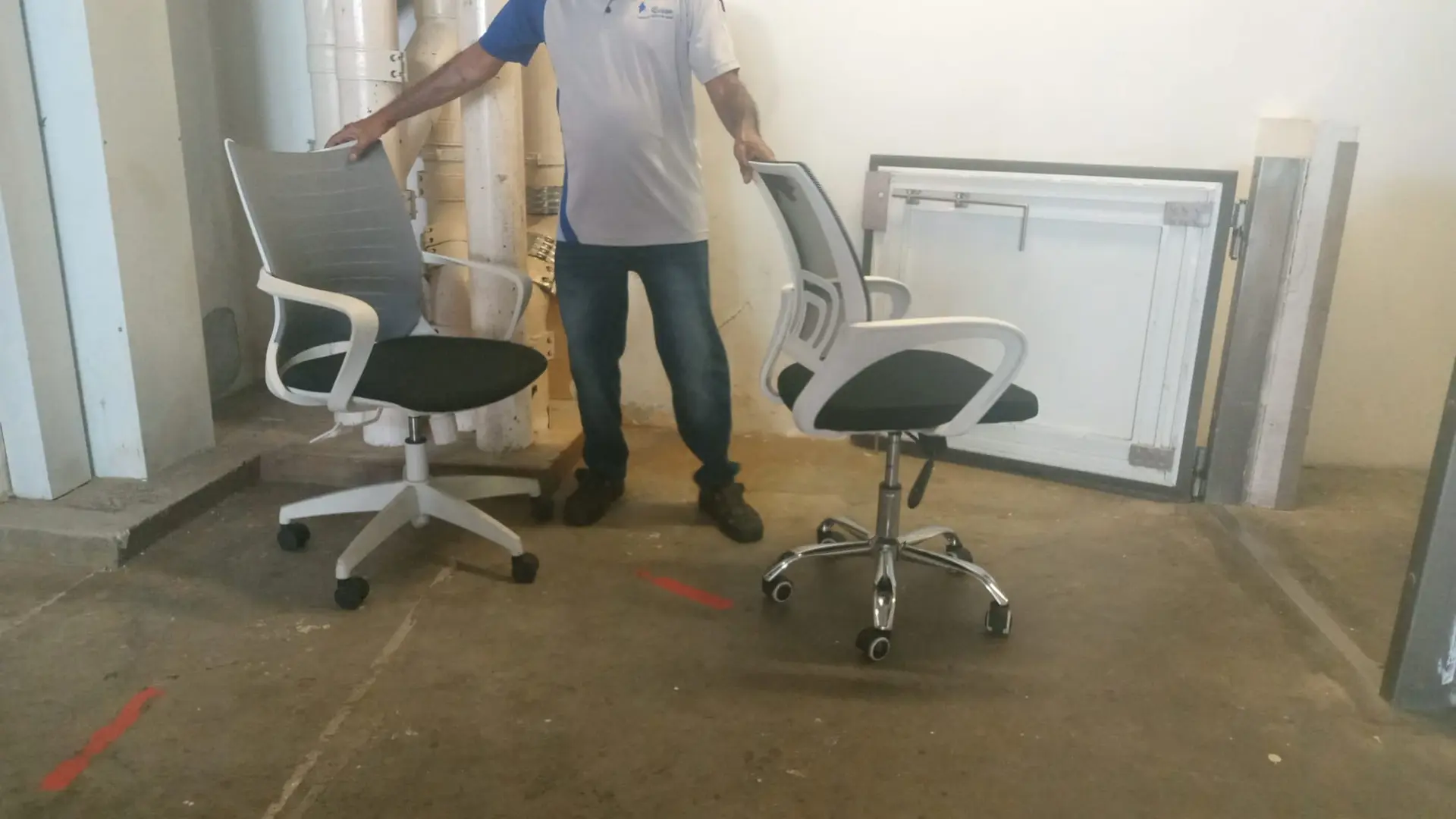
We dismantle, carry and load all of it. Workstation clusters with shared cable management get broken down into individual desk units for transport. Cubicle partitions — the fabric-wrapped steel-frame type common in older Singapore offices — are unclipped panel by panel. Our guide on cubicle and partition disposal covers the specifics if you're dealing with a heavily partitioned floor plate.
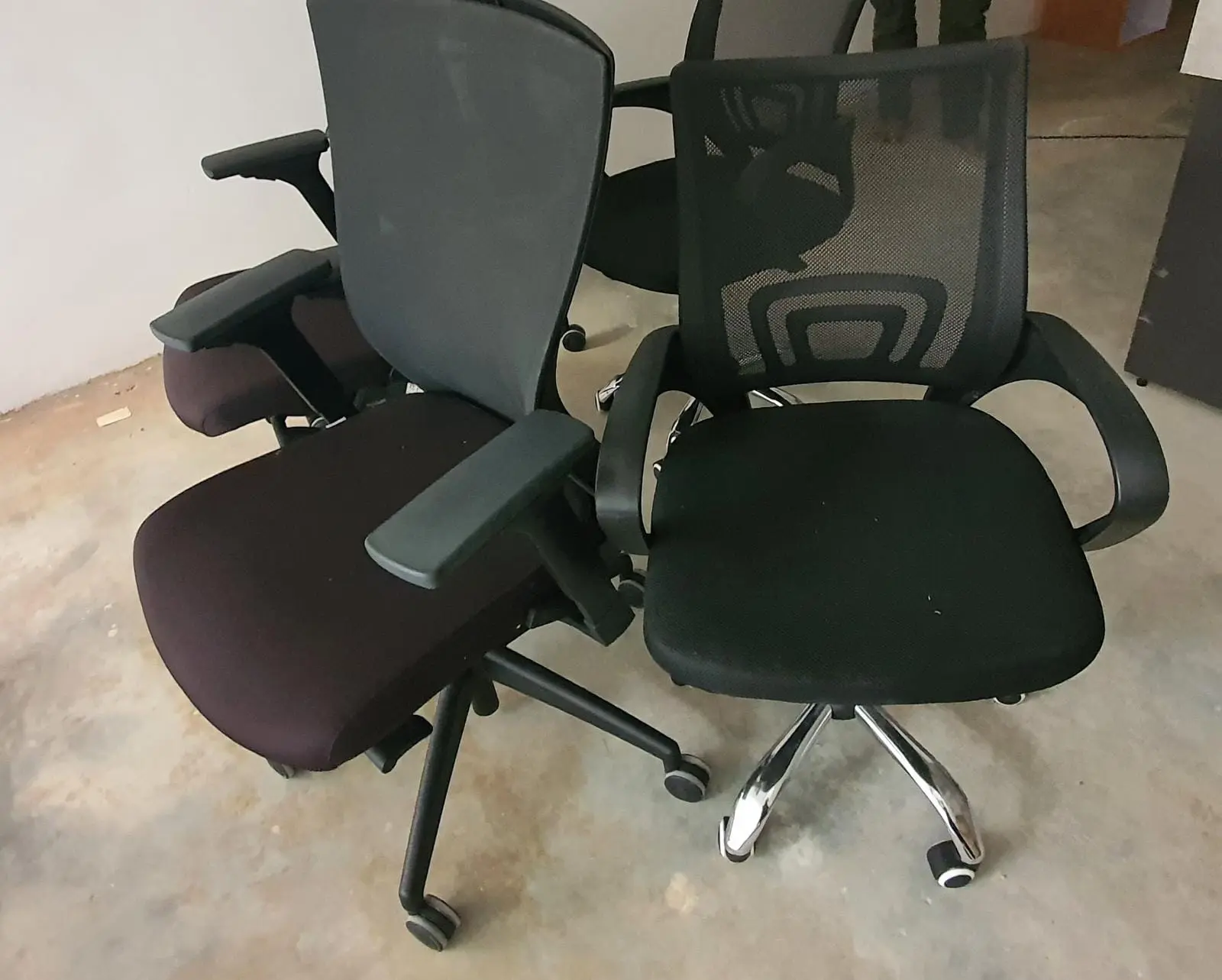
Task chairs are one of the highest-volume items we handle on commercial jobs. A standard ergonomic chair with a gas cylinder, five-star base and fabric seat doesn't fold, doesn't stack neatly, and takes up more truck space than you'd expect. Multiply that by forty or sixty units and you understand why bulk office chair disposal is a topic that deserves its own page.
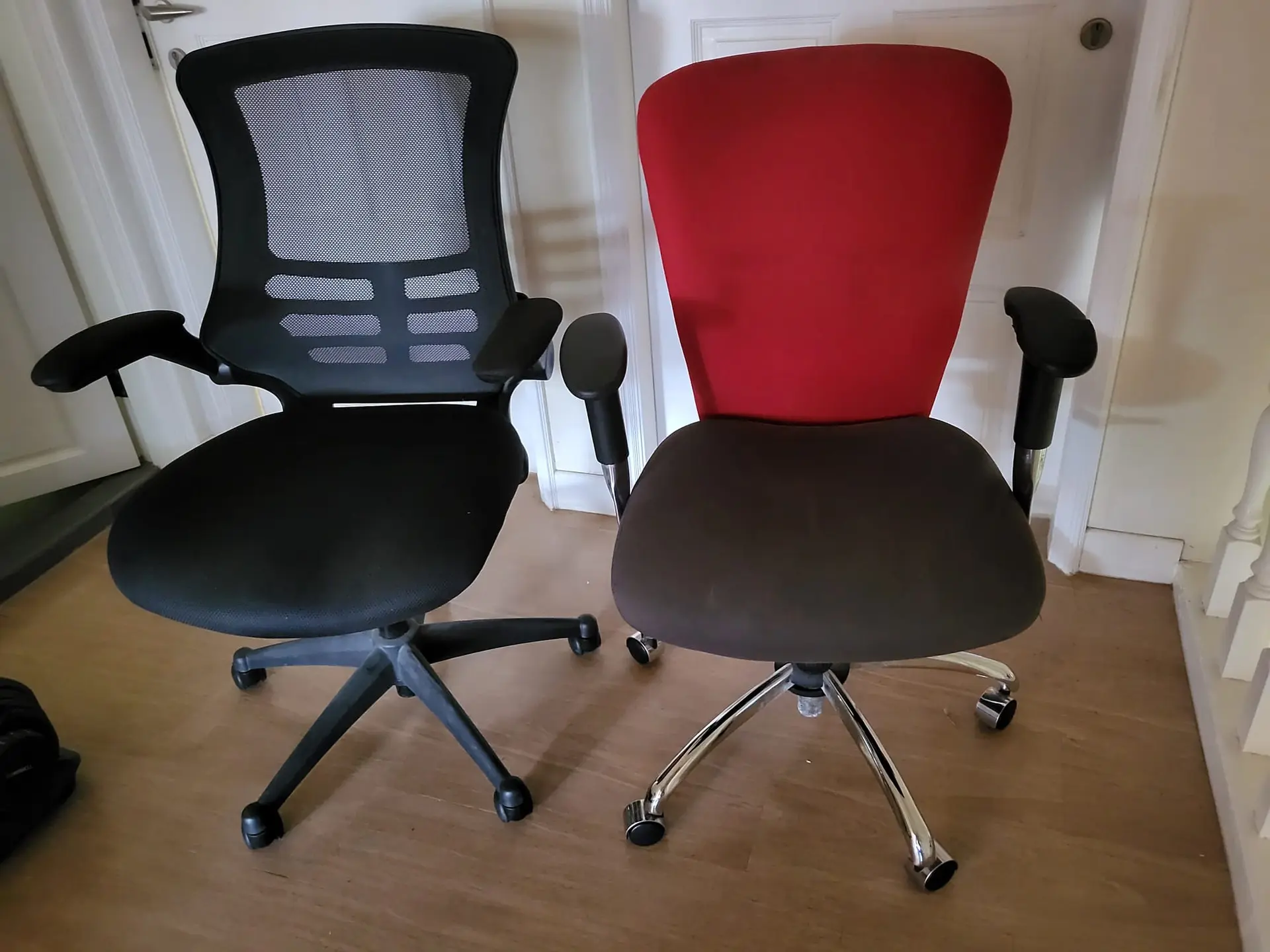
Items in reusable condition get routed to second-hand channels. Metal components — chair bases, desk frames, filing cabinet shells — go through recycling. The rest is sent to licensed intermediaries for further sorting. Nothing usable goes straight to landfill if we can help it.
One thing to flag early: if your company has asset tags or IT-security stickers on equipment, decide before clearance day whether those need to be removed or recorded. We clear the items; your facilities or IT team handles asset deregistration.
What If the Lease Ends This Week?
It happens more often than it should. A handback date that seemed months away is suddenly five days out, and the space is still full.
Tight-deadline clearance is possible. We've cleared full office floors within days when the schedule demanded it. The limiting factors are usually building access — how many hours per day the freight lift and loading bay are available — rather than crew availability on our end.
Our emergency office clearance guide covers the steps to compress a timeline: getting building-management approvals fast, staging items near the loading point the night before, and sequencing the removal so the reinstatement crew can start on one end of the floor while we're still clearing the other.
Urgent jobs are subject to availability and may carry additional charges. The earlier you call, the more options we have. Even 48 hours of lead time makes a meaningful difference to what we can schedule.
Is a Retail Unit Different From an Office?
The items change. The pressure doesn't.
A retail closure typically involves display fixtures, shelving systems, point-of-sale counters, signage, mannequins, back-of-house racking and whatever unsold inventory the business hasn't liquidated. The materials are more varied than a standard office — glass display cases, acrylic signage, MDF shelving, stainless steel fixtures — and the access constraints are often tighter. Mall units have strict loading-dock hours, goods-lift booking windows, and rules about moving items through common corridors.
Our retail closure disposal page covers the logistics for shop clearances across malls and street-level units. If you're managing a fit-out handover rather than a full closure, the retail fit-out handover page addresses the overlap between clearance and reinstatement scope.
For a step-by-step checklist — what to do about remaining stock, what the landlord expects back, how to handle branded fixtures you don't want a competitor reusing — the retail shop closure disposal checklist is the most detailed resource we've put together.
Retail timelines tend to be even more compressed than office ones. Landlords with a new tenant lined up will push hard on the handback date, and every day of overrun can trigger penalty clauses in the lease.
What About a Warehouse or Commercial Kitchen?
These are the heaviest commercial clearances we handle, both literally and logistically.
A warehouse clearance might involve industrial racking systems bolted to the floor, pallet loads of obsolete stock, heavy machinery, and the accumulated operational clutter of years — broken pallets, shrink wrap rolls, spare parts bins, signage from three tenants ago. The volume is large, the items are heavy, and the access is usually easier than an office (ground-floor roller-shutter doors, forklift access, no lift constraints). Our warehouse clearance guide covers the planning timeline and what to prioritise.
Commercial kitchens are a different challenge. Stainless steel prep tables, exhaust hoods, walk-in chiller panels, deep fryers, commercial ovens and dishwashers — all of it heavy, some of it plumbed or hardwired. The commercial kitchen equipment disposal page outlines what we handle, and the detailed guide to disposing of commercial kitchen equipment covers disconnection responsibilities (your licensed electrician or plumber handles disconnection; we handle removal once equipment is free-standing).
Stainless steel has recycling value and gets routed accordingly. Refrigeration units contain refrigerant gases that need proper handling through licensed channels. We don't cut corners on that.
What Should You Sort Out With Building Management First?
This section matters more than most tenants realise. Building-management logistics can make or break your clearance timeline, and they're your responsibility to arrange — not ours.
Loading bay and goods lift booking. For commercial buildings and condos, the freight lift and loading bay operate on a booking system controlled by the MCST or building management. Slots are often limited to specific hours, and popular move-out periods (quarter-end, especially December) book up fast. Secure your slot as early as possible.
Lift padding. Where the MCST requires lift padding during move-out, the padding is provided by building management. You arrange this directly with them. Factor in any deposit or lead time they require.
Security clearance for crew. Some buildings need a list of names and NRIC numbers 24 to 48 hours in advance. Others need the tenant's authorised representative on-site during the clearance. Ask your building management what they require and relay it to us during booking.
Access cards and after-hours entry. If the clearance happens outside standard building hours, confirm that your access cards will work for the loading bay, goods lift and relevant floors during the booked window.
Parking for larger vehicles. A 14-foot lorry or larger truck needs a loading bay or designated parking spot. Street-level units may need to coordinate with URA or the building for temporary parking. CBD buildings almost always require advance booking for anything larger than a van.
We can advise on what questions to ask your building management — we've seen enough buildings to know the common requirements. But the conversation and the approvals sit with you as the tenant.
Commercial Clearance FAQs
Do you buy or offer trade-in value for office furniture and equipment? No. We are a disposal service, not a buyback operation. We don't pay for items collected, offer trade-in credit, or provide compensation for anything we remove. Items in reusable condition get routed to appropriate second-hand or recycling channels, but no payment flows back to the client.
How do you quote for a commercial clearance job? Send us photos of the space and a description of what needs to go via WhatsApp. We'll provide a free quote based on volume, item types, access conditions and timing. Quotes are valid for 14 days. No site visit is needed for most jobs, though larger or more complex clearances may warrant one.
Can you clear a space that still has staff working in part of it? Yes, provided there's a clear boundary between the active area and the clearance zone. We've handled phased clearances where one half of a floor is emptied while the other remains operational. Coordination on timing and noise is part of the planning conversation.
What items can't you take from a commercial space? We don't handle chemicals, asbestos materials, loose batteries, food or biological waste, cooking gas tanks, or anything hazardous or explosive. Paints and solvents are fine. If you're unsure about a specific item, mention it when you send photos for the quote.
How much notice do you need for a standard commercial clearance? Typically 24 to 48 hours for a straightforward job. Larger clearances — full floors, warehouses, multi-day projects — benefit from a week or more of lead time so we can match the right crew size and vehicle to the scope. Tight-deadline jobs are possible subject to availability, with potential additional charges.
Related Guides
- CBD Office Clearance — access logistics, freight-lift constraints and after-hours scheduling for central business district offices.
- Emergency Office Clearance Singapore — compressing a full clearance into days when the deadline won't move.
- Retail Shop Closure Disposal Checklist — step-by-step for retail tenants managing a unit handback.
Your handback date isn't moving. Get the clearance locked in.
WhatsApp us at 9730 4047 with photos of the space and your deadline. We'll come back with a free quote and a plan to get it empty on time.