Office Cubicle Disposal in Singapore: Why Your Old Partitions Won't Just Walk Out
By Junk Express Team
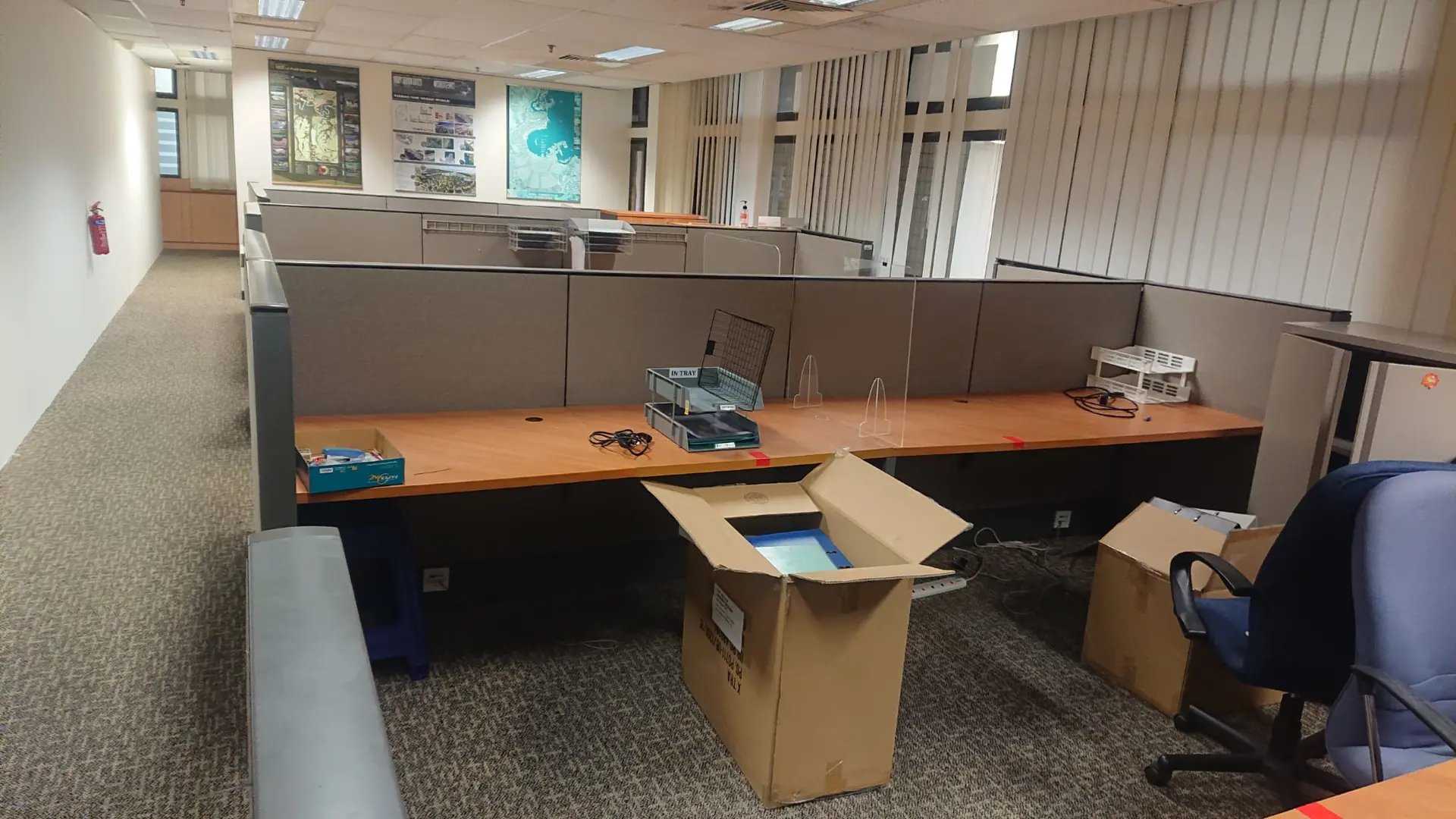
You've signed the lease on your new space. The renovation contractor is booked. There's just one problem: forty-odd cubicle workstations bolted together in a grid, connected by shared power trunking, and anchored to cable trays that run under a raised floor. They need to go. Yesterday.
This is where most office managers hit a wall — sometimes literally. Cubicles aren't standalone furniture. They're systems. And getting them out of a commercial building in Singapore without damaging the floor finish, blocking the service lift for hours, or earning a strongly worded email from building management requires more than a few guys with a trolley.
Why This Comes Up More Than You'd Think
Office refits in Singapore tend to cluster around lease-renewal cycles — three-year or five-year terms. When a company downsizes, merges floors, or shifts to hot-desking, the first casualty is usually the panel-based cubicle system that's been there since the fit-out.
If your handover is this week and the office still has furniture in it, commercial team is what you want — share access window and we'll commit to a finish time.
The problem? These systems were designed to be installed efficiently. Nobody thought much about removal day. Panels interlock. Worksurfaces share brackets. Power and data run through the partition spines. You can't just unclip one cubicle without destabilising the next three.
And then there's volume. A typical 40-pax open-plan setup generates enough material to fill a 14-foot truck — sometimes two. That's not something you stage at the loading bay and hope the building's waste contractor will take.
What Dismantling Actually Involves
In our 10+ years clearing Singapore offices, we've handled every major cubicle system on the market — from the heavy steel-frame Steelcase panels common in banking floors to lightweight aluminium-and-fabric screens used in co-working refits. Here's what the process looks like in practice:
Panel-Based Systems (Herman Miller, Steelcase, Haworth)
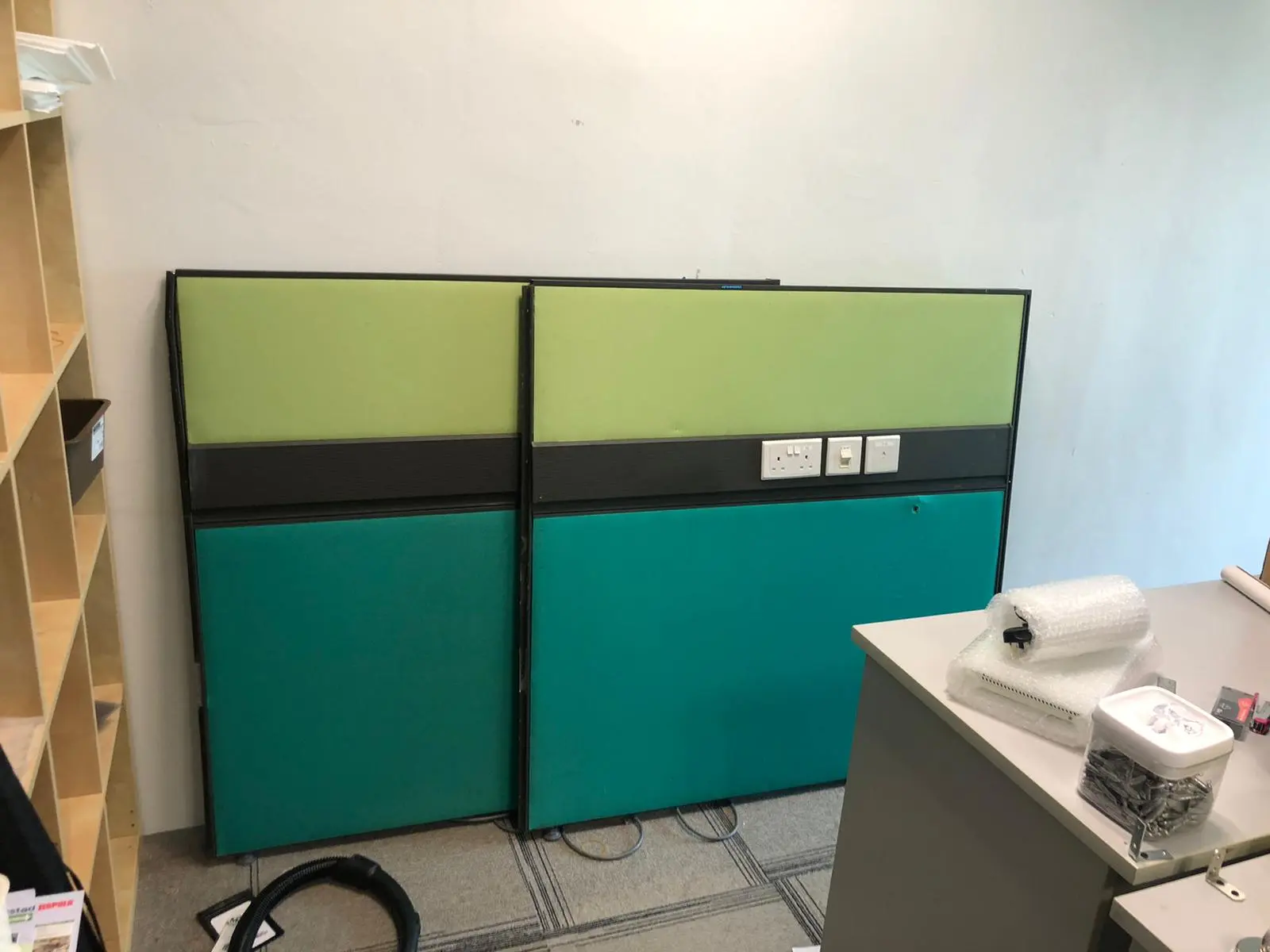
These are the classic full-height or mid-height partitions with integrated power. Dismantling means:
- Disconnecting electrical feeds at the base (power must be isolated first — coordinate with your electrician)
- Removing worksurfaces and overhead bins before the panels themselves
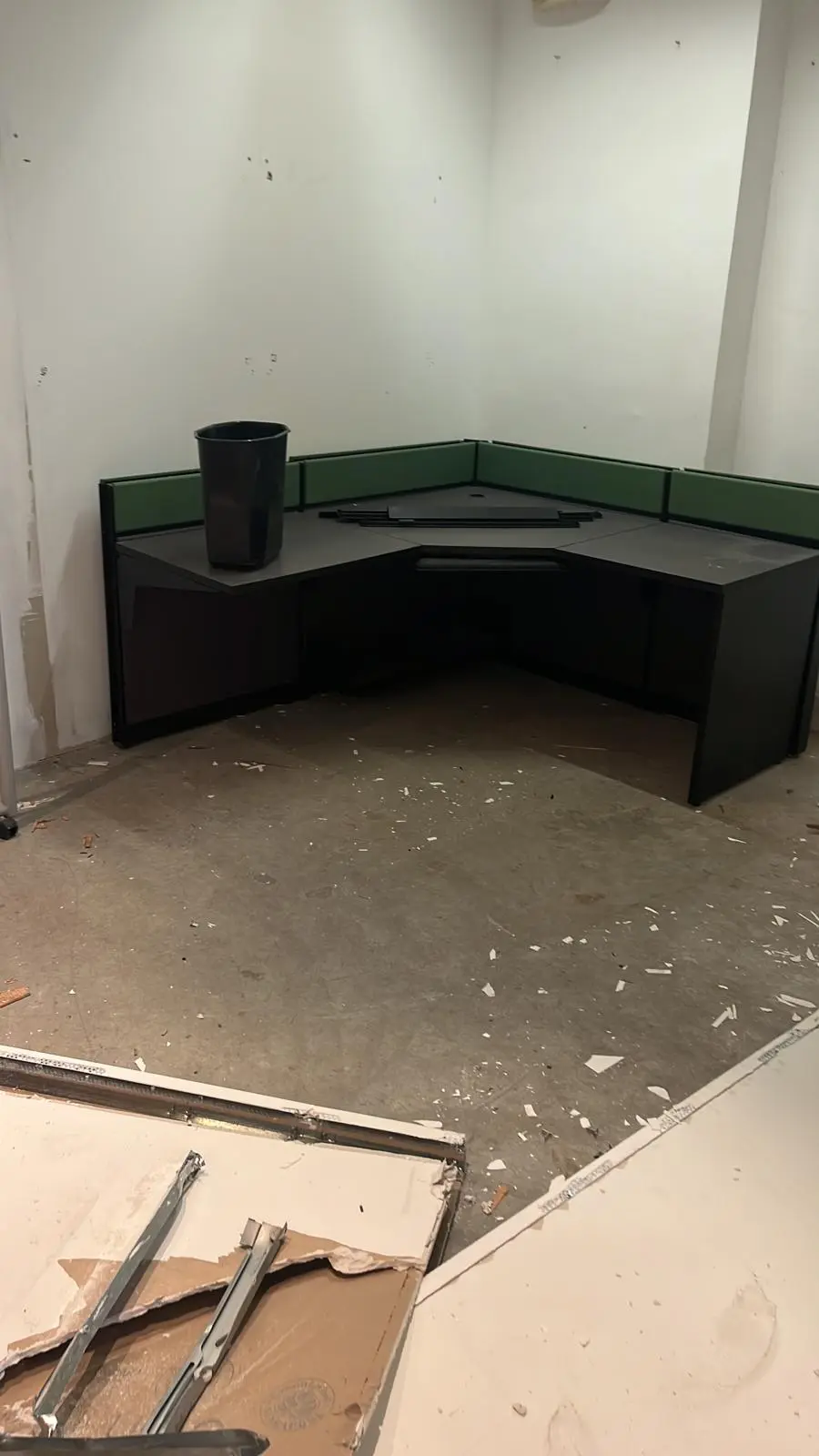
- Unbolting floor anchors, which often sit under carpet tiles
- Stacking panels flat for transport — they don't fit through doorways standing up
A 20-cubicle cluster takes a crew of three roughly two to three hours to break down, depending on how many shared components there are.
Glass Partitions and Frameless Screens
More common in newer offices. These are lighter but more fragile. Cracked glass creates a safety hazard and a mess that takes longer to clean than the removal itself. We wrap and carry — no dragging, no stacking glass-on-glass.
Desk-Mounted Screens and Clamp-On Dividers
The easiest category. These unclamp quickly, but the sheer quantity in a large open-plan can still overwhelm a standard waste-collection arrangement. Fifty acrylic screens don't compress. They need vehicle space.
The Building Logistics That Catch People Off Guard
Here's what we've learned from clearing offices across Singapore's commercial districts:
Service lift booking is non-negotiable. Most commercial buildings restrict goods-lift access to specific time windows — often early morning or after office hours. Your building management sets these slots, and you (the tenant) need to book them ahead of our arrival. We've seen jobs delayed by days because the lift wasn't secured in advance.
Loading bay access has time limits. Many CBD and suburban office buildings allow 30–60 minutes at the loading dock before penalties or forced relocation. With cubicle jobs, we plan truck rotations around these windows.
Floor protection matters. Dragging a steel panel across polished concrete or vinyl flooring will cost you more in reinstatement than the entire disposal job. We use trolleys and protective sheeting, but the tenant should flag any specific floor-finish concerns during booking.
One critical point: building management approval and any required lift padding are the tenant's responsibility to arrange. Rules vary wildly between buildings — some MCSTs require 48-hour notice, others need a refundable deposit. Sort this before we arrive.
Common Mistakes We've Seen Over 10+ Years
Assuming the renovation contractor will handle it. Many ID firms and contractors don't include old-furniture removal in their scope. They'll hack out the built-in carpentry, sure. But freestanding cubicle systems? That's on you.
Leaving it too late. If your handback date is Friday and you call us Wednesday afternoon, we'll do our best — but urgent jobs are subject to availability and may incur additional charges. Two to three days' lead time keeps things smooth.
Mixing cubicle disposal with active IT decommissioning. If your IT team is still pulling drives from workstations while we're dismantling partitions around them, everyone slows down. Sequence matters: data wipe first, then furniture out.
Underestimating the volume. One cubicle workstation — the panel, worksurface, pedestal, and overhead — takes up more truck space than a three-seater sofa. Forty workstations is a serious logistics exercise, not a quick pickup.
Mini-FAQ
Q: Can reusable cubicle panels be recycled or rehomed? Where materials are in serviceable condition, we route them through proper recycling channels or secondary-use pathways. Metal frames and aluminium components are particularly recoverable. We handle the sorting — you don't need to separate anything.
Q: Do surcharges apply for after-hours removal? Yes. After-hours, Sundays, and public holidays carry surcharges — confirmed at the quoting stage. Many office clearances happen outside business hours by necessity, so we're set up for it. Just factor it into your timeline.
Q: What do you need from me to quote accurately? Photos via WhatsApp. Show us the number of workstations, the type of partition system, the floor you're on, and the service lift or loading bay situation. The more context, the tighter the quote.
Ready to Clear Those Cubicles?
Send us a few photos of your office setup on WhatsApp. We'll come back with a no-obligation quote — typically within hours, not days. If the partitions are part of a wider move-out, our full office decommissioning service clears the whole floor in one sequenced job.
WhatsApp us at 9730 4047 — include the number of workstations, your floor level, and your ideal removal date. We'll handle the rest.