Retail Shop Closure Disposal: The Checklist Singapore Tenants Keep Getting Wrong
By Junk Express Team
Your tenancy ends in three weeks. The landlord's reinstatement clause says "return to bare shell." You've packed the merchandise, cancelled the POS subscription, and told the staff. But the built-in shelving bolted to the back wall? The ceiling-mounted lightbox signage? The grease-caked exhaust hood above the wok station? Those are still your problem — and the clock is already running.
In our 10+ years clearing retail units across Singapore's malls, shophouses, and HDB ground-floor commercial spaces, we've seen tenants lose their security deposits over items they genuinely didn't realise were theirs to remove. This checklist exists so you don't join that list.
Why the Handover Window Is Tighter Than You Think
Mall management offices rarely give you a generous timeline. Most impose a removal window of two to five days after your last trading day. Some restrict disposal work to overnight hours only — loading bay access between 10pm and 6am, with a specific bay slot you need to book in advance. Miss that window and you're paying holdover rent at a punitive daily rate.
When the landlord's clock is ticking, Commercial Clearance is the lane: same-day and after-hours slots, photo quote, fast confirmation.
Shophouse landlords tend to be more flexible on timing but stricter on scope. "Bare shell" in a shophouse often means stripping everything back to exposed brick and concrete slab, including floor tiles you laid over the original surface.
The penalty structure is simple: anything left behind after the handover deadline gets removed by the landlord's appointed contractor, charged back to you at a markup, and deducted from your deposit. We've seen invoices where the landlord's contractor charged three to four times what a direct disposal would have cost.
Landlord's Fixtures vs Tenant's Items: Drawing the Line
Your tenancy agreement should have a schedule listing the landlord's fixtures — items that came with the unit and stay with the unit. Everything else is yours to remove. When in doubt, these general principles apply:
Structural elements stay. Concrete walls, floor slab, ceiling grid framework (the T-bar system itself, not the panels you installed), fire sprinkler heads, main electrical DB box.
Your additions go. Display shelving you commissioned, wall panelling or cladding over the original surface, dropped ceiling tiles or feature ceilings, all signage (internal and external), kitchen equipment, custom counters, POS hardware, CCTV cameras you installed.
The grey area sits with air-conditioning. If the unit came with a base AC system and you upgraded or added splits, you typically need to remove your additions and cap off the piping properly. Check your tenancy agreement — some landlords want the upgraded units left in place; others insist on removal.
The Retail Closure Checklist: What Tenants Forget
1. Ceiling-Mounted and Wall-Fixed Items
Lightbox signage bolted to the fascia or suspended from the ceiling slab. Track lighting systems. Ceiling-mounted speakers. Projector brackets. Menu boards fixed with rawl plugs. These get overlooked because they're "part of the space" visually — but they're tenant installations.
Remove them, patch the holes, and repaint to match if your reinstatement clause demands it. At minimum, get them down and out of the unit.
2. Built-In Shelving and Display Systems
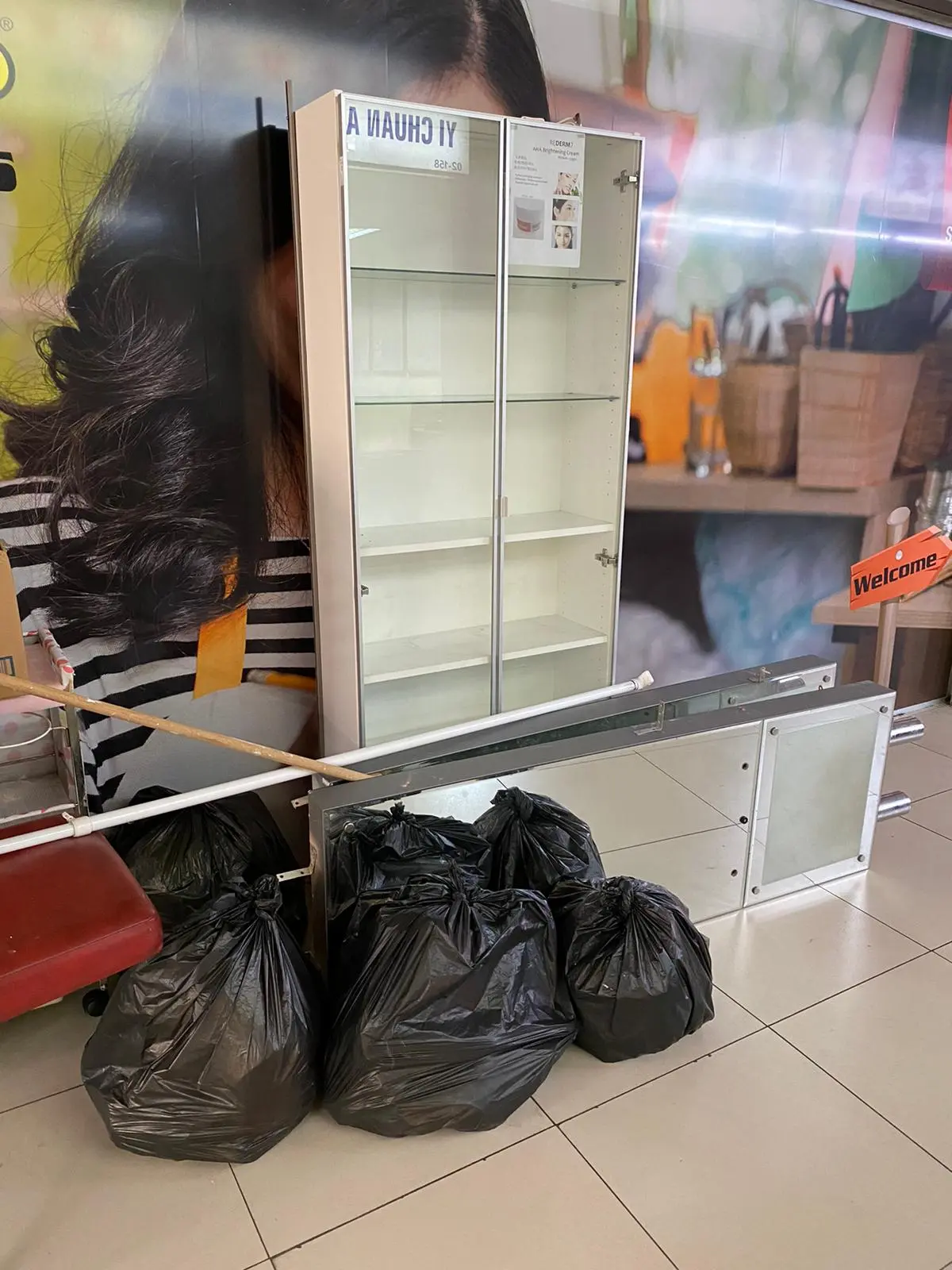
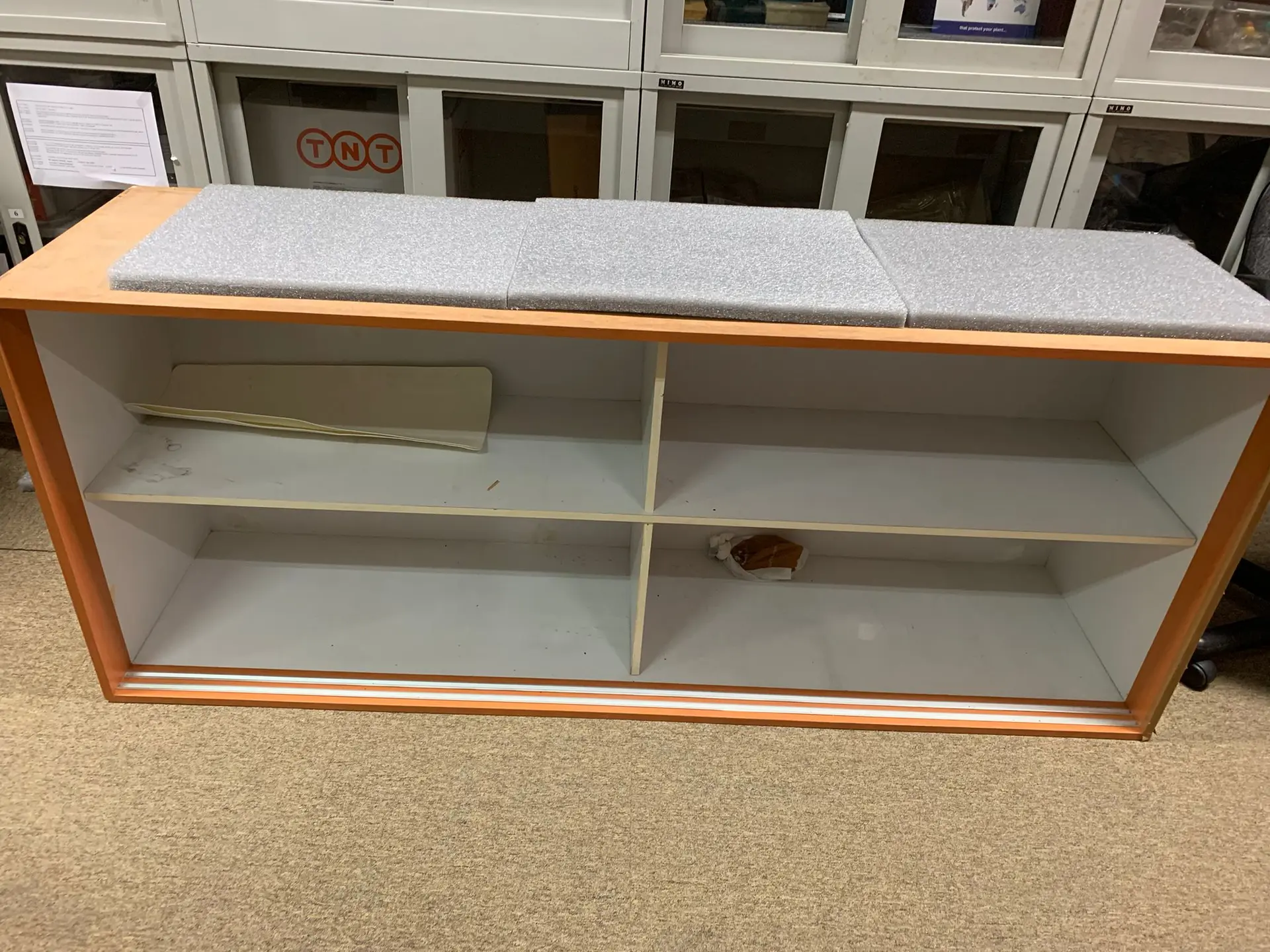
Freestanding gondola shelving is obvious — you'd never leave that behind. But the floor-to-ceiling display wall that was custom-built by your ID contractor? That's yours. The slatwall panels screwed into every vertical surface? Yours. The glass display cabinets that look like they've always been there because they were installed on day one of your fit-out? Also yours.
3. F&B-Specific Equipment
This is where closure disposal gets heavy — literally. A commercial exhaust hood with ductwork can weigh 80–150kg depending on length. Stainless steel prep tables, deep fryers, walk-in chiller panels, grease traps, gas piping (after your licensed plumber disconnects it). None of this fits in a standard passenger lift, and most of it won't clear a shophouse stairwell without partial dismantling.
4. IT and POS Infrastructure
Network switches mounted in a ceiling void. Cable trays running above the dropped ceiling. POS terminals, receipt printers, customer-facing displays, self-ordering kiosks. Security camera DVRs tucked in a back-of-house cabinet. Routers. UPS battery units.
These items are small individually but add up to several trips if you haven't planned for them. And the cabling — Cat6 runs, coaxial for the old cable TV, speaker wire — either pull it out or confirm with your landlord that it can stay buried in the trunking.
5. Flooring and Wall Finishes
Vinyl plank flooring laid over the original screed. Epoxy coatings in kitchen areas. Feature walls with timber cladding or tile overlays. If your reinstatement clause says "bare shell," all of it comes up or comes off. This generates more debris by volume than most tenants expect — a 500sqft shop with vinyl throughout produces roughly 15–20 large contractor bags of material once it's ripped up.
Common Mistakes From a Decade of Retail Clearances
Underestimating the loading bay logistics. Mall loading bays operate on timed slots. You can't just show up with a lorry at 2am and expect access. Book your slot through building management well in advance — and confirm the maximum vehicle height the ramp or basement carpark can accommodate. We've arrived at jobs where the tenant booked a slot but forgot that the basement clearance is 2.4m, ruling out anything larger than a van.
Leaving the signage for last. External signage — especially illuminated lightboxes on the mall facade — often requires a boom lift or scaffold, which means coordinating with building management for common-area access. This isn't a job you squeeze into the final afternoon.
Assuming the landlord wants the AC left behind. We've cleared units where the tenant left a near-new system thinking it added value, only to receive a reinstatement charge for "unauthorised fixtures remaining." Always confirm in writing.
Forgetting the back-of-house. The customer-facing shop floor gets attention. The storeroom, staff toilet modifications, the mezzanine storage platform you built — those are afterthoughts until the landlord's representative walks through with a checklist.
Mini-FAQ
Q: Can I just leave items for the mall's waste management to collect? No. Mall waste management handles daily operational waste (food scraps, cardboard from deliveries). Tenancy fixtures, equipment, and fit-out materials are your responsibility to remove via your own appointed contractor. Most malls explicitly prohibit leaving bulky items in common waste areas.
Q: Do I need to arrange the loading bay slot myself? Yes. Building management controls loading bay access, and the tenant (or their appointed disposal crew) must book the slot directly. Confirm the available timing windows, vehicle size limits, and whether goods-lift access is included or separately booked. Surcharges may apply for after-hours or weekend slots depending on the building.
Q: What happens to items that still have resale value — commercial fridges, stainless steel tables? Reusable items in working condition can be routed through proper recycling channels or second-hand markets rather than going straight to disposal. When you request a quote, mention which items are functional — it may affect how the job is structured.
Get Your Closure Clearance Quoted
Snap photos of everything that needs to go — the shelving, the kitchen line, the signage, the back-of-house storeroom. Send them over WhatsApp with your handover deadline and building access constraints. We'll come back with a scope and quote, typically within the day.
Stripping the unit back to bare shell is exactly what our retail fit-out handover clearance is built for — shelving, signage, the F&B line, all of it out before your deadline.
We work to the tightest window your job allows, subject to availability. Overnight mall clearances, early-morning shophouse strip-outs, weekend work when the neighbouring tenants aren't trading — surcharges may apply for after-hours or non-standard timing, confirmed at quote stage.
WhatsApp us at 9730 4047 with your photos and deadline. We'll handle the rest.