Bulk Office Chair Disposal in Singapore: What 50+ Chairs Actually Takes
By Junk Express Team
You've approved the PO for 60 new ergonomic chairs. The supplier confirms delivery next Tuesday. Then someone asks the question nobody thought about during the procurement meeting:
If your handover is this week and the office still has furniture in it, commercial pickup flow is what you want — share access window and we'll commit to a finish time.
"What are we doing with the old ones?"
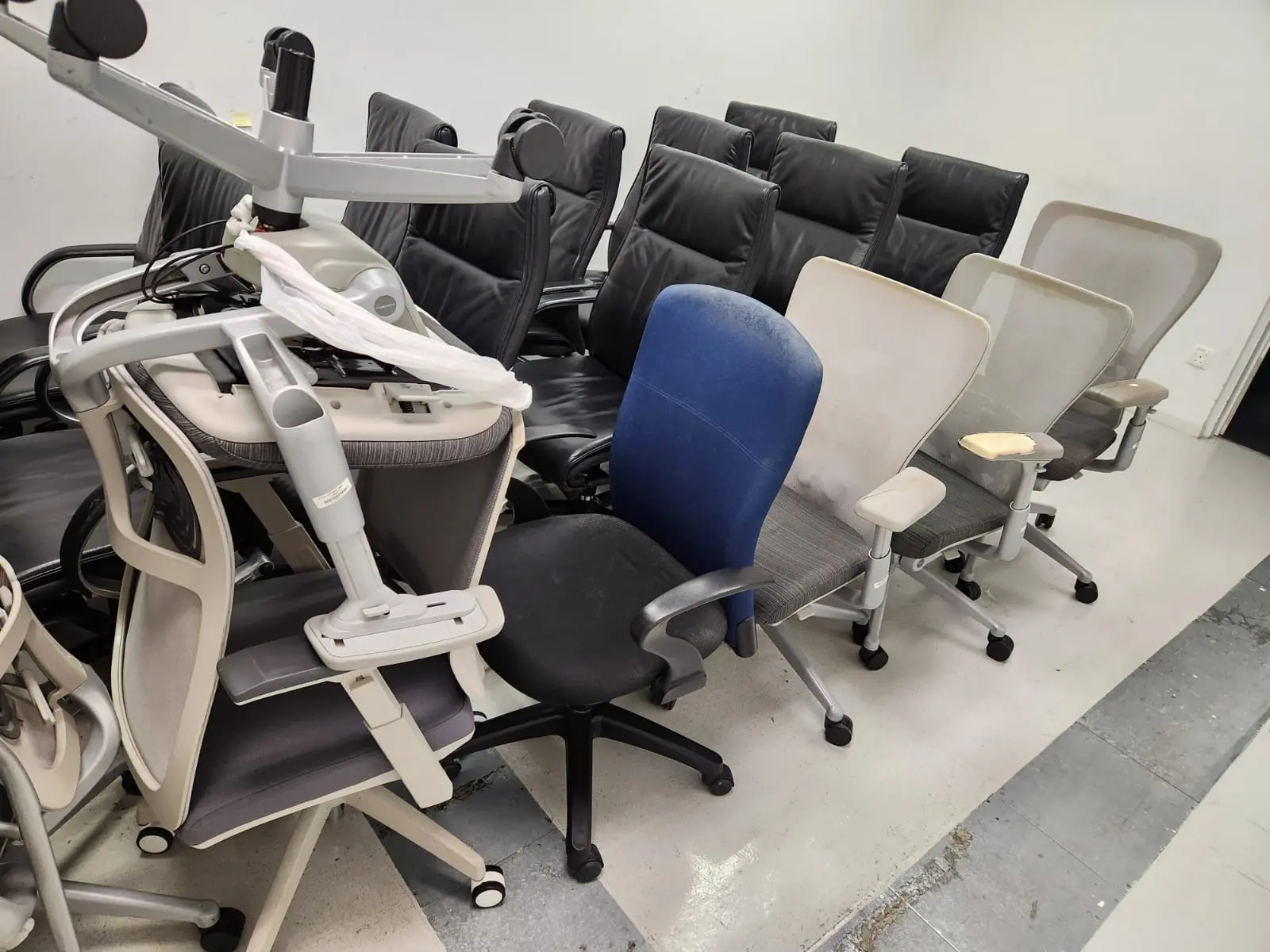
Fifty office chairs don't just disappear. They don't stack neatly. They don't fit in a bin centre. And your building management isn't going to let you leave them in the loading bay for three days while you figure it out.
In our 10+ years clearing Singapore offices — from single-floor startups to multi-storey corporate fit-outs — we've seen this scenario play out dozens of times. The new furniture arrives on schedule. The old furniture becomes everyone's problem and nobody's responsibility.
Why Bulk Chair Removal Is Harder Than It Looks
A single office chair weighs 12–18 kg. Multiply that by 50 and you're looking at close to a tonne of material. But weight isn't the real issue.
It's the geometry.
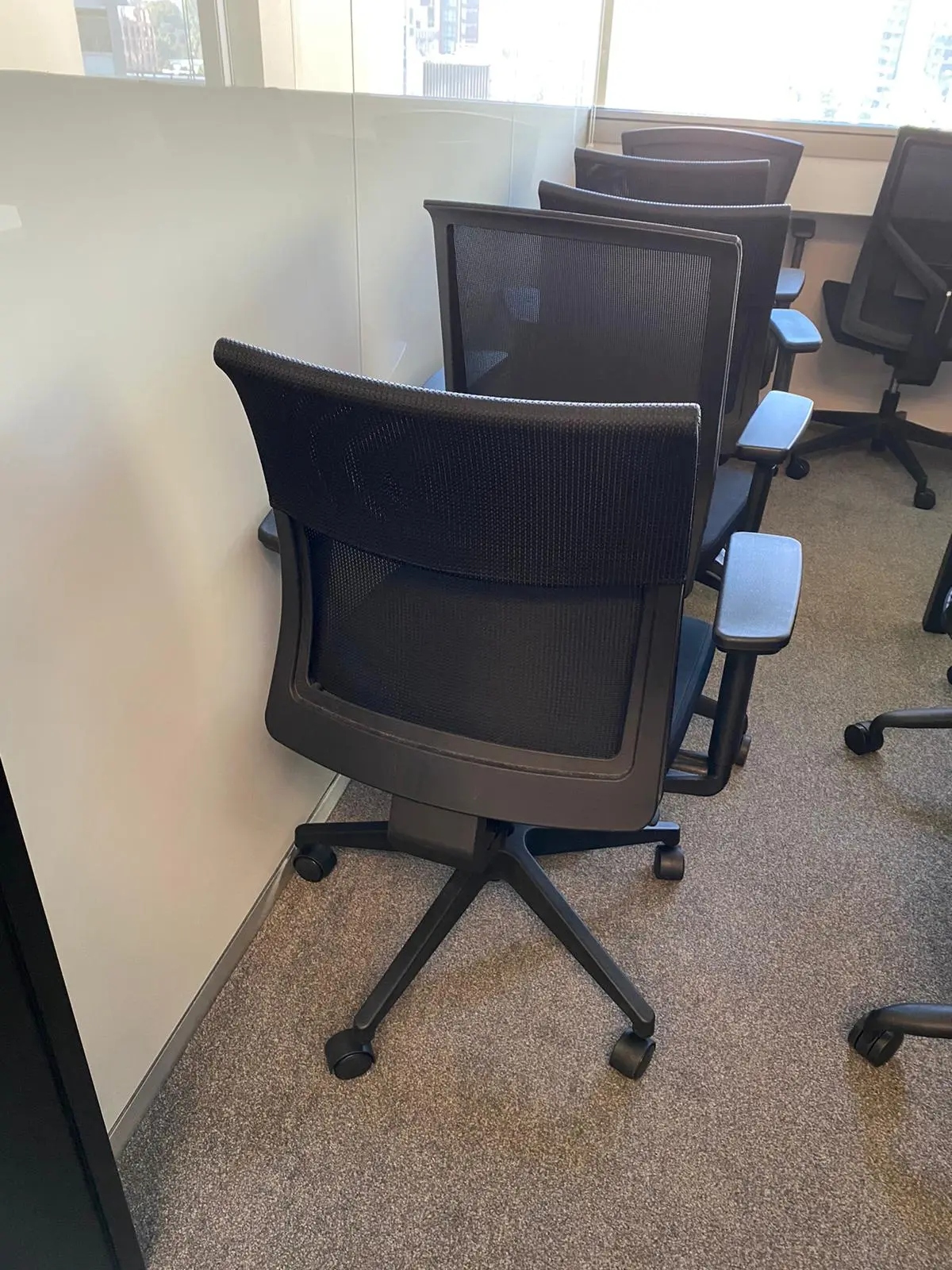
Five-star bases splay outward. Armrests interlock with neighbouring chairs when you try to line them up. Gas cylinders protrude at odd angles. You cannot stack office chairs the way you stack dining chairs. Each one occupies roughly 0.6 × 0.6 metres of floor space — meaning 50 chairs, even crammed together, consume 18 square metres. That's a small meeting room.
Then there's the materials mix. A standard task chair contains:
- Steel — the gas cylinder, base plate, adjustment mechanisms
- Aluminium or nylon — the five-star base and casters
- Polyurethane foam — seat and back padding
- Polyester mesh or fabric — upholstery
- Polypropylene — armrest shells, shrouds
This matters because responsible disposal means separating these streams. Metal goes one route. Plastic another. Fabric and foam — honestly — have limited recycling pathways in Singapore and typically end up routed through licensed intermediaries for proper processing. We don't pretend everything gets a second life. But the metal and hard plastics? Those get recovered.
The Three Logistics Bottlenecks You Need to Plan For
1. Goods Lift Capacity and Time Slots
Most commercial buildings in Singapore allocate goods-lift access in 2-hour blocks. You book your slot through building management — and if your removal crew isn't done when the next tenant's renovation contractor shows up, you lose access.
Fifty chairs across multiple trips in a standard goods lift (fits maybe 8–10 chairs per load depending on lift dimensions) means 5–7 lift runs minimum. Factor in the walk from your floor to the lift lobby, and you're looking at a full time slot consumed just on vertical movement.
The owner or tenant must arrange goods-lift booking and any required lift padding with building management ahead of our arrival. Rules differ per building. Some MCSTs require 48 hours' notice; others need a refundable deposit. That's your conversation to have before we show up — we'll work within whatever window you've secured.
2. Loading Bay Access
Your building's loading bay likely has a vehicle size restriction and a time limit. We operate vans, lorries, and larger trucks depending on the job scale. For 50+ chairs, a lorry is the minimum — and a standard 14-foot lorry fits approximately 25–35 office chairs depending on whether we're dismantling bases on-site or transporting whole.
That means two loads minimum. Two loading-bay slots. Two trips.
3. Timing Against New Furniture Delivery
The worst version of this job: new chairs arrive at 9am, old chairs still on the floor, and there's physically nowhere to put anything. We've cleared more than one office where the facilities manager called us the afternoon before delivery day in a panic.
It works. But planning ahead — even 24–48 hours' notice — means we can schedule crew and vehicle without the urgency surcharge.
Common Mistakes We've Seen Over 10+ Years
Assuming the cleaning contractor handles it. They don't. Your office cleaner empties bins and vacuums carpet tiles. They don't have a lorry or disposal routing.
Trying to donate 50 worn task chairs. Here's the reality: second-hand channels have limited appetite for bulk office seating, especially if the mesh is sagging, the gas cylinders are sinking, or the fabric is stained. Reusable items in good condition get routed appropriately where possible — but don't assume all 50 will find a second home.
Underestimating dismantling time. If you're thinking "we'll just unscrew the bases to save space" — each chair takes 3–5 minutes with the right tools. Multiply by 50. That's over four hours of labour before anything leaves the building. Our crew handles this as part of the job.
Forgetting surcharges exist. After-hours removal, Sunday jobs, buildings without lift access — surcharges apply. These are confirmed at quote stage so there are no surprises, but don't assume a weekend clearance costs the same as a Tuesday morning.
Mini-FAQ
How many office chairs fit in one lorry load? A standard 14-foot lorry holds approximately 25–35 task chairs transported whole. Dismantling bases on-site increases capacity but adds labour time. For 50+ chairs, expect at least two trips — we'll confirm the most efficient approach after seeing photos of your specific chairs and floor layout.
Can you remove chairs during office hours without disrupting staff? Yes — we routinely clear sections of an office floor while adjacent teams continue working. The key constraint is goods-lift availability and loading-bay timing, not noise. We work fast and clean.
What happens to the chairs after collection? Metal components (gas cylinders, bases, frames) are routed through proper recycling channels. Plastics are separated where viable. Foam and fabric with limited recycling pathways go through licensed intermediaries for responsible processing. Items in genuinely good condition may be routed for reuse where possible.
Get Your Bulk Chair Removal Quoted in Minutes
If the chairs are coming out as part of a wider strip-out, our office decommissioning service handles the whole floor in one coordinated sweep. Send us photos of the chairs, the quantity, your floor level, and your preferred date. We'll come back with a fixed quote — no ambiguity, no hidden line items beyond any applicable surcharges (which we'll flag upfront).
WhatsApp us at 9730 4047 for a free photo-based quote.
It's fast. It's planned. It's done.