Commercial Kitchen Equipment Disposal in Singapore: What F&B Operators Need to Know
By Junk Express Team
Your lease is ending. The renovation contractor starts Monday. And sitting in the back of house is a 200kg combination oven caked in a decade of grease, a walk-in chiller bolted to the wall, and a deep fryer still connected to the gas line.
Most commercial deadlines come down to one access window. commercial pickup flow confirms inside that window or tells you what's actually feasible — no vague promises.
This isn't furniture. You can't wheel it to the kerb and hope the town council picks it up. Commercial kitchen equipment disposal is a different beast entirely — and if you're an F&B operator in Singapore closing, relocating, or renovating a restaurant, the clock is already ticking.
Why This Can't Wait
In our 10+ years clearing commercial kitchens across Singapore — from hawker-style central kitchens in Jurong to fine-dining back-of-house spaces in the CBD — we've seen what happens when operators leave kitchen clearance to the last 48 hours of their tenancy.
The landlord's handback inspection fails. The reinstatement contractor can't start because the equipment is still in place. Penalty clauses kick in. What should have been a straightforward disposal job becomes an emergency — and emergencies cost more.
The reality: commercial kitchen equipment is heavy, awkward, greasy, and often still connected to utilities. It requires planning.
The Disconnection Problem: What Must Happen Before We Arrive
Here's the non-negotiable. Before any removal crew touches your equipment, certain disconnections must be completed by licensed tradespeople:
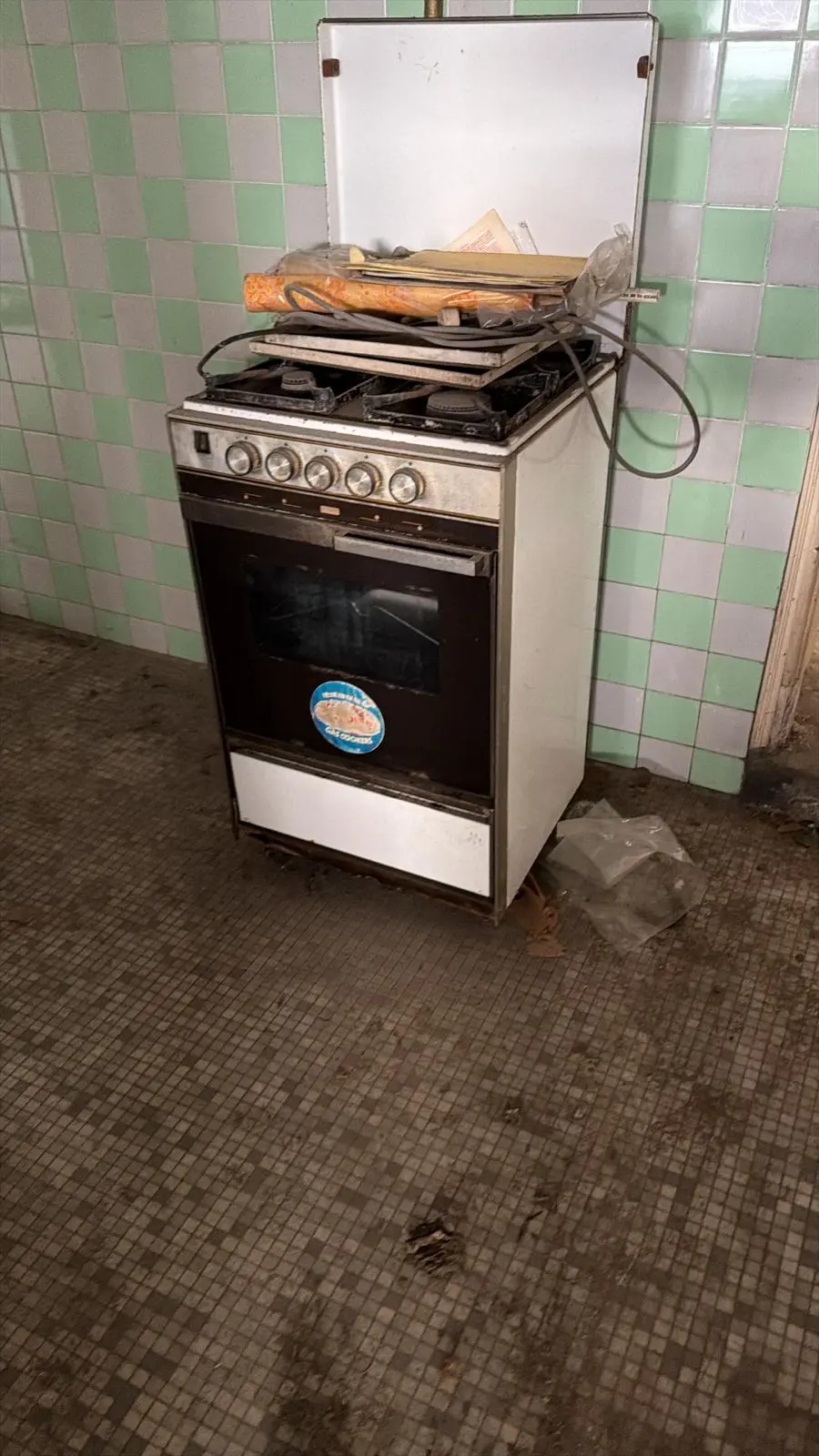
Gas-connected equipment — combination ovens, gas ranges, wok burners, deep fryers. A licensed gas service worker (LSW) must disconnect and cap the gas supply. This isn't optional. It's a safety requirement, and no responsible removal crew will manhandle a unit that's still live on the gas line.
Hardwired electrical equipment — blast chillers, walk-in freezers, exhaust hoods with integrated motors. If it's hardwired (not just plugged into a socket), a licensed electrician needs to isolate and disconnect.
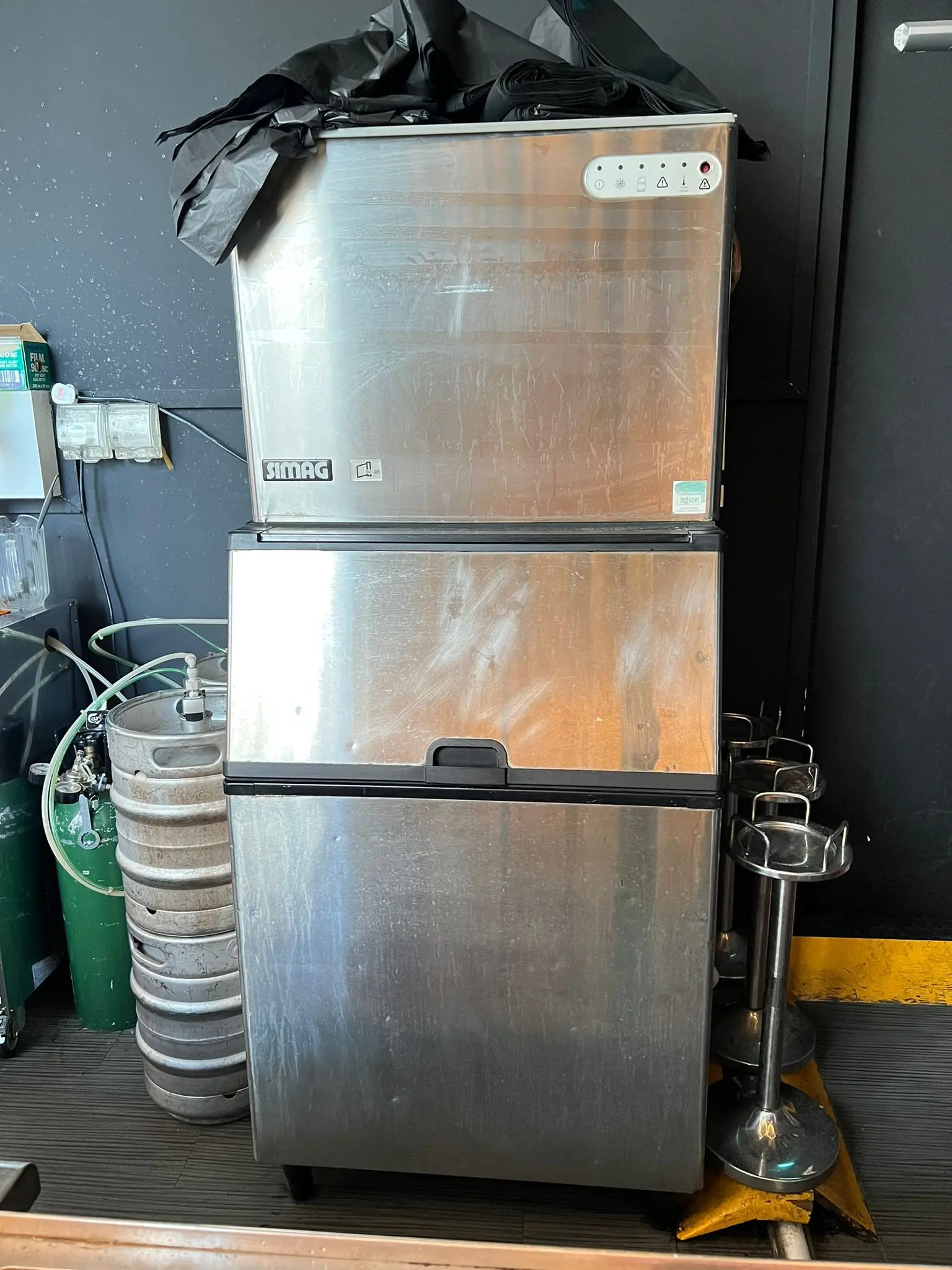
Water lines — commercial dishwashers, ice machines, steam ovens. Shut-off valves need closing and lines need capping to prevent flooding once the unit is pulled away from the wall.
We don't perform these disconnections. That's tradesperson territory. But in our experience, the most common delay on F&B clearance jobs is the operator forgetting to schedule the LSW or electrician ahead of our arrival. Book them first. Then book us.
The Weight Challenge: Why Normal Waste Channels Don't Work
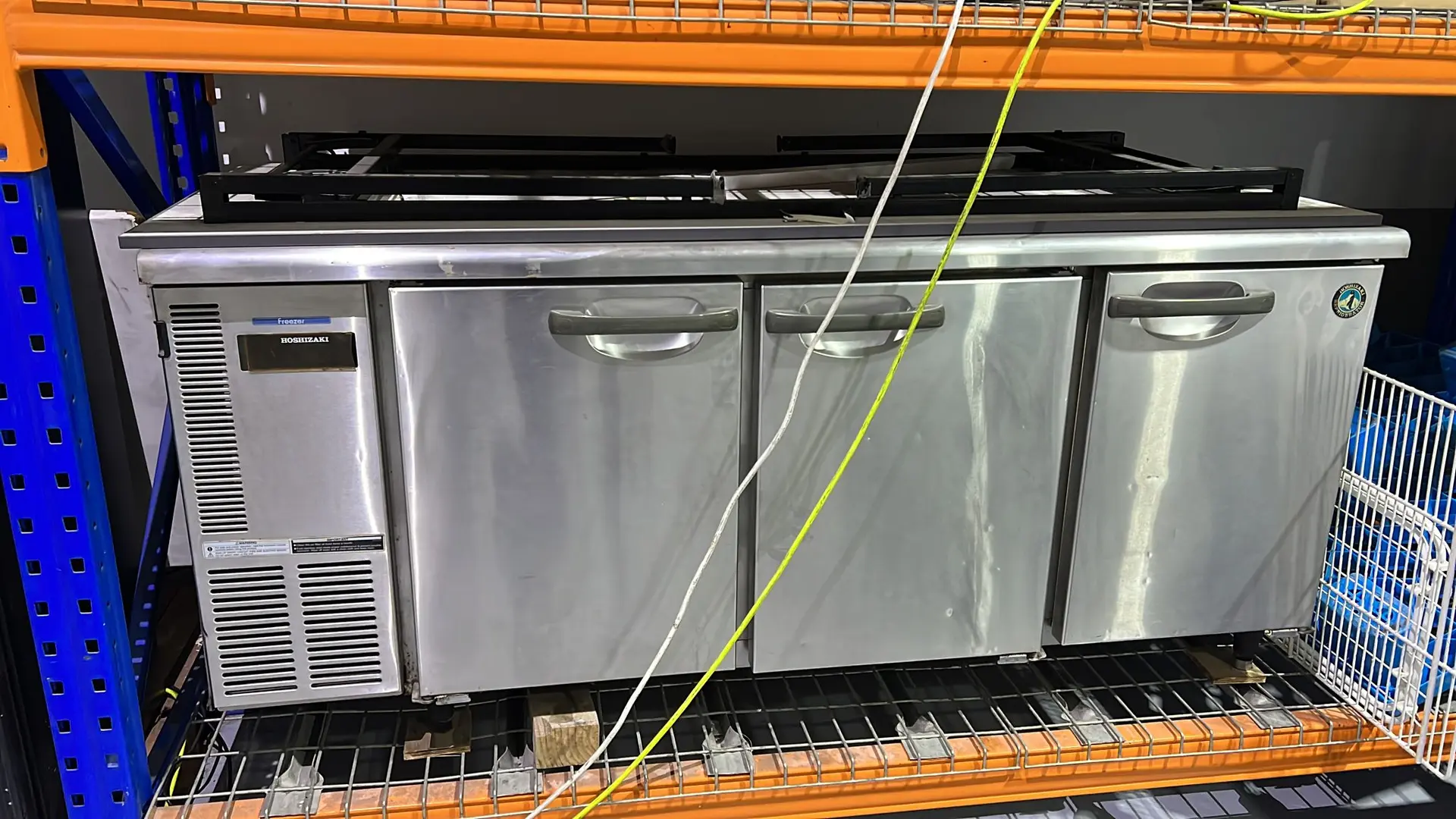
A residential fridge weighs 60–80kg. A commercial upright fridge? 150–250kg. A combination oven on its stainless steel stand? Easily 180kg. A deck pizza oven? Some models push past 400kg.
Town councils won't touch these. Their bulky-item collection service is designed for household furniture — and even then, you're required to dismantle items yourself before they'll collect. A 200kg commercial oven doesn't fit that model. Literally or logistically.
What's actually involved in removing this equipment:
- Crew sizing. A standard two-person team won't safely shift a walk-in chiller compressor unit. Heavier kitchen jobs typically require 3–4 personnel with proper lifting technique and equipment.
- Vehicle capacity. These items don't fit in a van. Lorry or larger truck access is essential, and that means coordinating with loading bay availability if you're in a commercial building or shopping mall.
- Grease and contamination. Years of cooking residue makes surfaces slippery and floors treacherous. The area around exhaust hoods, deep fryers, and wok stations is often coated in carbonised grease that makes footing dangerous during heavy lifts.
Building Access: The Logistics Layer Most Operators Forget
If your restaurant is in a shopping mall, mixed-use development, or commercial building — and most are — there's an access layer between "we want this gone" and "it's on the truck."
Service lift booking. Commercial buildings allocate service lift slots. These are finite windows — often 2–3 hours — and they book out fast, especially at month-end when multiple tenants are moving or renovating simultaneously. The building management controls these slots. You, the tenant, must request and confirm the booking directly with your building management. We cannot do this on your behalf.
Loading bay access. Same principle. Your management office assigns loading bay time. If you miss your window, the job gets pushed — potentially by days if the next available slot is taken.
Floor protection and lift padding. Some MCSTs require lift padding for heavy-item moves. Where this is required, the building management provides and installs it — again, arranged by you as the tenant. Confirm this requirement early so there are no surprises on removal day.
For HDB-based commercial kitchens (central kitchens operating from ground-floor HDB units, for example), the logistics shift. No service lift exists. Access is via standard passenger lifts or ground-floor roller shutters. Narrower corridors. Tighter turning radii. These constraints affect how equipment gets manoeuvred out and may require partial disassembly on-site.
Common Mistakes We've Seen Over 10+ Years
Leaving the grease trap full. Grease traps need to be pumped and cleaned by a specialist waste contractor before kitchen clearance. We remove equipment — not liquid waste or biological sludge. If the trap hasn't been serviced, it delays everything.
Assuming the reinstatement contractor handles disposal. Many don't. Reinstatement contractors demolish and rebuild. They'll hack out the exhaust ducting and tile the walls. But the actual equipment — the ovens, fridges, prep tables — often isn't their scope. Confirm this explicitly in your reinstatement contract. We've arrived at jobs where the operator assumed the contractor would handle it, only to find everything still sitting there two days before handback.
Not photographing equipment for quoting. Commercial kitchen items vary enormously. A countertop salamander is a different job from a floor-standing convection oven. Send us photos — angles showing the size, the connections, and the access path from the unit to the nearest exit. This gets you an accurate quote fast.
Forgetting about the exhaust hood. It's bolted to the ceiling. It's full of grease. It's heavy. And it's often the last thing operators think about because it doesn't look like "equipment" — it looks like part of the building. Clarify with your landlord whether hood removal is your responsibility or part of reinstatement works.
FAQ
Can I just leave the equipment for the next tenant? Only if your landlord and the incoming tenant have agreed in writing. Otherwise, it's your responsibility to clear before handback. "The next tenant might want it" is not a disposal strategy — it's a gamble that usually costs you penalty days.
Do you take equipment that still works? Yes. Functional or non-functional, we handle both. Where items are in reusable condition, we route them through appropriate second-hand channels rather than sending everything straight to disposal. But this is a removal service — we don't purchase equipment from you.
What about after-hours removal? My mall only allows moves between 11pm and 7am. We operate 24 hours on weekdays and Saturdays, subject to availability and prior booking. After-hours jobs and Sunday/public holiday requests carry surcharges — we'll confirm the exact figure at quote stage. The key is giving us enough notice to slot your job into the right window.
Get Your Kitchen Cleared
Once your LSW and electrician have done their part, our commercial kitchen equipment disposal service handles the heavy, greasy lift-out. Send us photos of the equipment, the access path, and your deadline. We'll quote you within the day.
WhatsApp us at 9730 4047 — include the number of items, your building type, and your target clearance date. We'll handle the rest.