Lease Reinstatement Disposal in Singapore: What Your Contractor Won't Clear
By Junk Express Team
Your Reinstatement Contractor Won't Touch the Filing Cabinets
Here's a scenario we see every month: a commercial tenant gets their reinstatement notice, engages a hacking contractor, and assumes everything will be handled. Then the contractor shows up, looks at the 40 filing cabinets, the reception desk, the server rack, the pantry fridge, and says: "That's not in our scope."
For deadline-driven commercial work — handover day, decommissioning, F&B closure — commercial pickup flow prioritises the slot over everything else.
Suddenly you're two weeks from lease expiry with a floor full of furniture and no plan to move it.
In our 10+ years clearing Singapore offices through reinstatement cycles, this misunderstanding costs tenants time, money, and sometimes their deposit. Let's untangle what's actually your disposal crew's job versus your reinstatement contractor's job — and why sequencing matters more than most tenants realise.
Why This Catches Tenants Off Guard
Your tenancy agreement's reinstatement clause typically requires you to return the premises to its original condition. That means hacking out partitions, removing false ceilings, repainting, rewiring — structural restoration work.
But here's what the clause also implies without spelling out: everything you brought in must leave first. Furniture. Fixtures. Equipment. Signage. Pantry appliances. IT infrastructure. None of that is your reinstatement contractor's problem.
The contractor hacks walls. They don't haul your 200kg L-shaped executive desk into a goods lift.
And the debris generated by hacking — broken drywall, ceiling tiles, metal studs, ducting — that's a second disposal event entirely. Some reinstatement contractors include debris removal in their quote. Many don't. Read the fine print.
The Two-Phase Disposal Sequence
Think of reinstatement disposal as two distinct jobs with different timing:
Phase 1: Pre-Hacking Clearance
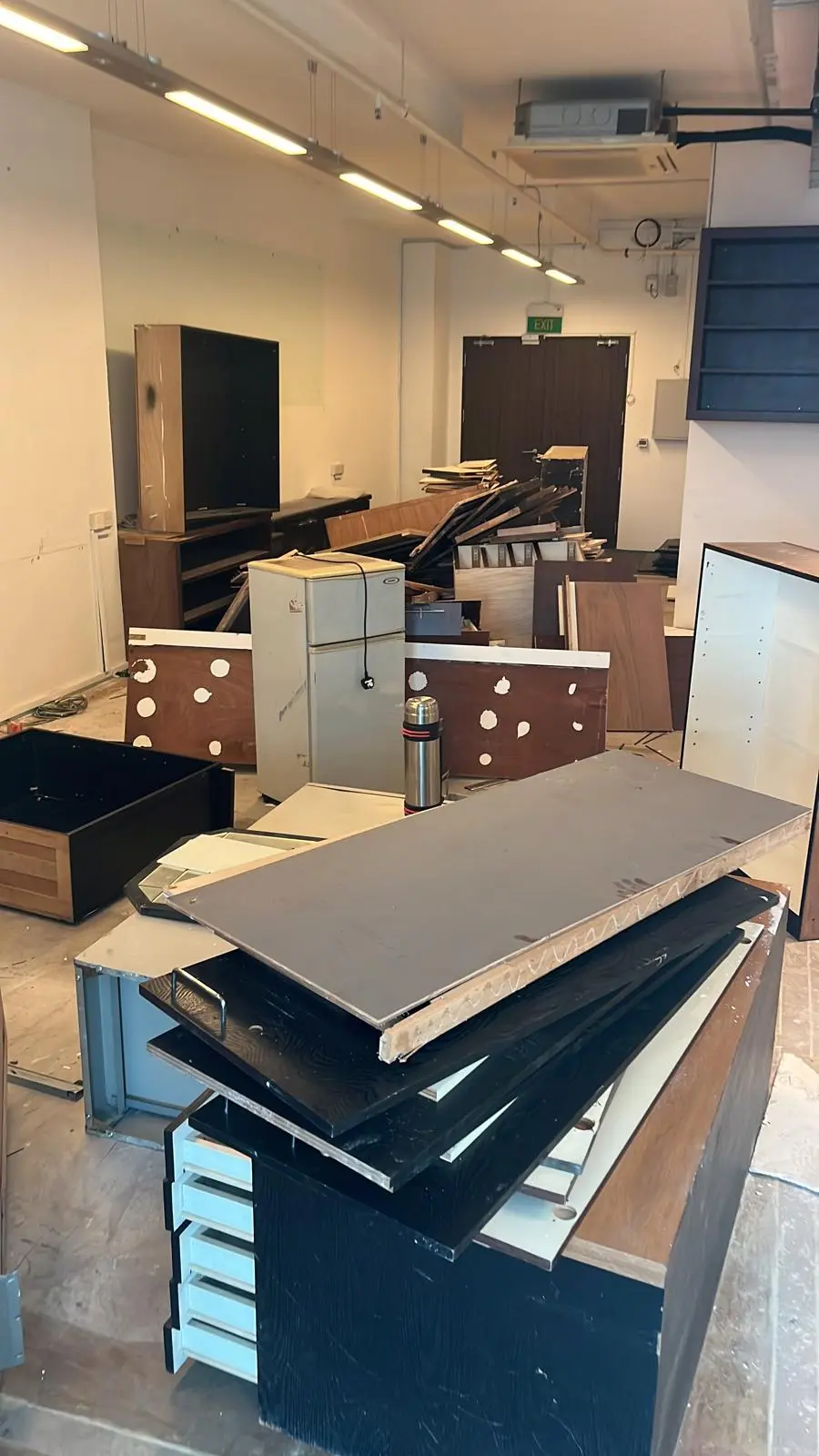
Before your reinstatement contractor can start demolition, the space needs to be empty of moveable items. This is the "strip-out" phase:
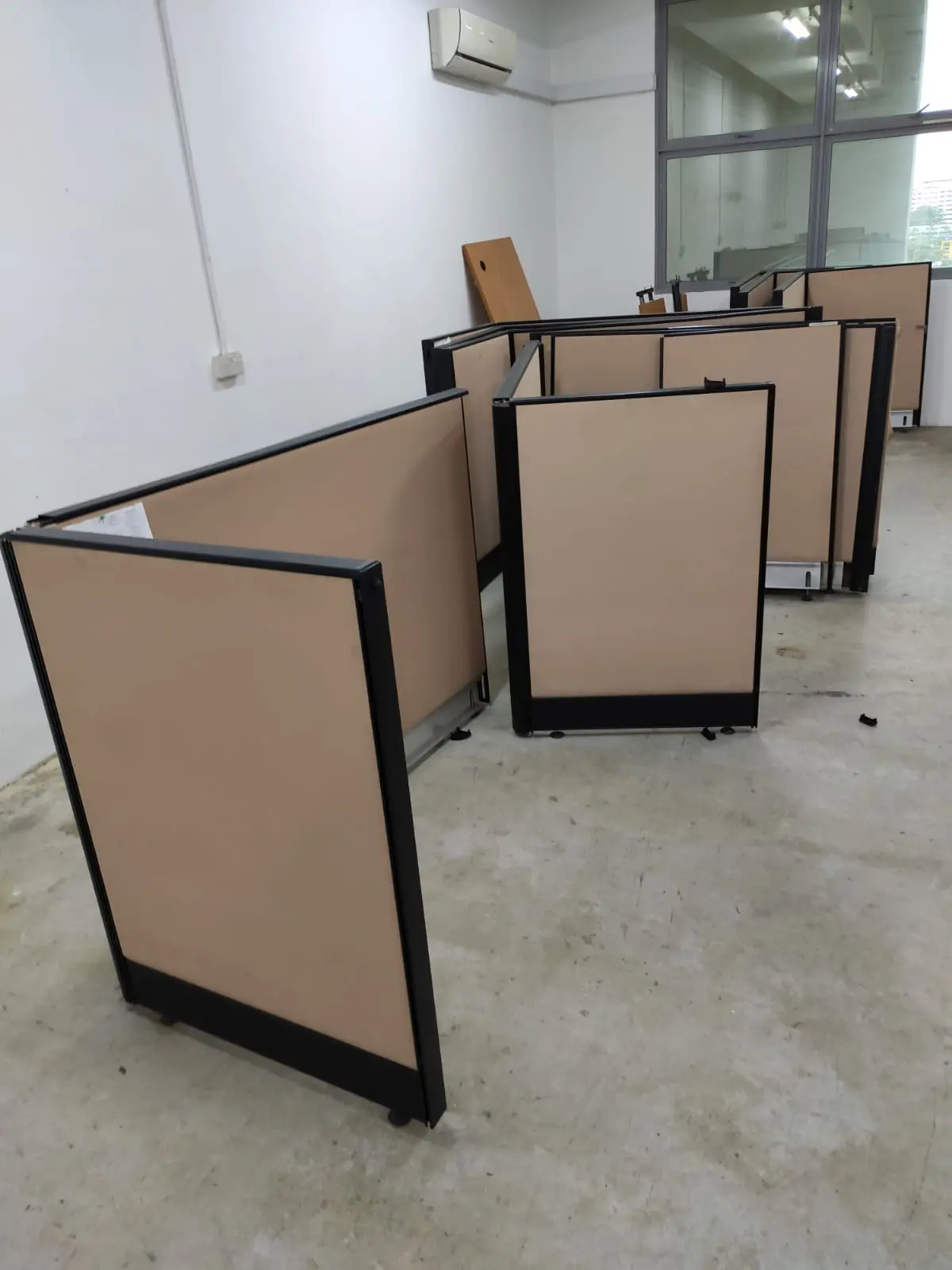
- Office furniture — desks, chairs, filing cabinets, shelving units, reception counters
- IT equipment — servers, monitors, printers, network switches, cabling
- Pantry and amenity items — fridges, microwaves, water dispensers, coffee machines
- Soft furnishings — carpets (if tenant-installed), blinds, curtains, acoustic panels
- Fixtures you installed — display units, custom cabinetry, signage
This phase must happen before the contractor mobilises. If your furniture is still on the floor when the hacking crew arrives, they'll either refuse to start or charge you waiting time. We've seen both.
Phase 2: Post-Hacking Debris Removal
Once walls come down and ceilings get stripped, you're left with construction debris: concrete chunks, plasterboard, ceiling grid frames, metal ducting, electrical conduit, broken tiles. This is heavy, bulky, and often sharp.
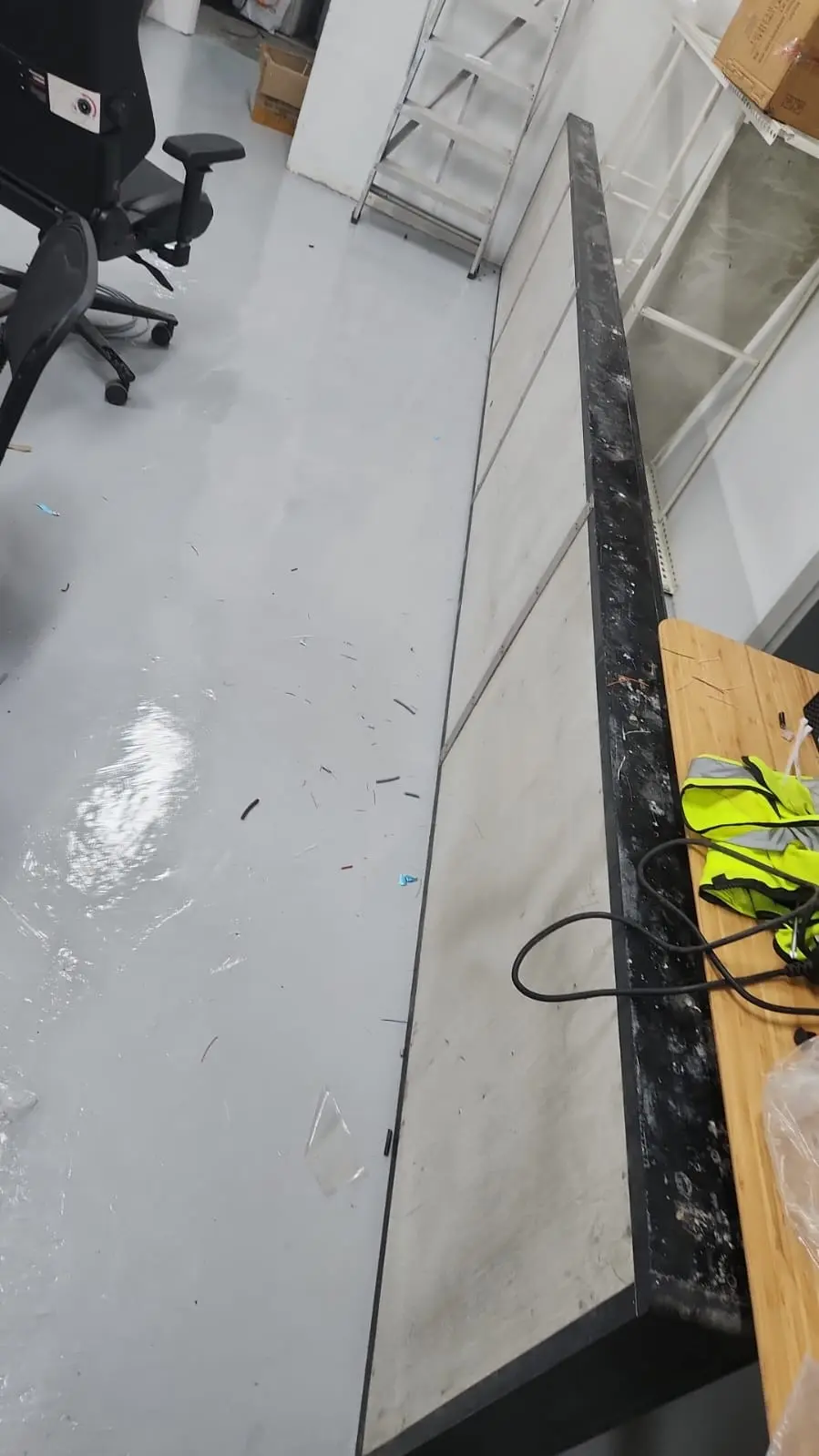
Some reinstatement contractors bundle debris disposal into their package. Others don't — they'll stack it neatly and walk away. Confirm this before signing your reinstatement contract. If debris removal isn't included, that's where a disposal crew comes in for the second pass.
Building Access: The Part Nobody Plans For
Here's where commercial tenants lose days they can't afford.
Most office buildings in Singapore — especially CBD towers and business parks — have strict goods-lift booking requirements. You can't just show up with a crew and start loading. The building management controls:
- Goods lift time slots (often 2–4 hour windows, sometimes only before 8am or after 6pm)
- Loading bay access (first-come or pre-booked, sometimes shared with other tenants moving simultaneously)
- Lift padding requirements (many MCSTs mandate protective padding in the goods lift during moves — this is arranged between you and your building management)
- Vehicle size restrictions at the loading dock
Critical point: You, the tenant, must arrange all building approvals and lift bookings with your management office. We cannot do this on your behalf — every building has different protocols, different forms, different lead times. Some need 48 hours' notice. Some need a week. Start this conversation early.
For jobs requiring after-hours access — common in buildings that restrict daytime goods-lift use — surcharges may apply. We confirm this at the quoting stage so there are no surprises.
Common Mistakes From 10+ Years of Reinstatement Jobs
Leaving it to the last week. Your lease ends on the 30th. Your reinstatement contractor needs 2–3 weeks. Your disposal crew needs a day or two per phase. Work backwards. If you call us on the 25th expecting clearance on the 26th, we'll do our best subject to availability — but it's not ideal, and urgent scheduling may incur additional charges.
Assuming the landlord won't inspect thoroughly. They will. Especially in Grade A buildings. A single abandoned server rack in the comms room or a stack of ceiling tiles left in the corridor can trigger a failed inspection and cost you your reinstatement deposit.
Not separating e-waste. Monitors, CPUs, printers, and networking equipment fall under e-waste regulations. These can't go into the same skip as broken drywall. We route electronic items through proper recycling channels — but we need to know they're part of the job upfront so we plan accordingly.
Forgetting the storeroom. Every office has a forgotten storeroom packed with old marketing collateral, broken chairs, archived documents, and mystery boxes from three tenants ago. It all needs to go.
Mini-FAQ
Q: Can my reinstatement contractor just handle everything — furniture and hacking?
Some do offer an all-in package, but most specialise in construction works, not logistics. Their quote for furniture removal (if they offer it) is often higher than engaging a dedicated disposal crew, because it's not their core operation. Get separate quotes and compare.
Q: What if I'm not sure which items the landlord considers "original condition"?
Check your tenancy agreement's schedule of condition — it should list what was in the unit at handover. Anything not on that list is yours to remove. When in doubt, photograph everything and confirm with your landlord's property manager before disposal day.
Q: Do you handle both Phase 1 and Phase 2, or just furniture?
Both. We clear office furniture, equipment, and fittings in the pre-hacking phase, and we handle construction debris removal post-hacking if your reinstatement contractor doesn't include it. Send us photos of the space via WhatsApp and we'll quote both phases separately so you can plan your timeline.
Don't Let Disposal Derail Your Handover
Reinstatement timelines are tight. Landlords don't extend. Building management doesn't bend their lift-booking rules. Your contractor won't start until the floor is clear. When the deadline is days away, book an urgent office strip-out and we'll prioritise your slot.
The fix is simple: plan disposal as its own workstream, not an afterthought.
Send us photos of your space on WhatsApp — furniture, equipment, debris, all of it. We'll break down what needs to go in Phase 1 versus Phase 2, confirm timing around your contractor's schedule, and give you a clear quote within the day.
WhatsApp us at 9730 4047 — include your unit size, photos, and your lease-end date. We'll work to the tightest window your timeline allows.