Warehouse Clearance Singapore: What 10+ Years of Industrial Cleanouts Have Taught Us
By Junk Express Team
Your lease is ending. The landlord's reinstatement clause says "broom-clean condition." And somewhere between Bay 3 and the mezzanine, there's a decade's worth of broken pallets, obsolete racking, dead stock nobody wants, and that forklift attachment everyone forgot about.
Most commercial deadlines come down to one access window. commercial clearance service confirms inside that window or tells you what's actually feasible — no vague promises.
We've seen this exact scenario play out hundreds of times across Tuas, Jurong Industrial Estate, and private warehouse parks island-wide. The tenants who start early walk away clean. The ones who leave it to the final week? They pay penalty charges that dwarf what the clearance itself would have cost.
Why Warehouse Clearance Can't Wait Until the Last Month
Here's what catches most tenants off guard: the volume is always more than you think.
A single 3,000 sq ft warehouse unit that's been occupied for five years typically generates three to four full truck loads of material. That's racking, pallets (broken and intact), shrink wrap bales, obsolete inventory, office furniture from the admin corner, and miscellaneous equipment that's been "stored temporarily" since 2019.
In our 10+ years clearing Singaporean industrial units, the pattern is consistent. Tenants underestimate volume by 40–60%. They budget one day. They need three.
And the clock is unforgiving. JTC lease handovers have fixed dates. Private landlords have incoming tenants breathing down their neck. Miss the deadline, and you're looking at holdover rent — often at a punitive premium.
What's Typically Left Behind (And What It Takes to Move It)
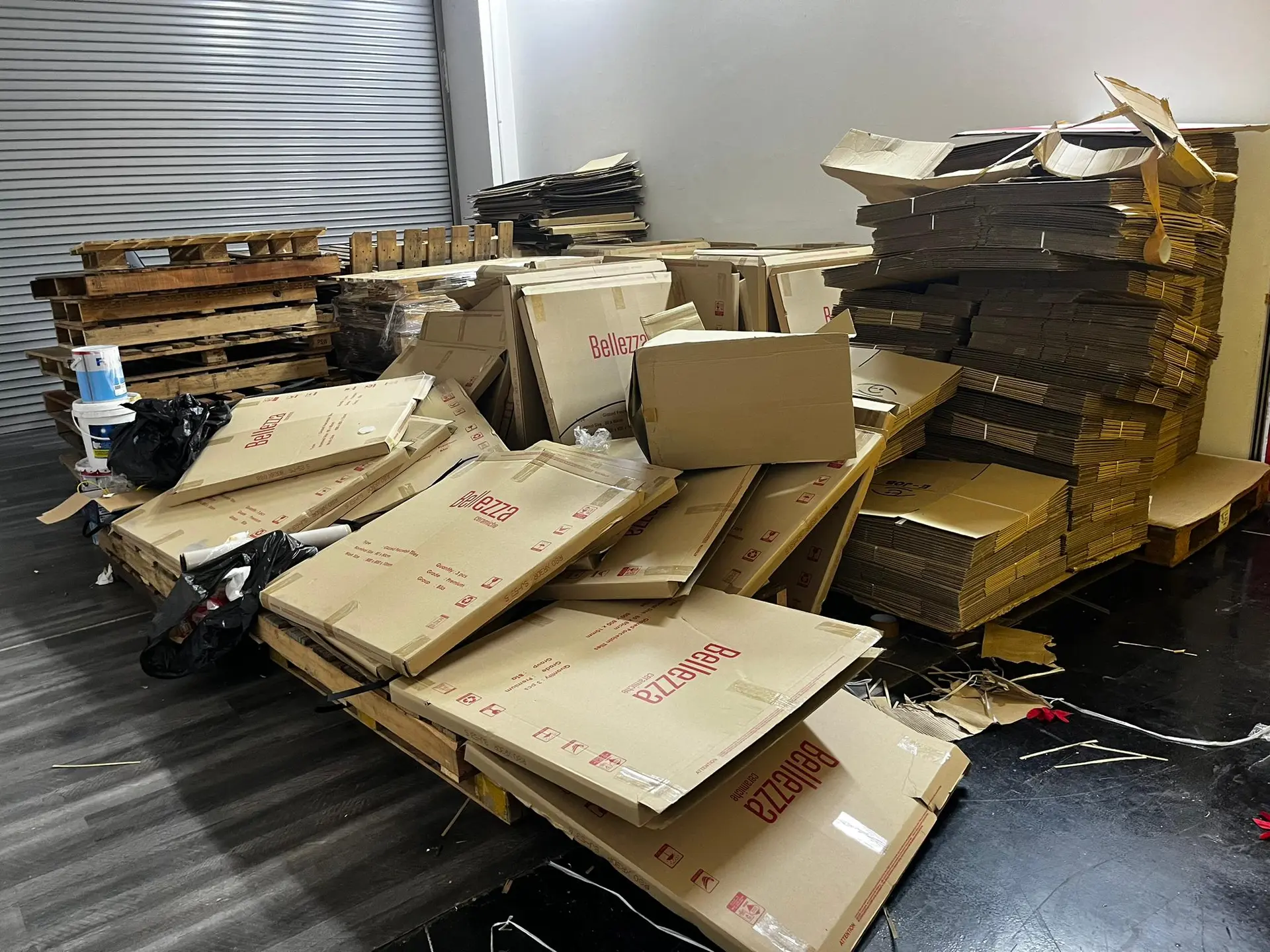
Dead Stock and Broken Pallets
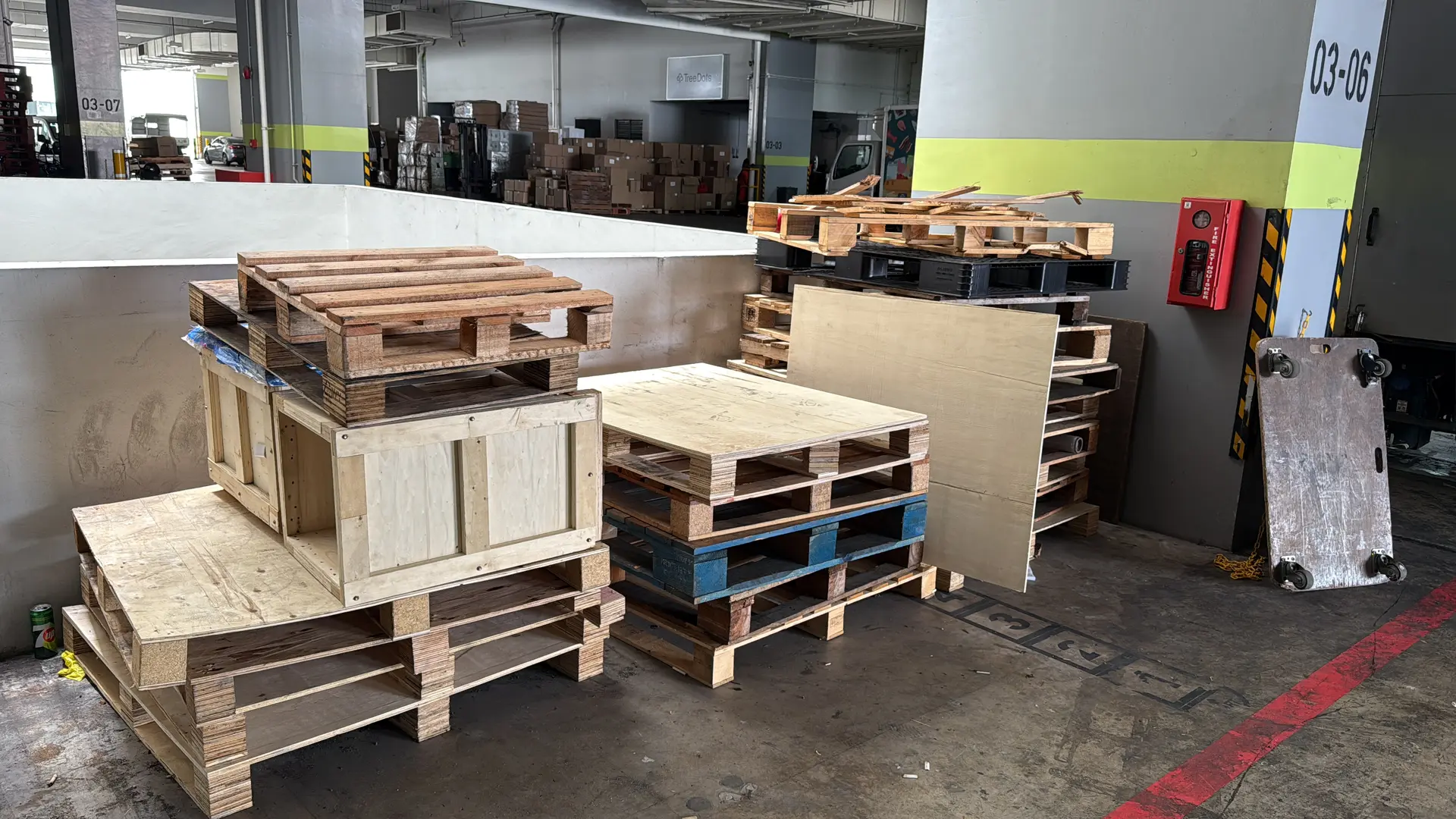
The biggest volume contributor in almost every warehouse clearance. Wooden pallets stack up because nobody wants to pay to dispose of them, and they're not worth enough to sell. Broken ones can't even be reused. We've cleared units in Tuas where the pallet stack alone filled an entire 14-foot lorry.
Dead stock — expired product, unsellable inventory, sample runs that never went to market — adds weight. Cartons of product are deceptively heavy. A pallet of bottled liquids or canned goods? That's 800kg you need equipment to shift.
Racking Systems and Metal Fixtures
Bolt-together pallet racking looks straightforward to dismantle. It isn't. A standard four-tier bay takes two workers 20–30 minutes to break down safely, and that's with the right tools. A 20-bay warehouse? That's a full day of dismantling before anything goes on a truck.
We bring the crew and tools to handle this. Ratchet spanners, impact drivers, and the experience to know which bolts are load-bearing and which sequence prevents the frame from toppling.
Office Corners and Mezzanine Levels
Almost every warehouse has a small office section — filing cabinets, desks, a printer that stopped working in 2021. Mezzanine levels accumulate the things nobody wanted to carry back down: old monitors, archived paperwork, broken chairs.
Access Considerations for Industrial Estates
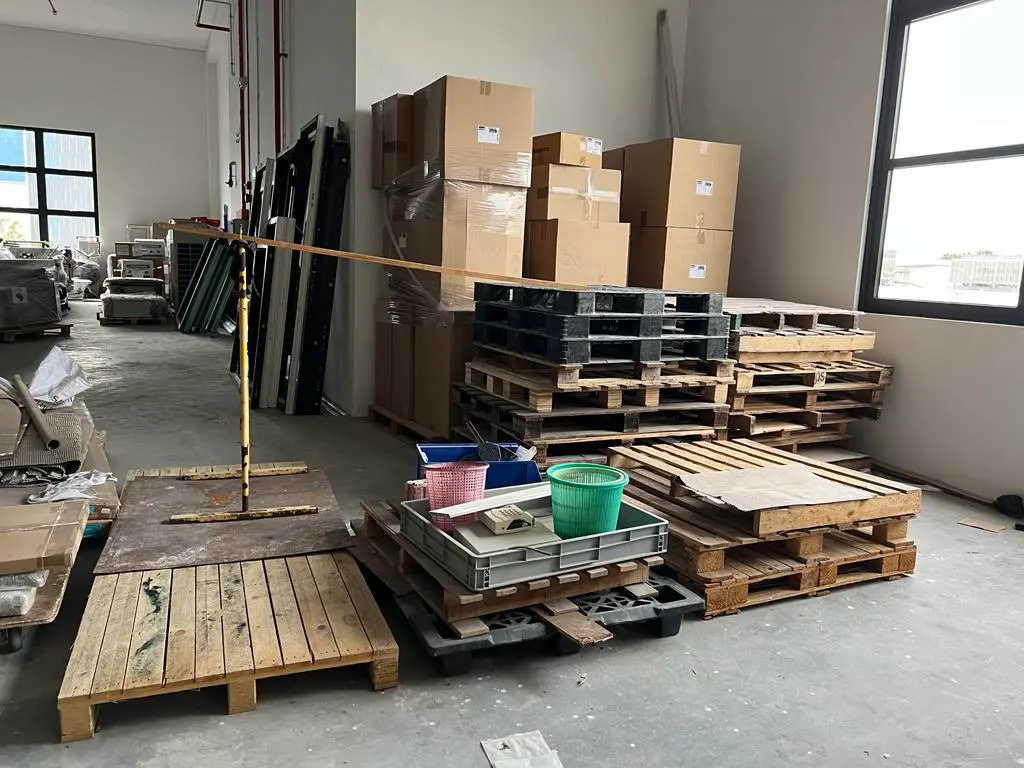
This is where warehouse clearance differs fundamentally from residential or office work. Industrial estates have their own logistics layer.
Security and Gate Access
Most JTC estates and private industrial parks require vehicle registration at the security post. Some need 24-hour advance notice for non-tenant vehicles. This is the tenant's responsibility to arrange — we need the gate pass or security clearance sorted before our trucks arrive. Nothing burns time like a crew waiting at the guardhouse.
Weighbridge Requirements
Certain estates — particularly those near Tuas South — operate weighbridges for outgoing loaded vehicles. This affects scheduling. Weighbridge operating hours don't always align with after-hours clearance windows. Know your estate's rules before booking a night job.
Loading Bay Access and Dock Heights
Standard dock height in Singapore industrial units is 1.2m–1.4m. Our lorries match this. But if your unit has a ground-level roller shutter with no dock, we work with ramps. If the ramp is steep or unusually long, surcharges may apply — confirmed at quote stage.
Operating Hours and Noise Restrictions
Some estates enforce noise curfews after 7pm or restrict heavy vehicle movement on weekends. Tuas is generally more permissive than mixed-use industrial parks closer to residential areas. We work within whatever window your estate allows.
Common Mistakes From 10+ Years of Industrial Clearouts
Mistake #1: Assuming the landlord will handle it. They won't. Reinstatement clauses put the obligation squarely on the outgoing tenant. We've had clients call us in a panic three days before handover because they assumed "someone" would deal with it.
Mistake #2: Underestimating dismantling time. Racking, mezzanine structures, partition walls — these don't just lift out. They need systematic breakdown. Budget time for this, or budget for a crew that does it professionally.
Mistake #3: Mixing hazardous items in with general waste. We handle paints and solvents, but chemicals, loose batteries, and gas cylinders are items we cannot take. If your warehouse stored anything hazardous, identify and segregate those items early. They need specialist disposal channels.
Mistake #4: Leaving it to one massive push. A single-day blitz sounds efficient. In practice, it creates bottlenecks — trucks queuing, crew fatigue, items missed in dark corners. Phased clearance over two to three sessions is faster overall and reduces the risk of damage to the unit.
Mistake #5: Not photographing the cleared space. After handover, disputes about "items left behind" or "damage to flooring" are common. Document everything. We clear it. You photograph it. Clean handover, no arguments.
Mini-FAQ
How many trucks does a typical warehouse clearance need? It depends entirely on unit size and accumulation. A 2,000 sq ft unit with moderate clutter might need two lorry loads. A 10,000 sq ft unit packed to the rafters could require six or more trips with larger trucks. Send us photos via WhatsApp and we'll give you an accurate estimate.
How far in advance should I book? For warehouse-scale jobs, we recommend at least one to two weeks' lead time. This allows us to schedule the right vehicle size, crew numbers, and coordinate with your estate's access requirements. Last-minute jobs are possible subject to availability, and additional charges may apply.
Do you handle the racking dismantling or just the removal? Both. We dismantle bolt-together racking, break down mezzanine fixtures, and remove everything from site. If your racking is welded rather than bolted, let us know upfront — it changes the tooling and time estimate.
Ready to Clear Your Warehouse?
Every day you delay is another day closer to penalty charges. Our warehouse clearance service handles the racking dismantling, the dead stock, and the JTC handover logistics end to end. Send us photos of what needs to go — the racking, the pallets, the dead stock, all of it — and we'll come back with a clear scope and crew plan.
No obligation. No guesswork. Just a straight answer on what it takes.
WhatsApp us at 9730 4047 for a free photo-based quote. The sooner you start, the cleaner your handover.