Warehouse Clearance Singapore
Your lease is ending. The unit needs to go back broom-clean. And right now the floor is still stacked with pallets, dead stock nobody's buying, racking you bolted down three years ago, and enough shrink-wrap and cardboard banding to fill a lorry on its own.
In our 10+ years handling commercial clear-outs across Singapore's industrial estates — from JTC units in Tuas to multi-storey warehouses in Jurong — we know the real pressure point isn't the junk itself. It's the deadline. Everything has to be gone by a fixed date, and the building's operating hours and loading-bay access dictate how fast the job can move.
Send Us the Full Picture on WhatsApp
Before we quote, we need:
- Wide-angle photos of the warehouse floor (every aisle, every bay)
- The unit address and your hand-back date
- Loading-bay access rules — lorry size limits, dock leveller availability, forklift access
- Building operating hours and any after-hours restrictions
WhatsApp these to 9730 4047 and we'll come back with a clearance plan and quote.
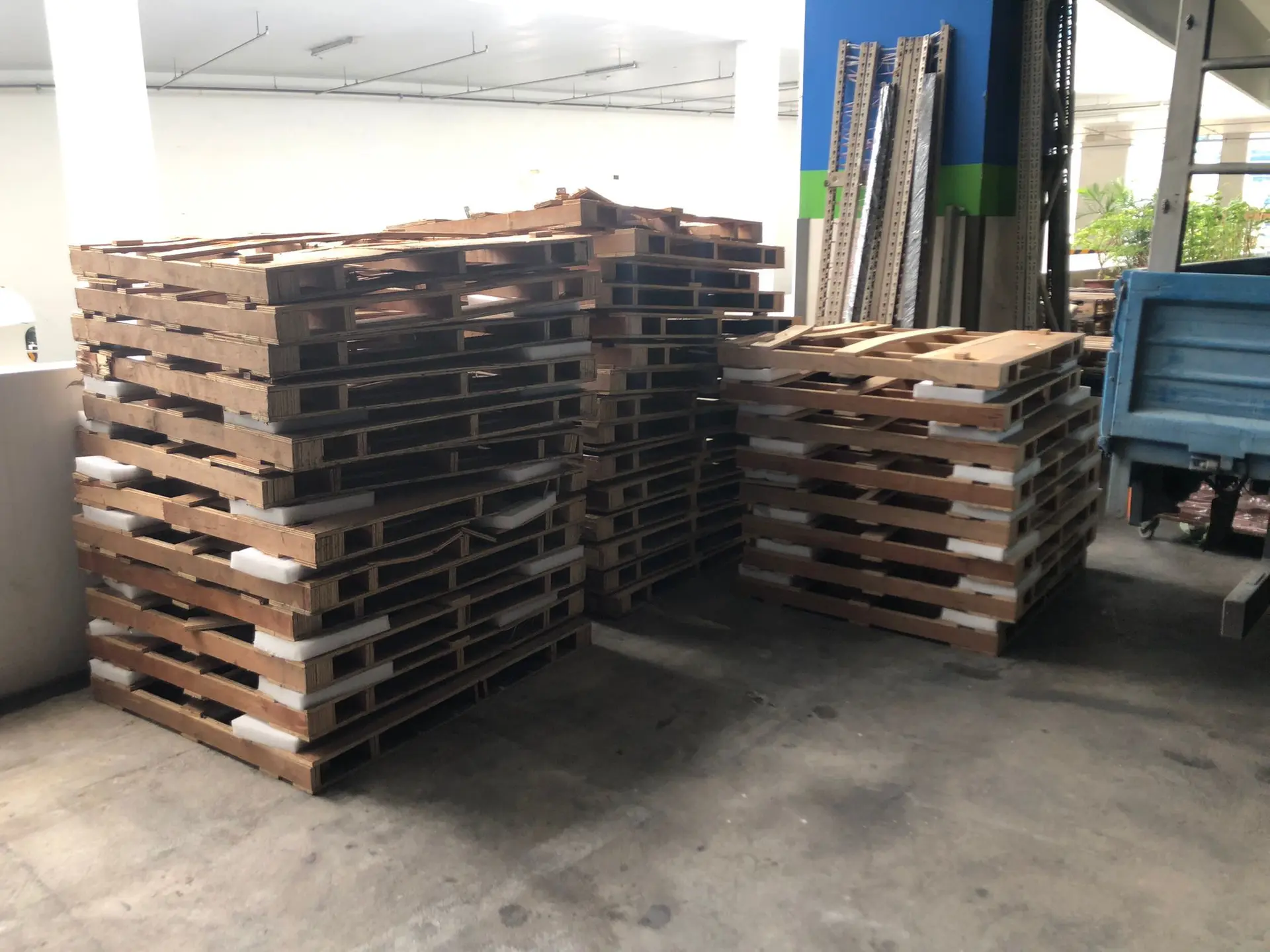
What We Clear From Warehouse Units
A typical end-of-lease warehouse clearance includes some combination of:
- Wooden and plastic pallets (broken, non-returnable, or simply surplus)
- Obsolete or damaged stock that's been written off
- Steel shelving and bolt-together racking systems
- Wooden crates, stillages, and shipping containers
- Cardboard, banding, shrink-wrap, and general packaging waste
- Office furniture from the mezzanine or site office upstairs
- Loose fittings, signage, and anything else that wasn't part of the original fit-out
We dismantle racking on-site where needed. You don't have to break it down first.
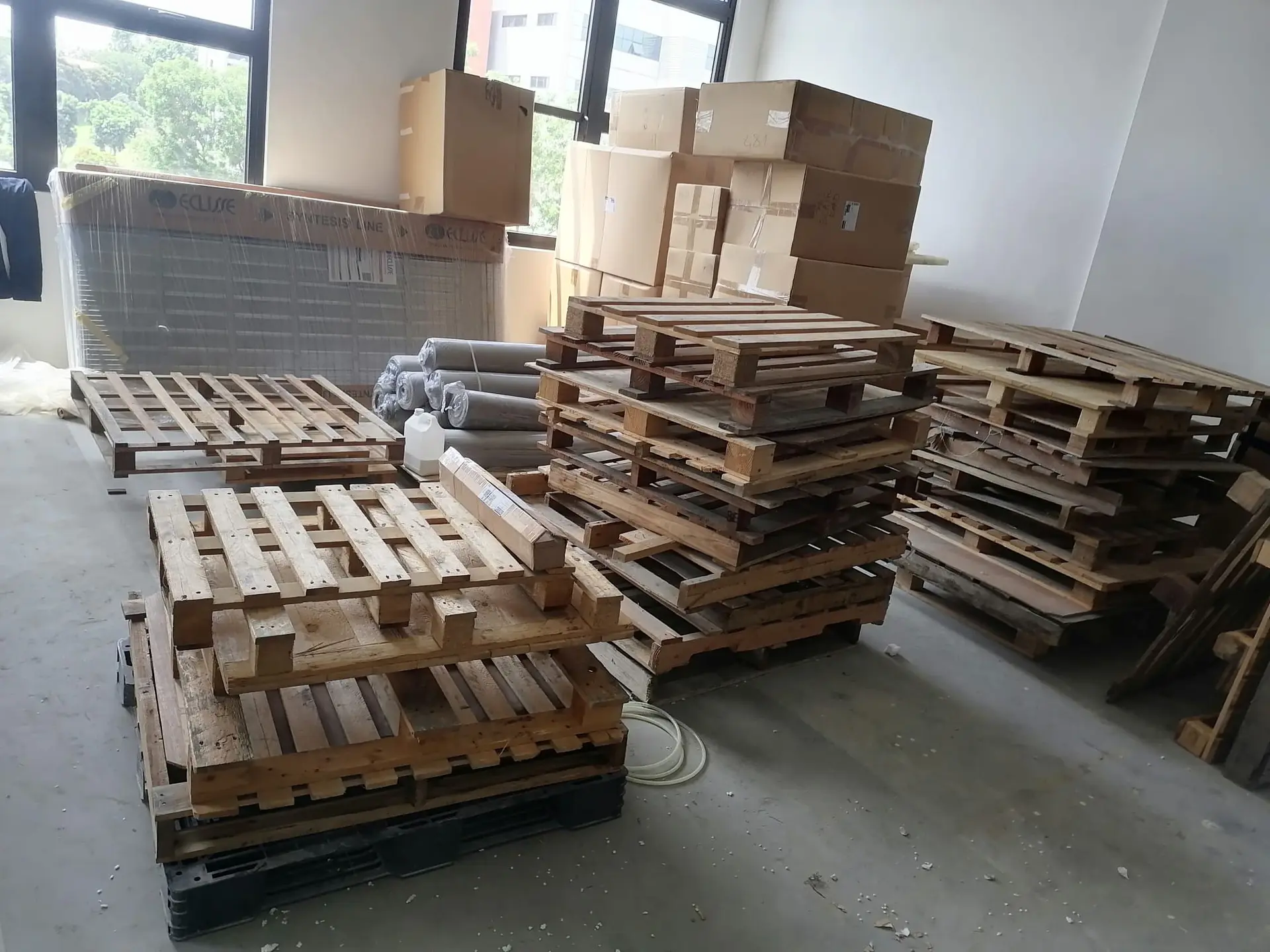
Access and Volume Drive the Plan
Warehouse clearance isn't a single-trip job if you've got 40 pallets, a wall of dead stock, and racking bolted across 300 square metres. The logistics hinge on three things:
Loading-bay capacity. Can we back a 14-foot lorry to the dock, or do we need a 24-footer? Is there a dock leveller or are we working ground-level with a tail-lift? These details shape crew size and vehicle selection.
Operating hours. Most industrial buildings restrict heavy vehicle movement to specific windows. If your building management only allows lorry access between 9am and 5pm on weekdays, we schedule trips within that window. After-hours work is possible where the building permits it, though surcharges apply.
Staging space. If we can stage material near the loading bay while the lorry cycles, the job moves faster. A clear path from the deepest aisle to the dock matters more than most people realise.
Large lots run across multiple trips or across a couple of scheduled windows — all mapped against your hand-back deadline. The tenant arranges site access and any permissions with building management ahead of our arrival.
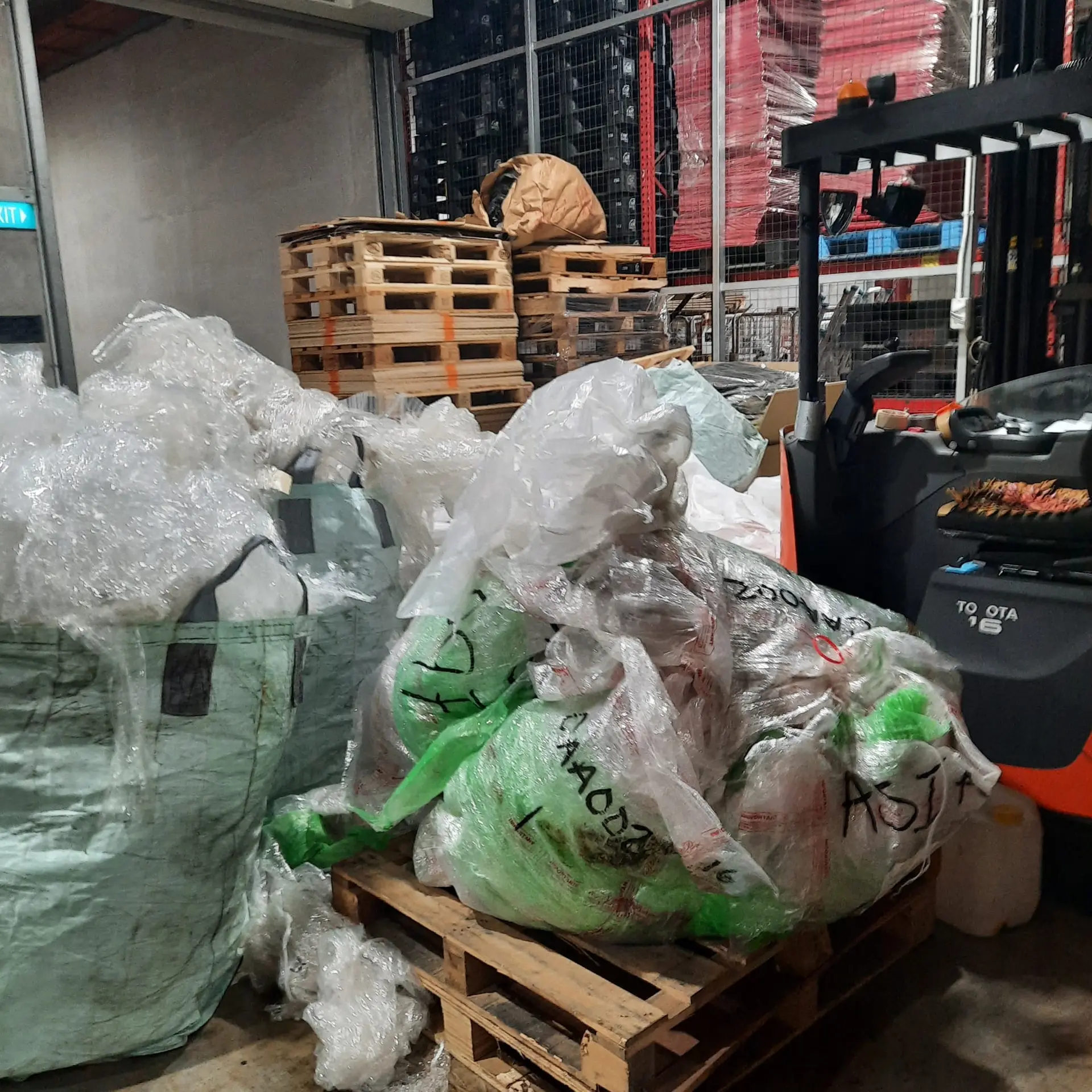
Recycling and Routing
Clean cardboard goes to paper recyclers. Timber pallets in recoverable condition get routed to secondary markets. Scrap metal from racking and shelving goes through metal recycling channels. Mixed or contaminated waste is passed to licensed intermediaries for further sorting before final disposal.
We won't divert everything — some material is genuinely end-of-life — but where the lot allows separation, we keep recyclable streams out of the general waste path.
FAQ
Can you handle a high-volume single-day clear? Depending on the volume, yes — but it requires early coordination. Large floors may need multiple lorry trips within a single operating window, which means crew and vehicle availability confirmed well in advance. Surcharges may apply for compressed timelines. WhatsApp us the photos and deadline and we'll confirm feasibility.
Do you take racking and pallets? Both. Steel racking gets dismantled on-site by our crew and loaded for disposal or recycling. Wooden and plastic pallets of any condition — broken, warped, non-standard sizes — all go. We do not pay for pallets or stock collected; this is a disposal service.
How do you schedule around our operating hours? You tell us the building's permitted lorry-access windows and any restrictions (no weekend access, no movement after 6pm, etc.). We build the clearance schedule around those constraints, splitting the job across as many sessions as needed to meet your hand-back date.
Get Your Clearance Plan
WhatsApp your floor photos, the unit address, hand-back deadline, and loading-bay details to 9730 4047. We'll respond with a clearance plan, trip estimate, and quote.