Washing Machine Disposal in Singapore: Prep Steps Before We Arrive
By Junk Express Team
Your New Washing Machine Arrives Tomorrow. The Old One Weighs 80kg and It's Going Nowhere.
Here's the scenario we hear three or four times a week. You've ordered a new front-loader from Courts or Harvey Norman. The delivery is confirmed for Saturday morning. You assume the delivery crew will haul the old unit away.
If your handover is this week and the office still has furniture in it, commercial team is what you want — share access window and we'll commit to a finish time.
They won't.
Most appliance retailers in Singapore will deliver and install your new machine — but taking the old one is either not offered or costs extra with a long wait. Meanwhile, you've got a 60–90kg dead weight wedged between your kitchen cabinet and a stack of laundry baskets, still connected to the water supply.
In our 10+ years clearing appliances from HDB flats, condos, and landed homes across Singapore, we've seen every variation of this problem. This post walks you through exactly how to prepare your old washing machine for removal — so when our crew arrives, the job is fast, clean, and done.
Why the Delivery Team Won't Take Your Old Washer
It's not laziness. Delivery crews are contracted for installation, not disposal. Their trucks are loaded with new stock, not rigged for waste transport. Some retailers offer a "trade-in" or removal add-on, but it's typically scheduled weeks out — not same-day.
That leaves you with a few options:
- Town council bulky-item collection — free, but you need to dismantle the unit yourself, schedule it on the designated collection day, and haul it to the pickup point. For a washing machine that weighs as much as an adult, that's a non-starter for most people.
- A professional removal service — we come to your laundry area, disconnect nothing (you handle that beforehand), carry it out, and route it through proper recycling channels.
The gap between "new machine arriving at 10am" and "old machine still sitting there at 10am" is where we come in.
Preparing Your Washing Machine: Step by Step
1. Shut Off the Water Supply and Disconnect Hoses
This is the single most important step. Find the tap behind or beside the machine — usually a quarter-turn ball valve. Close it fully. Then:
- Disconnect the inlet hose from the tap. Have a towel ready; residual water will drip.
- Pull the drain hose out of the standpipe or floor trap. Again, expect a small amount of water.
- Run a short spin cycle (if the machine still powers on) to flush remaining water from the drum and pump.
If the machine is completely dead and won't spin, tip it slightly backward over a towel to drain what's pooled inside. Sixty millilitres of stagnant water in a hallway is nobody's idea of a good time.
2. Empty the Drum and Clean Out the Filter
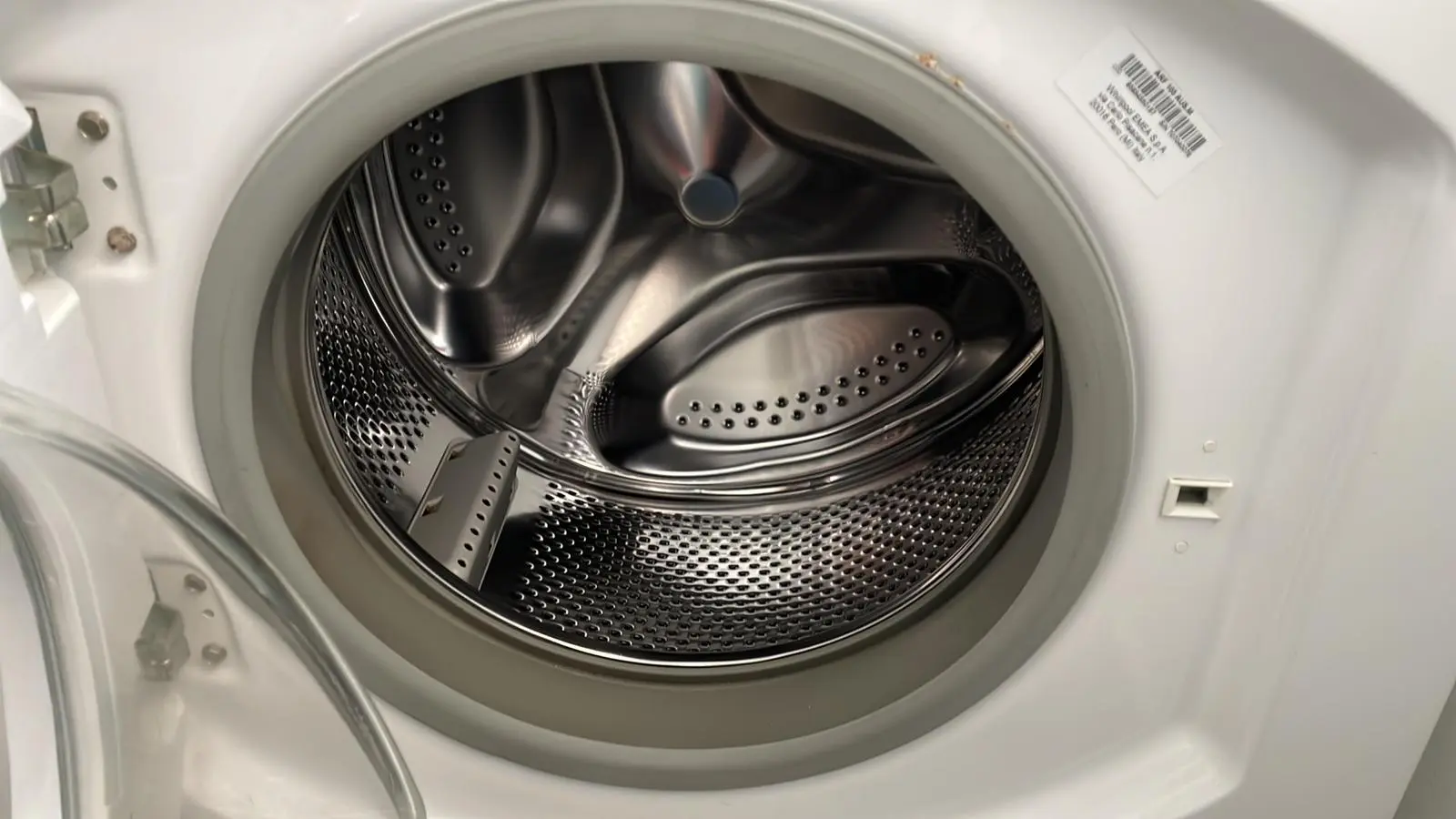
Open the door. Remove any forgotten socks. (We've found everything from passports to cash in old drums — check yours.)
Most front-loaders have a pump filter at the bottom-front behind a small panel. Open it over a shallow tray. Let the water drain. This prevents leaking during transport down your corridor.
3. Clear the Path from Laundry Area to Front Door
This is where Singapore homes make things interesting. Your washing machine lives in one of these spots:
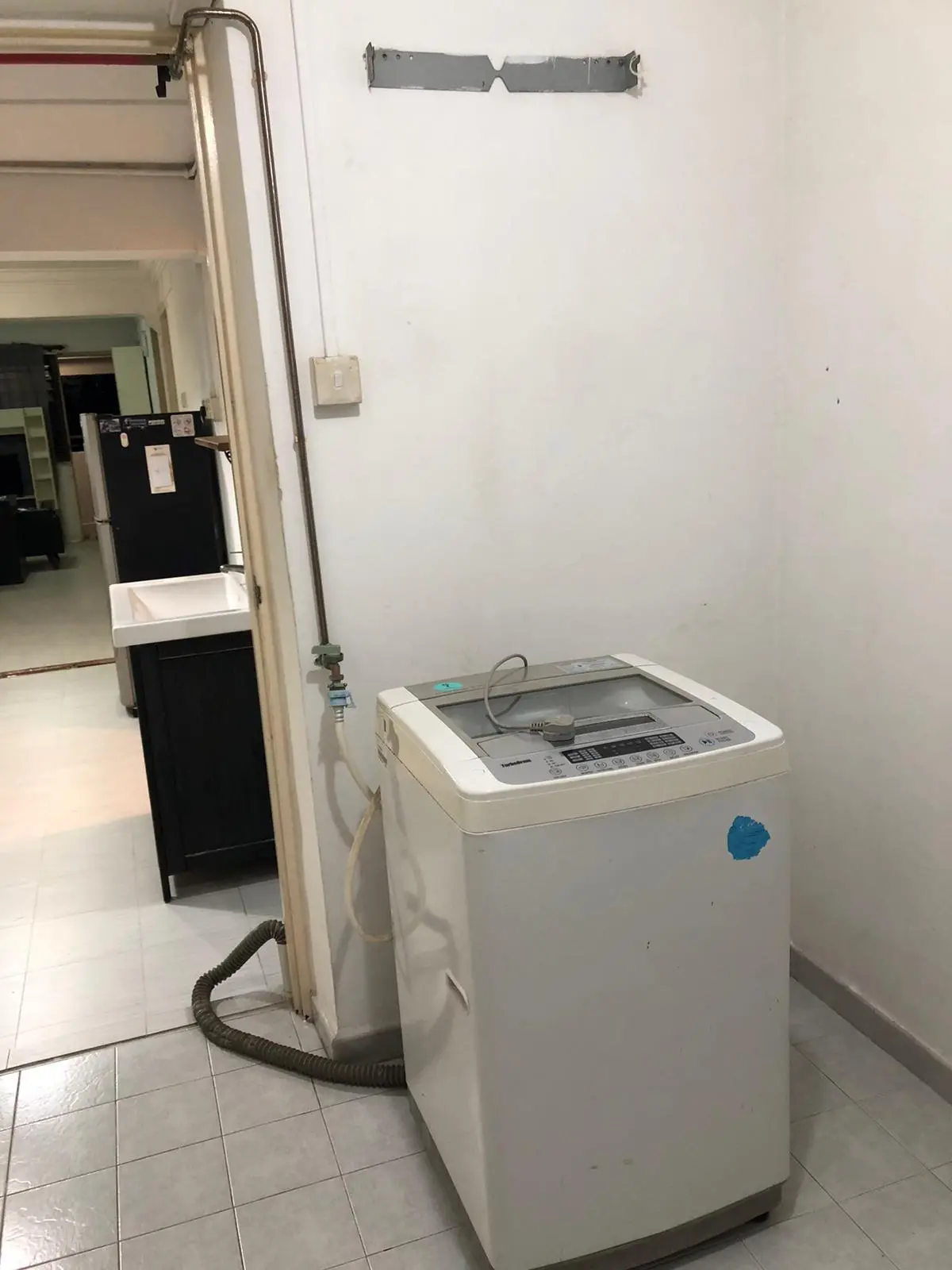
- HDB kitchen recess or yard — tight, often flanked by a cabinet on one side and a wall on the other. We need roughly 70cm clearance to manoeuvre the unit out.
- Condo utility room — sometimes behind a bi-fold door that doesn't open wide enough. Remove the door if possible, or fold it fully back and secure it.
- Landed property outdoor yard — easier access, but sometimes a step or lip at the threshold.
Move shoe racks, drying racks, mops, and anything breakable out of the corridor between the machine and your main door. Our crew works efficiently, but an 80kg appliance on a trolley doesn't negotiate obstacles gracefully.
HDB vs Condo: What's Different
HDB flats don't have a service lift. Your washing machine travels down the same passenger lift your neighbours use. We time the job to minimise disruption, but there's no separate freight route. If you're on a walkup block (no lift at all), surcharges apply — carrying 80kg down four flights of stairs is exactly as demanding as it sounds.
Condos often have a service lift, but access requires booking through your MCST or building management. This is your responsibility to arrange before our arrival. Some condos also require lift padding for appliance moves — again, that's coordinated between you and your management office. Let us know at the quoting stage if there are specific time slots or access restrictions so we can plan accordingly.
Common Mistakes We've Seen in 10+ Years
Forgetting to shut the water valve. We arrive, the customer says "it's all ready," and the inlet hose is still pressurised. We don't disconnect plumbing — that's your prep step. If we find it still connected, we'll wait while you sort it, but the clock is ticking.
Assuming the machine is light because it's old. A basic top-loader is 35–40kg. A large-capacity front-loader with a concrete counterweight block? Easily 85kg. Don't attempt to shift it yourself on a slippery kitchen floor.
Not checking the drum for transport bolts. This one's the reverse problem — if you still have the original transit bolts and want to keep the machine (say, for a helper's quarters or second property), reinstall them. If it's going to disposal, doesn't matter. But we've had customers change their mind at the door. Decide before we arrive.
Booking removal for after the new machine arrives. Ideally, we clear the old unit before the delivery window. That way the delivery crew has a clear space to install. If timing doesn't allow, at minimum ensure there's room for both machines temporarily — one in the laundry area, one in the corridor.
Mini-FAQ
Q: Can you remove a washer-dryer stack or a combo unit? Yes. Stacked units are heavier and taller but our crew handles them regularly. Just confirm it's a stacked setup when you send photos for your quote — it affects manpower planning.
Q: What happens to the old machine after you take it? Metals, motors, and recoverable components are routed through proper recycling channels. Non-recyclable parts go to licensed intermediaries for responsible processing. Nothing ends up dumped roadside.
Q: Do I need to be home during the removal? Someone needs to be present to grant access and confirm the job scope. It doesn't have to be you — a household member or helper works fine.
Ready to Get That Old Washer Out?
If your new washer lands tomorrow, our same-day large-appliance removal — which covers fridges, washers, and other bulky white goods — can clear the old unit before the delivery crew arrives. Send us a photo of the machine and its location via WhatsApp. We'll reply with a quote — no obligation, no dollar figures buried in fine print on this page. Just a straight answer based on what we see.
Surcharges may apply for after-hours jobs, Sunday/PH requests, or walk-up buildings — all confirmed at the quote stage so there are no surprises.
WhatsApp us at 9730 4047 — include a photo and your preferred date. We'll take it from there.