Aircon Disposal Singapore: The Two-Step Process Most Homeowners Miss
By Junk Express Team
Your new aircon is booked. The installer has a date. But what happens to the old unit sitting on the wall bracket — the one that's been rattling for the past three years?
If you're racing a lease handover, retail closure, or office decommissioning deadline, commercial clearance service works to your access window — send loading-bay rules and we'll plan around them.
Here's the thing most homeowners don't realise until the day itself: your disposal crew cannot touch that unit until a licensed aircon technician has disconnected and degassed it first. Skip that step, and you've got refrigerant venting into the atmosphere, voided warranties on your new system, and a crew standing around waiting.
In our 10+ years of clearing old aircon units across Singapore — from single-split HDB bedrooms to multi-cassette commercial fitouts — we've seen this scheduling gap cause more headaches than almost any other appliance disposal job.
Why the Sequence Matters
An air conditioning unit isn't like a washing machine you can just unplug and wheel out. Inside every AC system — window, split, or ceiling cassette — there's pressurised refrigerant (R-410A or the older R-22). That gas needs to be recovered by a qualified technician using specialised equipment.
The correct order:
- Licensed aircon technician disconnects the unit, recovers refrigerant, and caps the piping.
- Physical removal crew takes the disconnected unit away.
Why can't a disposal crew handle step one? Because refrigerant recovery requires specific certification and equipment. We handle the heavy lifting, the logistics, and the responsible routing of the unit afterward. But the degassing? That's a different trade entirely.
Window Units vs Split Systems vs Ceiling Cassettes
Not all aircon disposals are equal. The removal complexity varies dramatically depending on what you've got mounted.
Window Units
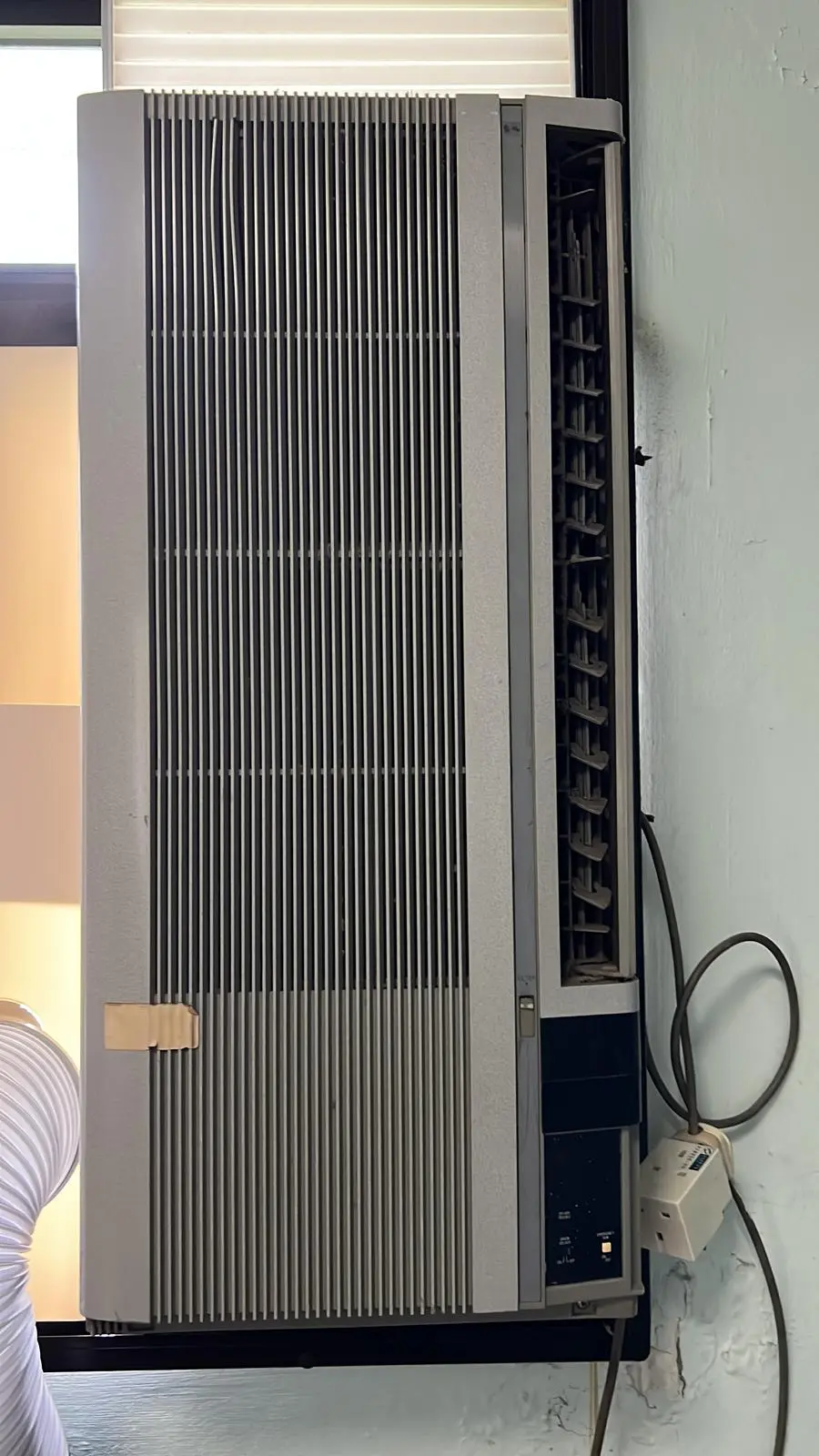
The simplest. Once degassed and disconnected from power, a window unit is a self-contained box. One person can usually handle it. The challenge? These are often in older HDB flats or walk-up apartments — which means navigating narrow corridors and standard passenger lifts. No drama, but the weight (25–40 kg for older models) adds up on staircases.
Split Systems (Wall-Mounted)
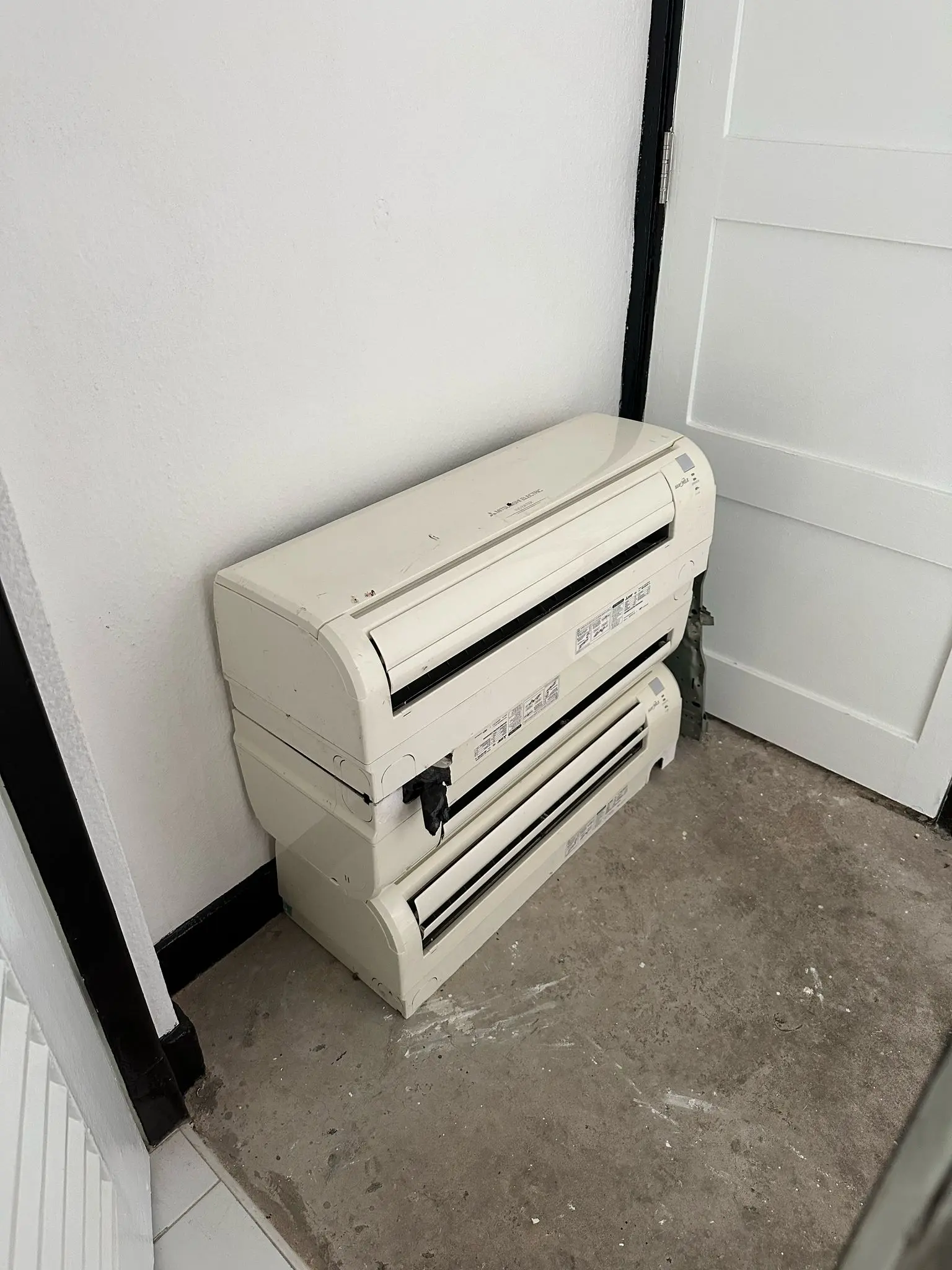
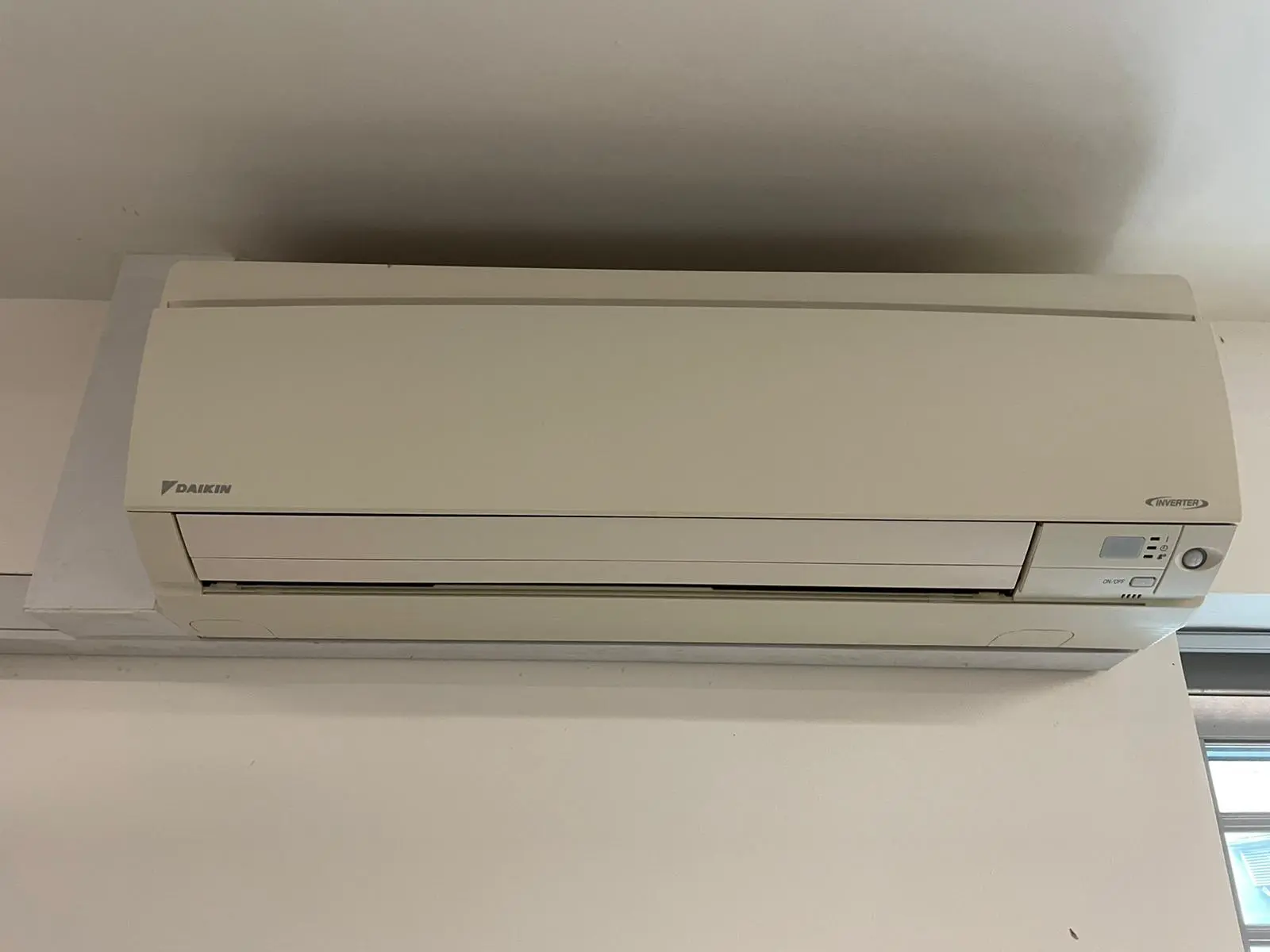
This is 80% of what we remove. A split system has two components: the indoor fan coil on your wall and the outdoor compressor unit on the bracket outside. The indoor unit comes off wall hooks — straightforward once disconnected. The outdoor unit is where it gets interesting.
That compressor is bolted to a bracket on your exterior wall. Sometimes it's accessible from a corridor or service ledge. Sometimes it's hanging three storeys up with nothing but a narrow ledge and a prayer. Your aircon technician handles the disconnection; we handle the physical removal of the bracket and unit. If the bracket is rusted through (common after 8–10 years in Singapore's humidity), extraction takes longer.
Ceiling Cassettes
Commercial territory. These sit recessed into false ceilings — offices, retail spaces, restaurants. Removal means accessing the ceiling void, disconnecting drainage piping (your technician's job), then manoeuvring a 30–50 kg metal box through a ceiling opening that's never quite big enough. We've cleared entire floors of cassette units during office handbacks in the CBD. It's methodical work that requires planning around building access windows.
HDB vs Condo vs Commercial: Logistics Differ
HDB Flats
Standard passenger lifts. No service lift — that's a common misconception. For split-system outdoor units, access is typically from the common corridor or kitchen ledge. Straightforward in most cases, though older blocks with narrow lift lobbies require some manoeuvring for bulkier compressor units.
Condos
Here's where it gets more involved. Most condominiums require MCST approval before any removal work happens in common areas. The owner or tenant must request this permission from building management ahead of the pickup. Some MCSTs require lift padding for moving bulky items through the service lift — that's arranged between you and your building management directly.
Outdoor compressor units in condos are often mounted in concealed ledges or plant rooms with restricted access. Know your building's rules before booking.
Commercial Buildings
Ceiling cassettes, VRV systems, ducted units — commercial aircon disposal is a different beast. Building management typically dictates which hours removal work can happen (often after 6pm or on weekends to avoid disrupting other tenants). The tenant books the service lift window; we work within it. CBD buildings with tight loading dock schedules add another layer. We've done enough Shenton Way and Robinson Road handbacks to know: confirm your loading bay slot before we arrive.
What Happens to the Old Unit?
Once we've collected your disconnected aircon unit, it doesn't just end up in a landfill pile. The components have different end-of-life paths:
- Copper piping and coils — high-value recyclable metal, routed through proper recycling channels
- Compressor motor — contains copper windings and steel; recycled as scrap metal
- Plastic housing and fan blades — sorted and processed through licensed intermediaries
- Refrigerant (already recovered by your technician) — handled separately under environmental protocols
We route materials through licensed intermediaries who do further sorting before items reach their final processing destination. Nothing usable gets wasted if we can help it.
Common Mistakes We See After 10+ Years
Booking disposal before disconnection is done. We arrive, the unit is still live, refrigerant lines still pressurised. Now everyone's waiting. Always confirm your aircon tech has completed their work before scheduling pickup.
Forgetting the outdoor unit. Homeowners focus on the indoor fan coil — the visible one on the wall — and forget the compressor sitting on the bracket outside. That's the heavier, bulkier piece. Mention it when you send photos for your quote.
Assuming the new installer will take the old unit. Some do, some don't, and many charge a premium for it. Often it's cheaper and faster to have a dedicated disposal crew handle removal separately.
Not checking condo MCST rules. We've had jobs delayed because the owner didn't realise their building requires 48 hours' notice for service lift booking. Check first. Save everyone the wasted trip.
Mini-FAQ
Q: Do I need to arrange the aircon technician separately, or do you handle that? We handle physical removal and disposal only. You'll need to engage your own licensed aircon technician for disconnection and refrigerant recovery — most aircon servicing companies offer this. Get it done before our scheduled pickup.
Q: Can you remove the wall bracket and patch the holes? We remove the bracket and take it with us. Patching and repainting the wall is outside our scope — your painter or renovation contractor handles that.
Q: Is there an extra charge for outdoor compressor units on high floors or difficult-access ledges? Surcharges may apply depending on access complexity — confirmed at quote stage once we see photos of the unit location. Walk-up buildings and staircase carries also attract additional charges.
Ready to Clear Your Old Aircon Unit?
Send us photos of the unit (indoor and outdoor), the access path, and let us know if your technician has already disconnected it. We'll get back to you with a quote — fast.
WhatsApp us at 9730 4047 for a free quote.