Contractor Left Debris Behind? What Singapore Homeowners Can Actually Do
By Junk Express Team
Your Contractor Disappeared. The Debris Didn't.
You signed the contract. It said "disposal included." The renovation is done — or half-done — and now there's a pile of hacked tiles, broken drywall, and splintered timber sitting in your living room. Your contractor isn't answering calls. Maybe they've blocked you. Maybe they've simply vanished.
If your handover is this week and the office still has furniture in it, commercial pickup flow is what you want — share access window and we'll commit to a finish time.
This isn't rare. In our 10+ years clearing Singapore homes and commercial units, we've seen this scenario play out dozens of times a year. The homeowner is left holding the bag — literally surrounded by bags of cement dust, old cabinet panels, and stripped wiring — with no clear next step.
Here's what you can actually do about it.
Why This Keeps Happening
Renovation contracts in Singapore are notoriously loose on disposal specifics. A line item might read "hacking and disposal" or "clearing of debris upon completion," but there's no standardised enforcement mechanism if the contractor simply doesn't show up to clear.
The economics are straightforward: disposal costs money. A lorry load of concrete and tile debris isn't cheap to route through proper channels. Some contractors quote low to win the job, then cut corners on the back end — and debris removal is the easiest corner to cut because by that point, they already have your money.
The result? You're stuck with a flat full of rubble, a move-in date that's slipping, and a contractor who's gone dark.
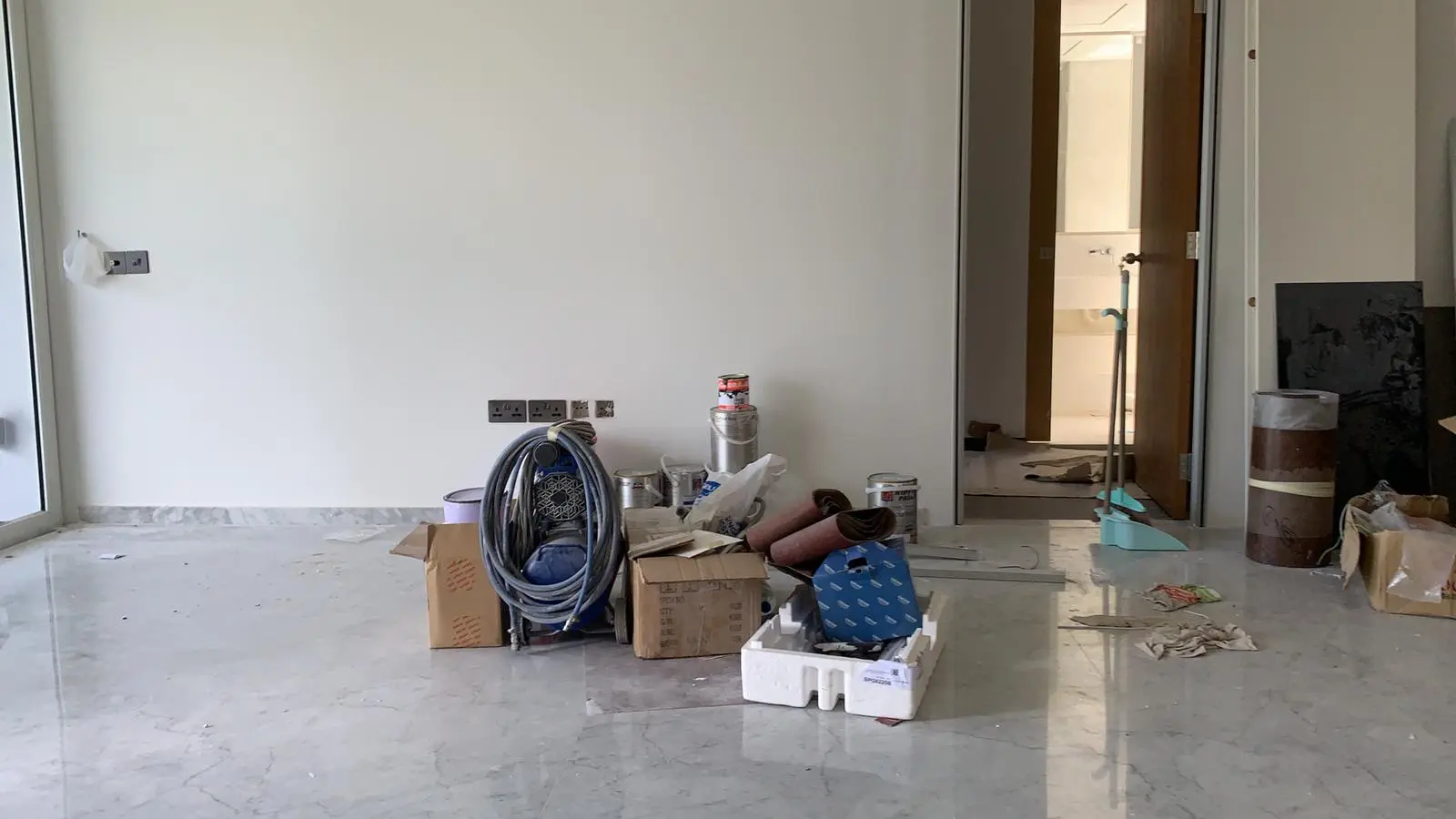
Step 1: Document Everything Before You Touch Anything
Before you move a single tile, photograph the debris from multiple angles. Screenshot your contract clause about disposal. Screenshot the unanswered messages. Save voicemail timestamps.
Why? Two reasons:
-
Small Claims Tribunal. For smaller civil disputes there's the Small Claims Tribunal (check the current monetary jurisdiction on the State Courts website). Your photos and communications become evidence. The process isn't instant — expect weeks to months — but it's a legitimate path to recovering disposal costs.
-
Your quote from us (or any disposal service) becomes a documented loss. When you engage a separate crew to clear what the contractor should have cleared, that invoice is quantifiable damage.
Don't wait too long. If you're in an HDB flat, leaving construction debris in common corridors or at the void deck invites complaints from neighbours and potential fines from your town council. If you're in a condo, your MCST may issue notices — and those can escalate quickly.
Step 2: Get the Debris Out — Independently
Here's the hard truth: even if you eventually recover costs through legal channels, the debris needs to go now. You can't live in it. You can't move furniture around it. And every day it sits there is a day your life is on hold.
This is where engaging a dedicated disposal service makes sense. We handle exactly this kind of job regularly — walking into a half-finished renovation site and clearing everything the contractor left behind.
What "everything" typically includes:
- Hacked wall and floor tiles (heavy, sharp, dusty)
- Broken drywall and cement board
- Stripped timber framing and old cabinetry
- Plumbing fixtures, old toilet bowls, basin pedestals
- Electrical conduit, wiring, old distribution boards
- Bags of mixed construction dust and offcuts
We've cleared post-renovation debris from three-room HDB flats in Ang Mo Kio where the contractor vanished mid-job, and from five-bedroom condos in District 10 where the ID firm folded overnight. The logistics differ, but the urgency is the same.
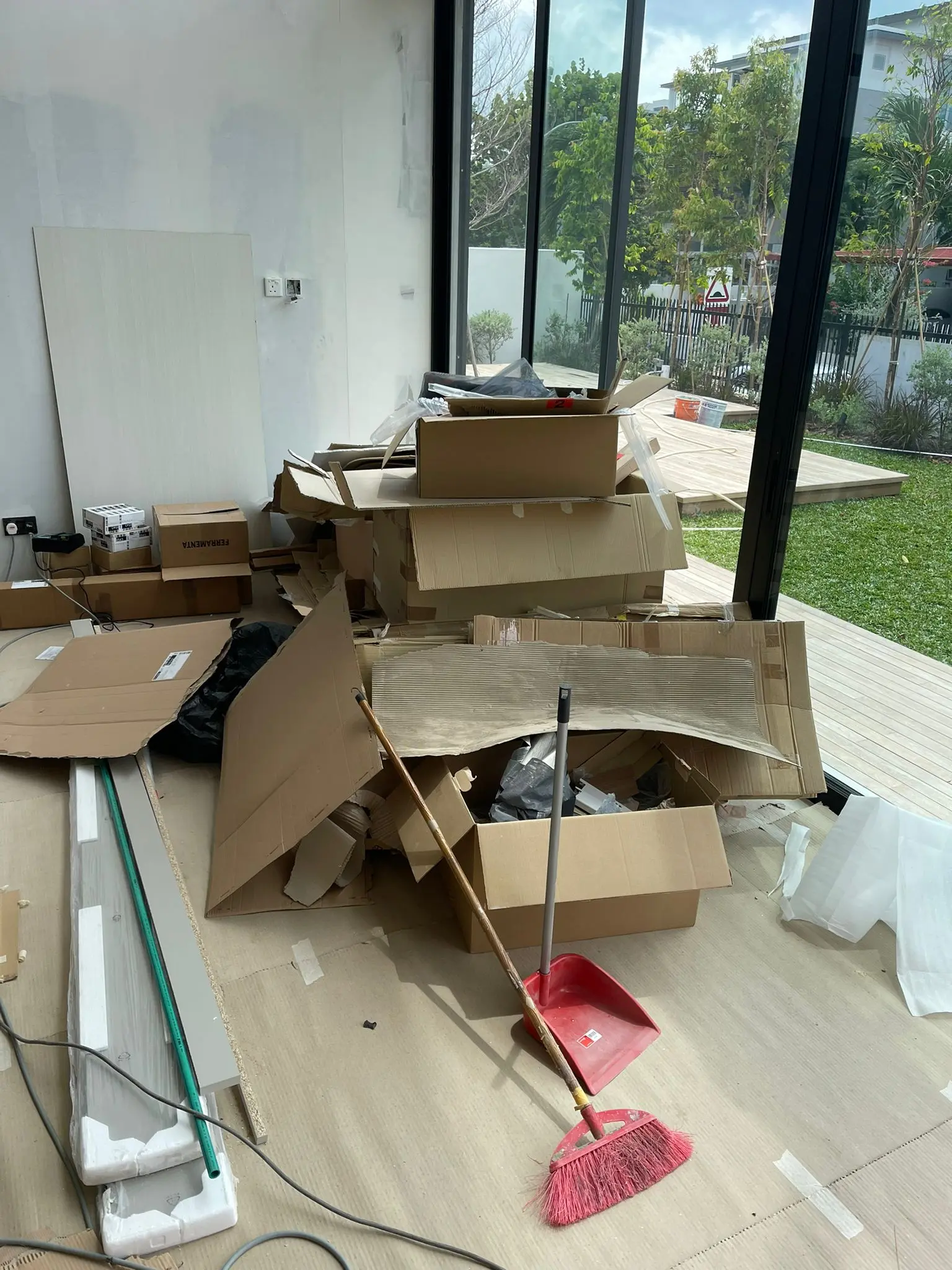
HDB vs Condo: Different Logistics, Same Frustration
For HDB flats: There's no service lift. We work with standard passenger lifts and stairwells. Heavy items — think a stack of hacked floor tiles or a demolished kitchen countertop — get broken down and moved in manageable loads. Your town council won't collect construction debris for you; their bulky-item service requires you to dismantle items first and only covers household furniture, not renovation waste.
For condos: The owner or tenant needs to check with building management about any access requirements — service lift booking windows, loading bay time slots, and whether lift padding is required by the MCST. These arrangements are between you and your management office; we'll work within whatever window you've secured. Some condos restrict construction-related movement to specific hours (often before 5pm on weekdays only), so factor that into timing.
For commercial units: Similar story. If your office renovation contractor has left debris in a CBD unit and you're staring down a lease handback deadline, the building management rules apply. You book the service lift window, you confirm the loading dock slot, and we execute within it.
Common Mistakes We've Seen Over 10+ Years
Mistake 1: Waiting for the contractor to "come back." They won't. If they've gone silent for more than a week after the agreed clearing date, assume it's not happening. Every day you wait is a day closer to a town council notice or MCST fine.
Mistake 2: Trying to dispose of renovation debris yourself via normal waste channels. Construction waste doesn't go in the general waste chute. It doesn't go in the bin centre. Dumping it at the void deck is illegal disposal. You need a proper removal service with vehicles rated for this kind of load.
Mistake 3: Not keeping the contractor's quote and contract. If you want to recover costs later — whether through the Small Claims Tribunal or a strongly worded lawyer's letter — you need the paper trail. The original quote showing "disposal included," your payment receipts, and the evidence that disposal never happened.
Mistake 4: Assuming your next contractor will clear the previous one's mess. Some will, for a fee. Most won't touch another contractor's debris — liability concerns, different waste types, not their scope. Better to clear the slate (literally) before the new team starts.
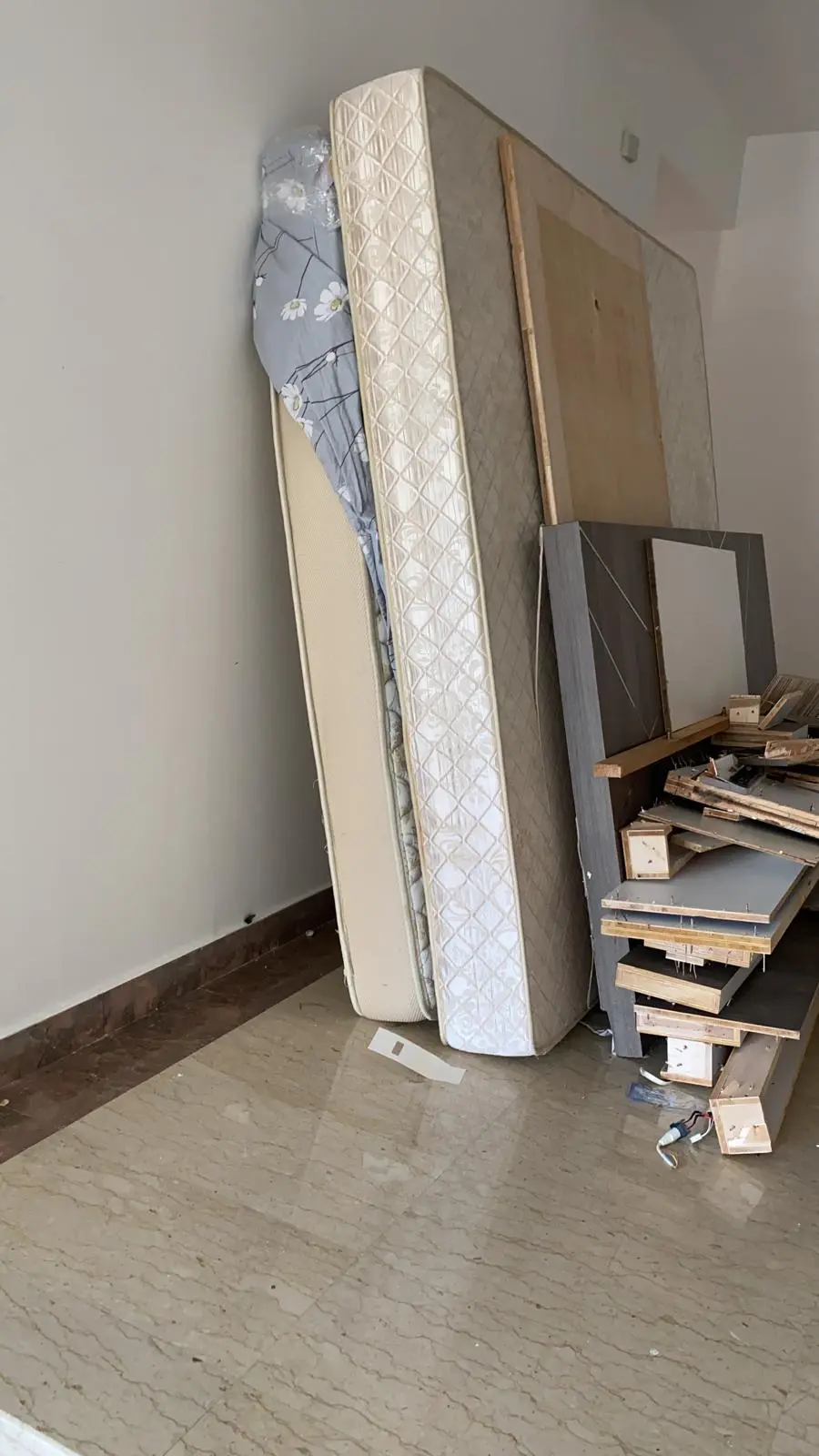
How to Avoid This Next Time
For your next renovation — because there's always a next renovation in Singapore — build these into your contract:
- Specify disposal as a separate line item with a clear completion date. Not bundled into "hacking works." A distinct deliverable.
- Withhold a percentage of payment until disposal is confirmed. Even 5–10% creates incentive. If disposal is the last task, make it the trigger for final payment.
- Get the disposal method in writing. "Contractor shall remove all debris from premises within 3 working days of hacking completion" is enforceable language.
- Take progress photos throughout. If it goes sideways, you have a timeline.
None of this guarantees compliance. But it makes your position significantly stronger if you need to pursue recovery.
FAQ
Q: Can my town council remove renovation debris if the contractor disappears?
No. Town councils handle bulky household items (furniture, mattresses) — and even then, you need to dismantle them first and schedule a collection. Construction debris like tiles, concrete, and drywall is outside their scope entirely. You need a private disposal service.
Q: How quickly can you clear a flat full of renovation debris?
It depends on volume and access. A standard three-room HDB flat with one room's worth of hacked tiles and old cabinetry — we can typically schedule within 24–48 hours of confirming the quote, subject to availability. Larger jobs or restricted-access buildings may need more coordination. Surcharges may apply for after-hours, Sundays, public holidays, or walk-up buildings without lift access.
Q: Should I file a police report if my contractor ghosts?
A police report is appropriate if you believe there's criminal intent (e.g., they took payment for services never rendered and disappeared). For a civil dispute over incomplete work, the Small Claims Tribunal is the more relevant channel. Either way — get the debris out first, document the cost, and pursue recovery with receipts in hand.
Don't Let Someone Else's Problem Stay Yours
Your contractor made a mess and walked away. That's on them. But the debris is in your home, and it's blocking your life from moving forward.
We clear what others leave behind. Our emergency renovation debris removal is set up for the abandoned-site scenario — we walk in, clear the rubble, and get your move-in date back on track. Fast, clean, done.
WhatsApp us at 9730 4047 with photos of what's been left behind — we'll get you a free quote and work to the tightest window your situation allows.