Condo Renovation Waste Disposal: Is It Your Contractor's Problem or Yours?
By Junk Express Team
Your Contractor Left. The Debris Didn't.
Here's a scenario we see at least twice a week: a condo owner wraps up a renovation, the contractor packs their tools, and three days later the MCST sends a notice. Debris in the common corridor. Tiles stacked by the bin centre. A fine — addressed not to the contractor, but to you, the unit owner.
If you're working against a delivery or move-out deadline, Residential Disposal prioritises same-day and urgent slots — send photos, location, and the time you need to be done by.
In our 10+ years of clearing renovation aftermath across Singapore condos, this is the single most common surprise homeowners face. The contractor is gone. The mess is yours.
Why Responsibility Allocation Matters More Than You Think
Most renovation contracts in Singapore contain a clause about waste disposal. The problem? It's often vague. Phrases like "site to be left in broom-clean condition" or "debris removal included" sound reassuring — until you discover what they actually mean in practice.
Here's the reality: MCST fines for debris in common areas are levied against the registered unit owner. Not the contractor. Not the sub-con who did the hacking. You.
We've seen fines ranging from warning letters to repeated penalty charges for debris left in corridors, service lift lobbies, or loading bays beyond permitted hours. Your contractor might promise to handle it, but once they've moved on to their next job, enforcement falls squarely on the person whose name is on the unit.
The Three Common Arrangements — And Where Each Breaks Down
1. "Disposal Included" in the Renovation Contract
This is the most common setup. Your contractor quotes a lump sum that supposedly covers debris removal throughout the project.
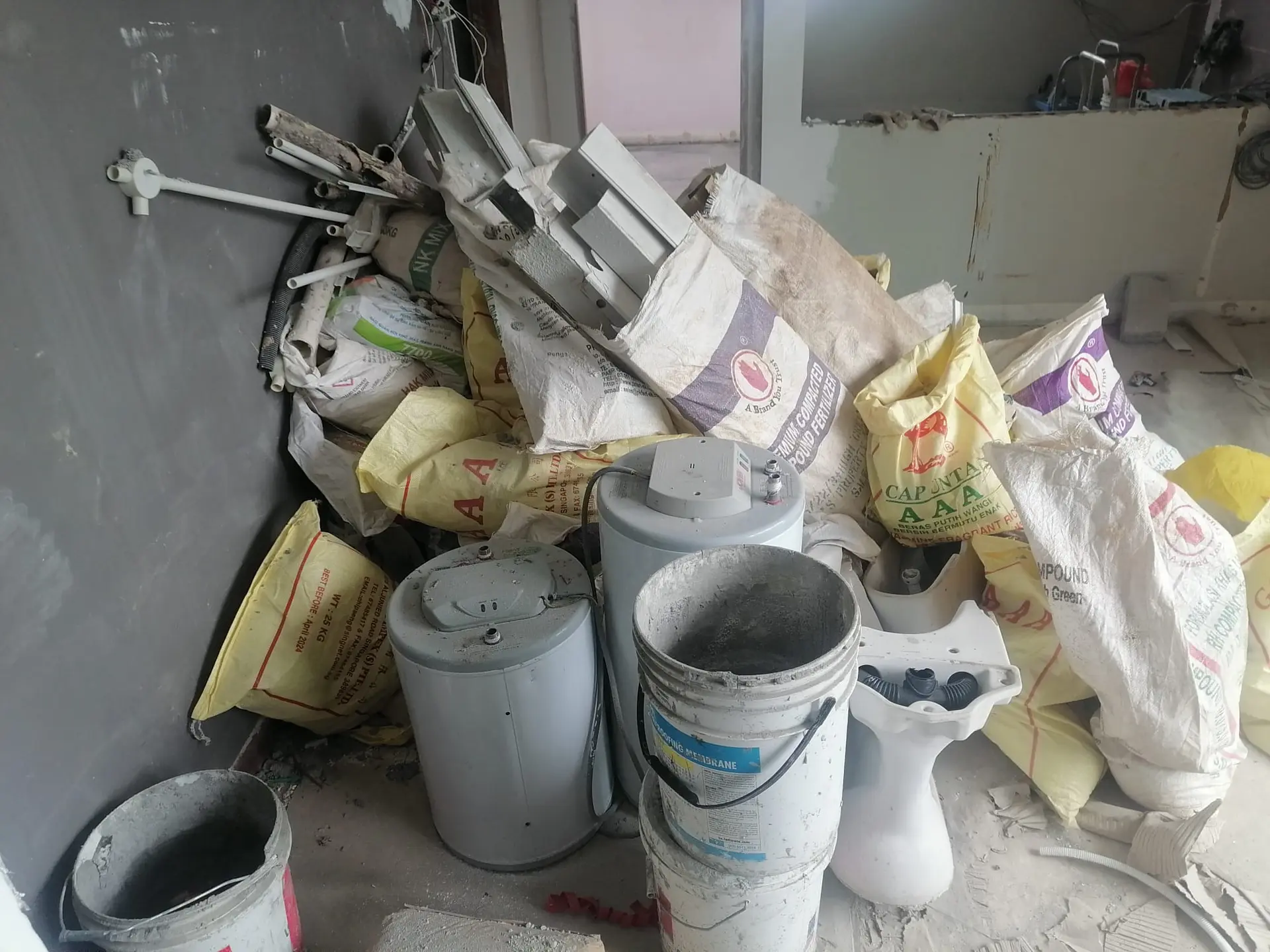
What actually happens: the contractor handles progressive waste — the hacking debris, old tiles, demolished walls — because they need the space cleared to continue working. Makes sense. But the final clear-out — leftover packing materials, protective sheets, odd bits of timber, that half-dismantled wardrobe you decided to discard mid-reno — often falls through the cracks.
Why? Because by the time the last coat of paint dries, the contractor considers the job done. Their disposal sub-con has already made their last trip. Anything that accumulates after that final haul? That's on you.
2. Disposal Handled Separately by the Owner
Some owners negotiate a lower renovation price by excluding waste disposal entirely. They plan to handle it themselves or engage a separate crew.
This works well if you plan ahead. The risk: underestimating volume. A three-room condo renovation generates far more debris than most people visualise. We're talking multiple lorry loads of concrete rubble, old cabinetry, stripped flooring, and packaging waste from new fittings.
3. The Grey Zone — Shared Responsibility, No Clear Terms
The worst scenario. No explicit clause. The contractor "usually handles it." Nothing in writing. When debris lingers, both parties point fingers while the MCST notice sits in your letterbox.
What Your MCST Actually Requires
Every condo development has its own set of renovation guidelines — there's no single national standard. But common rules we encounter across Singapore condos include:
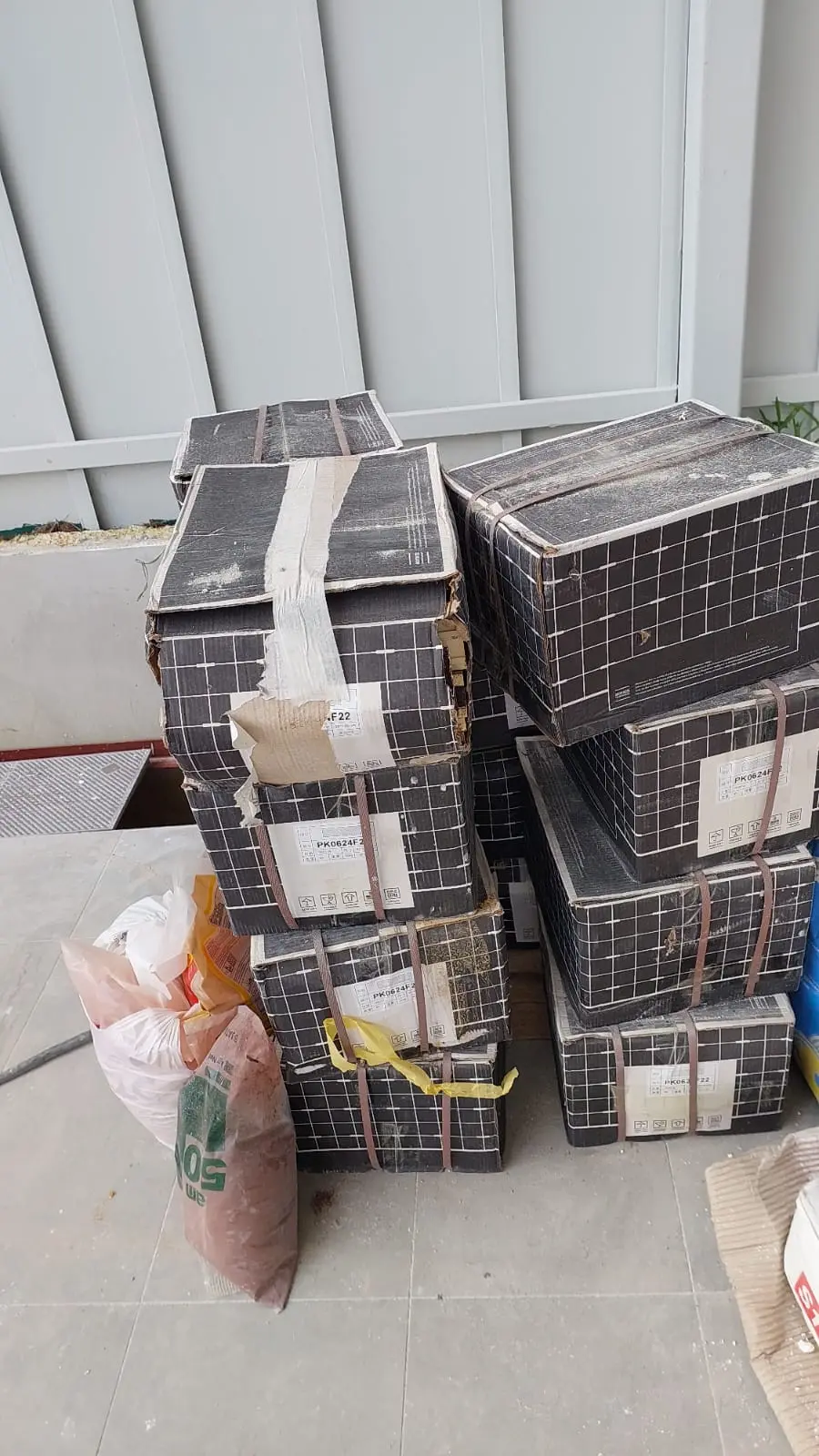
- Designated debris collection points (often near the loading bay or a specific bin centre area) with strict timing windows for placement
- Prohibition on storing debris in common corridors, stairwells, or lift lobbies — even "temporarily"
- Mandatory use of the service lift for all debris movement, often restricted to specific hours (typically early morning or late evening)
- Renovation deposit that the MCST holds — deductions happen for rule breaches, and leftover debris after your renovation permit expires is a common trigger
The critical point: the owner or tenant must request approval from their building management for debris movement schedules and service lift booking. We don't liaise with your MCST on your behalf — that relationship and those approvals sit with you. But once you've secured your time slot and access arrangements, we work within whatever window you've booked.
Where the MCST requires lift padding for debris movement, that's arranged between you and your building management — they provide and install it according to their own protocol.
When It Makes Sense to Engage a Separate Disposal Crew
After 10+ years of handling post-renovation clear-outs, we've identified the scenarios where a dedicated disposal service makes the most difference:
The final sweep. Your contractor has finished. There's a scattering of debris they didn't take — old light fittings, packaging from your new appliances, that built-in shelf unit you decided to rip out at the last minute. It's not enough for your contractor to send their lorry back. But it's too much for you to carry down yourself.
Tight handback deadlines. If your renovation permit is expiring and there's still material in the common area or your unit, you need it gone fast. We work to the tightest window your job allows, subject to availability — surcharges may apply for after-hours or weekend pickups, confirmed at quote stage.
Contractor no-shows. It happens. The disposal sub-con was supposed to come Tuesday. It's now Friday. The MCST is sending daily notices. A separate crew with their own schedule solves the bottleneck.
Common Mistakes We've Seen Over the Years
Assuming the town council will handle condo debris. Town councils serve HDB estates. Your condo's waste management is governed by the MCST and their appointed waste contractor — and renovation debris almost never falls under routine bulk waste collection.
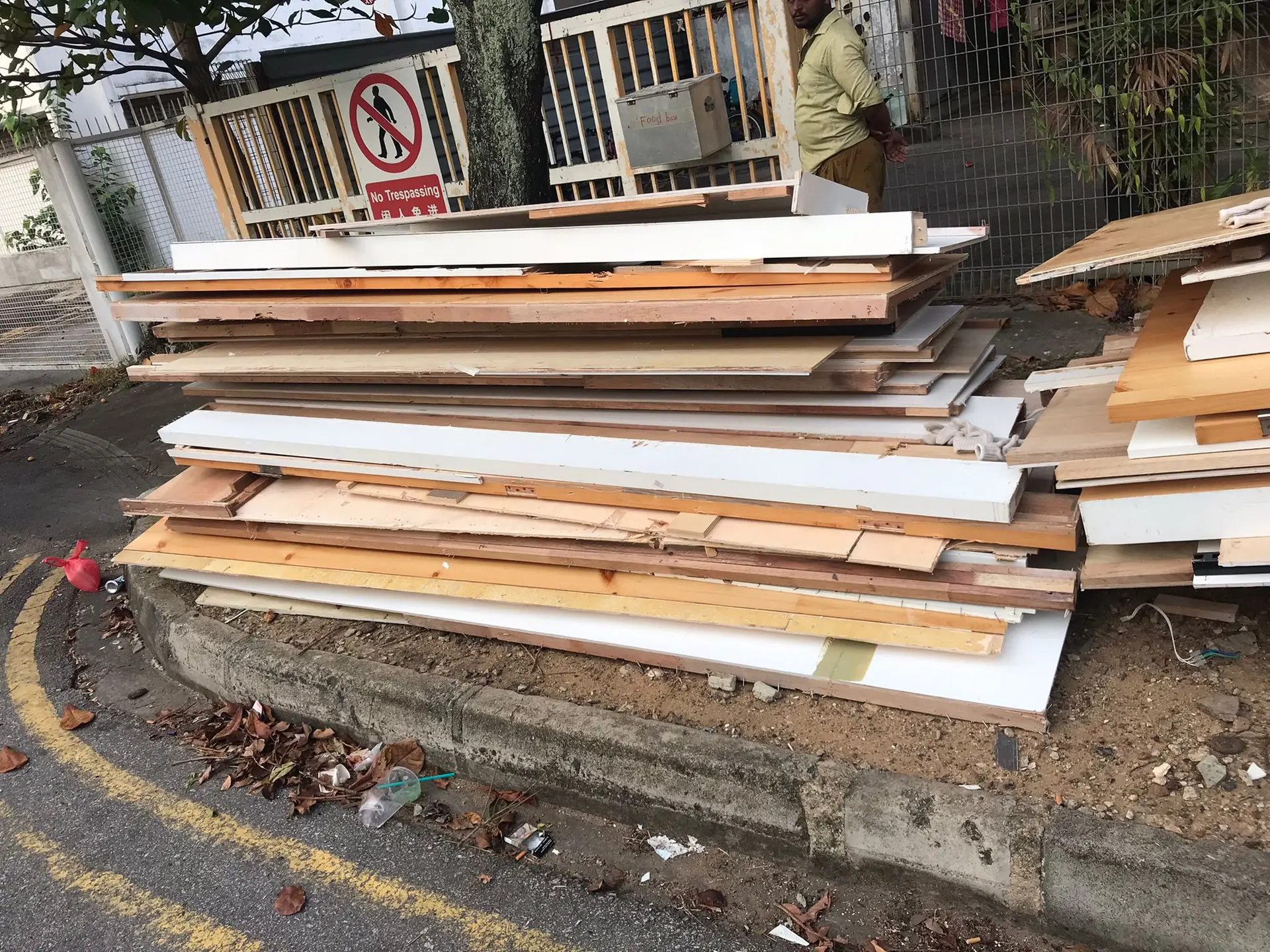
Leaving debris "just for one night" in the corridor. One night becomes three. The MCST's security patrol logs it. The fine arrives before the debris leaves.
Not photographing the state of common areas before renovation starts. When disputes arise over damage or debris attribution, photos are your only defence against deposit deductions.
FAQ
Q: My contractor says disposal is included — should I still worry? Get specifics in writing: how many disposal trips are included, what's the cutoff date for the last pickup, and who's responsible for anything that remains after that date. Vague promises don't protect you from MCST fines.
Q: Can I just bring renovation debris down to the condo bin centre myself? Most MCSTs prohibit renovation waste in general waste bins. There's usually a designated area with restricted hours. Check your development's renovation guidelines — placing debris in the wrong spot or at the wrong time triggers the same fines.
Q: What if my contractor left debris and won't come back to clear it? This is exactly the scenario we handle regularly. Send us photos of what's left via WhatsApp, confirm your service lift booking window with your building management, and we'll provide a quote for the clear-out. No need to chase a contractor who's moved on.
Don't Let Leftover Debris Become Your Problem
If your renovation is wrapping up and there's still material that needs to go — or your contractor has already left and the MCST notices are piling up — reach out. For a fast turnaround, our emergency renovation debris clearance is built exactly for these contractor-no-show situations. Send us photos on WhatsApp at 9730 4047 for a free, no-obligation quote. We'll confirm timing, access requirements, and any applicable surcharges before anything moves.
It's your unit. It shouldn't be your headache.