Co-Living Furniture Disposal Singapore: Fast Room Turnarounds for Operators
By Junk Express Team
The Room Turns Over Friday. That Sagging Mattress Won't Survive Another Tenant.
You know the drill. A tenant hands back the keys, your housekeeper walks the room, and the list comes back: a mattress that's given up, a desk chair with a seized gas lift, a wardrobe door hanging off its hinge. The incoming tenant has already signed. The room needs to be ready.
Most commercial deadlines come down to one access window. commercial team confirms inside that window or tells you what's actually feasible — no vague promises.
For co-living operators in Singapore — whether you're running a handful of rooms in one condo or a few hundred across multiple buildings — furniture condition sits right on top of your renewal rate. A room that photographs badly gets skipped. A mattress complaint in month one becomes a non-renewal in month six.
The problem isn't sourcing replacements. Suppliers here deliver fast. The problem is getting the old pieces out of the building, on the day you need them gone.
Why Co-Living Furniture Wears Differently
This is the part operators underestimate when they move over from ordinary tenancy management.
A family sofa gets one household. A co-living common-area sofa gets every tenant in the unit, plus their guests, and nobody in that rotation owns it. In our 10+ years clearing Singaporean homes and commercial units, we've watched co-living operators cycle mattresses and desk chairs noticeably faster than standard rental units — and the shared pieces faster still.
The wear is also uneven, which is what makes it awkward to plan. One room needs a whole bedroom set. The room next door needs nothing. Three months later it's reversed.
Here's what actually moves on a rolling basis:
- Mattresses — sagging, staining, odour that outlasts every cleaning attempt
- Desk chairs — hydraulic lift failure, torn mesh, cracked bases
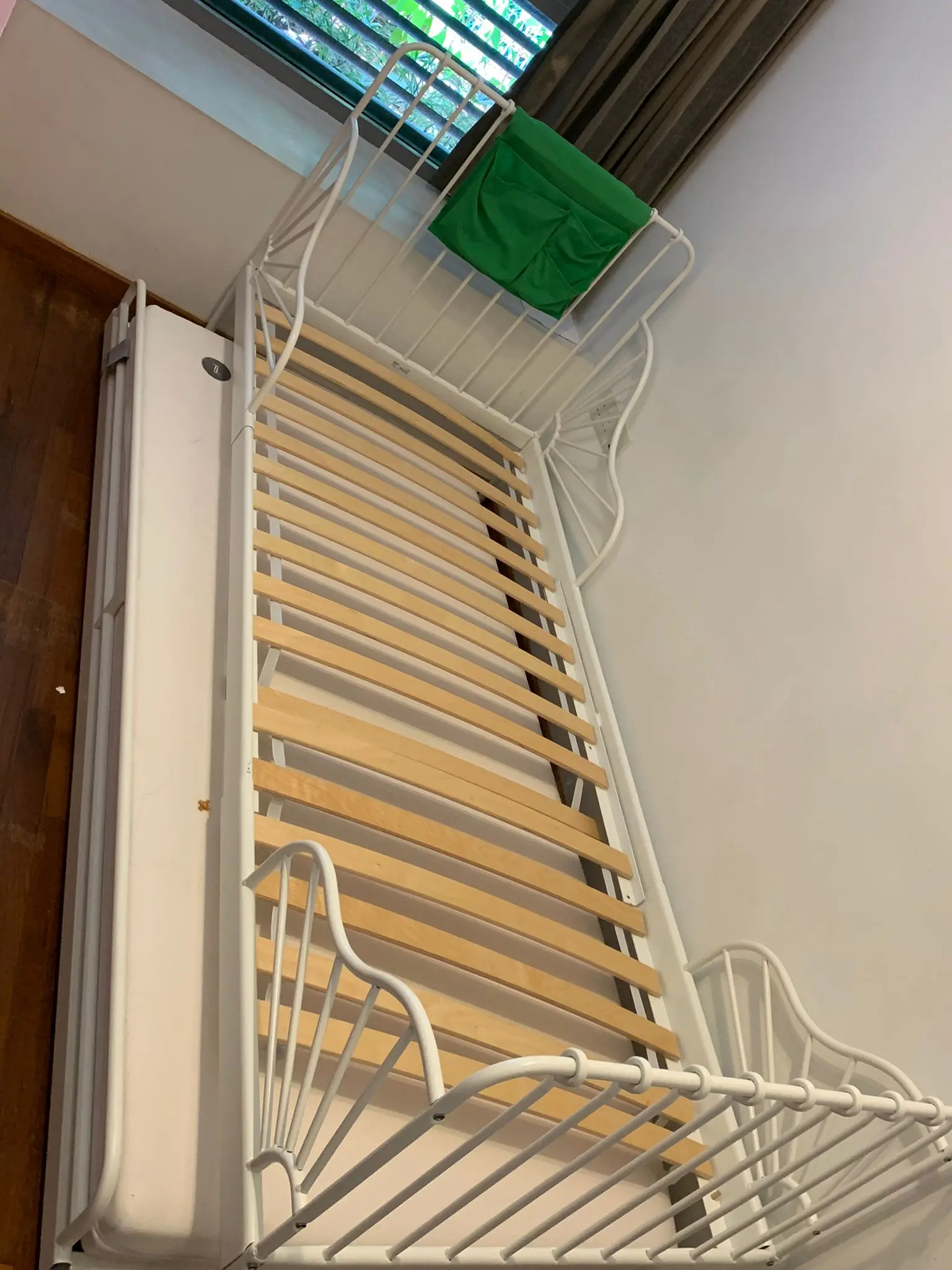
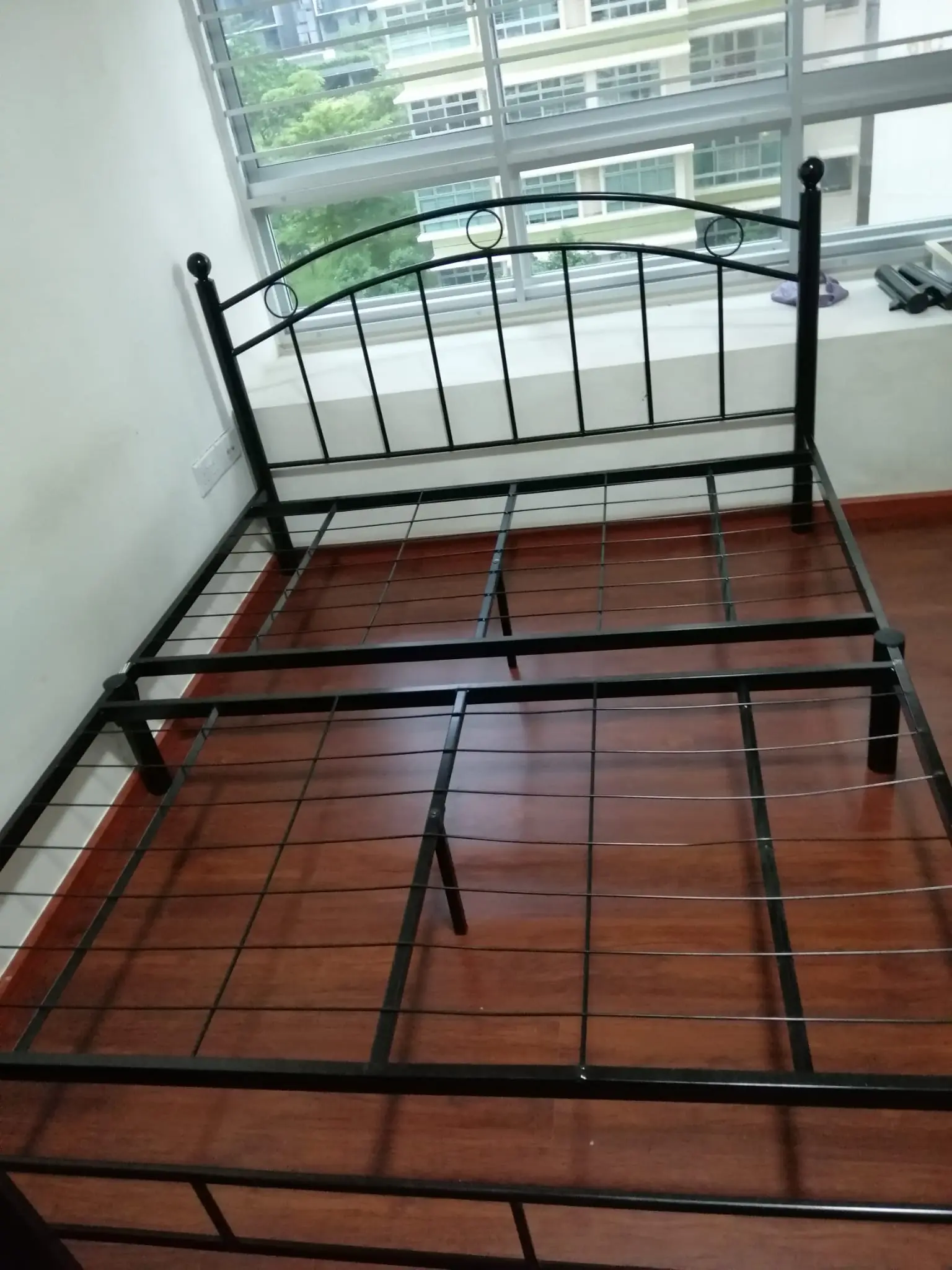
- Wardrobes and bed frames — hinge and slat failure from repeated dismantling and reassembly
- Common-area sofas and dining chairs — the highest-traffic items you own
- Study desks — water rings, chipped laminate, wobble that no amount of tightening fixes
One thing worth being clear about: co-living isn't short-stay letting. Nightly and weekly holiday-style rentals of Singapore homes aren't permitted, and co-living operates on tenancies that meet the minimum stay rules — URA's for private residential property, HDB's own where flats are involved. Those thresholds aren't something to guess at; confirm the current requirements with URA or HDB before you structure a tenancy. What it means operationally is that your turnover is measured in months, not days. That's more planning room than a holiday let would give you — and most operators still leave the disposal to the last week.
Coordinating Removal With Delivery: The Logistics That Actually Matter
The operators we work with longest don't treat disposal and delivery as two separate problems. They schedule them back-to-back, in one access window. Here's how that runs in practice:
Step 1: Confirm the replacement delivery slot. Most Singapore furniture suppliers give a 2–4 hour window. Lock that first — it's the least flexible piece.
Step 2: Book removal for the same morning. WhatsApp us photos of what's going: mattress sizes, how many chairs, whether a wardrobe needs dismantling, which floor. We'll confirm crew and timing against your window.
Step 3: We clear. They deliver. Your team stages the room. Housekeeping handles linen and setup once the new pieces land.
The gap between removal and delivery can be under an hour if the sequencing is right. We've run plenty of jobs where our crew is loading downstairs while the delivery truck is reversing in.
Condo and Serviced Apartment Access
Most co-living stock in Singapore sits in condos and serviced apartment blocks. That means MCST rules apply, and they vary building to building.
Important: you — the operator or the unit owner — need to arrange access approval with building management before we arrive. Every condo runs its own rules on service lift booking, loading bay slots, and move-in/move-out permits. Some want days of notice. Some want a refundable deposit.
We can't liaise with your MCST on your behalf — we're not the owner or tenant, and we've no standing to request a booking. What we can do is tell you exactly what to ask for: a service lift window wide enough to cover our removal and your supplier's delivery. One booking, both jobs.
If the building requires lift padding, that's arranged between you and management. Raise it when you book the lift slot, and mention it to us at booking so we know what the day looks like.
HDB-Based Rooms
Running co-living rooms out of an HDB flat? Different logistics entirely.
There's no service lift — it's the standard passenger lift, shared with everyone else in the block. A queen mattress or a built-up wardrobe either fits, or it goes down the stairwell. Our crew handles both, but narrow lift doors and tight corridor turns mean we need accurate measurements before the day, not on it.
Surcharges may apply for walk-up blocks or stair-only access. We confirm that at the quote stage — no surprises when the crew arrives.
One more thing operators get caught by: town council bulky-item collection requires you to dismantle items first. An intact wardrobe or bed frame won't be taken as-is. We can dismantle as part of the job, but don't build your turnover schedule around the council collecting a whole wardrobe off your corridor.
Mistakes We've Seen Operators Make (After 10+ Years of This)
Waiting for the complaint. By the time a tenant writes about the mattress, the review is already in your renewal numbers. Swap on occupancy cycles, not on visible damage.
Batching everything into one annual refurbishment. It sounds efficient. In practice you end up with a corridor full of furniture, an MCST complaint, and a lift booking that was never long enough. Rolling swaps across the year move faster and cost less in access headaches.
Not measuring before ordering replacements. We've turned up to remove a sofa and found the incoming one won't clear the same doorway. Measure twice — especially in older walk-ups and loft-style units.
Assuming we'll pay for the good pieces. We don't. This is a disposal service, not a buyback. Items still in usable condition get routed to reuse, donation or recycling wherever we can — but nothing comes back to you as cash or credit. Operators sometimes expect an offset on a barely-used desk. It doesn't work that way.
Quick FAQ
Can you clear a room the same day I contact you? Subject to availability. We handle urgent requests regularly, but there's no guaranteed same-day slot — especially at month-end, when everyone's turning over at once. Extra charges may apply for tight-turnaround jobs. The earlier you send the details, the better the slot we can hold.
Do you take mattresses without the original packaging? Yes. Bare, stained, no handles — we take them as they are. No need to bag or wrap unless your building management requires it for transit through common areas.
What if I have rooms turning over in several buildings the same week? That's normal for portfolio operators. Send the full list — addresses, room counts, item counts, preferred dates — and we'll map a schedule. Pickups in the same building or nearby blocks batch efficiently.
Stop Holding Rooms Empty for Furniture
Every night a room sits unlet because the old bed frame is still in it is revenue you don't get back. We work to the tightest window the building will give you.
WhatsApp us at 9730 4047 with photos of what needs to go. Include your preferred date, building type, and whether a delivery is landing the same day. Free quote, no obligation.
It's fast. It's clean. It's done.