En Bloc Sale Clearance: Plan Backwards From Your Vacancy Date
By Junk Express Team
Your En Bloc Vacancy Date Is Fixed. Your Disposal Plan Shouldn't Be Last-Minute.
Here's the scenario we've seen play out dozens of times across our 10+ years of clearing Singapore homes: a collective sale completes, residents get their 6-to-12-month vacancy window, and everyone assumes they have plenty of time. Then month five arrives. Suddenly 200 households in the same development all need disposal in the same fortnight.
For urgent residential pickups where every hour matters, residential pickup confirms a window from your photos and works to it.
Crews are fully booked. Lifts are jammed with neighbours' wardrobes. The loading bay has a queue three units deep. And the residents who planned ahead? They cleared out weeks ago, stress-free.
This post is your backwards-planning guide — whether you're in an en bloc development or a SERS rehousing situation.
Why the Fixed Deadline Changes Everything
A normal move gives you flexibility. Push it a week, negotiate with your landlord, overlap your leases. An en bloc or SERS vacancy date is non-negotiable. Miss it, and you're dealing with the developer's appointed clearing contractor — at their price, on their terms.
The real pressure isn't the deadline itself. It's that every unit in your block shares the same deadline. That creates a bottleneck no amount of last-minute urgency can solve:
- Passenger lifts (the only option in HDB blocks — there's no service lift) get monopolised by multiple households moving simultaneously
- Loading and unloading bays have limited slots
- Disposal crews across Singapore get stretched thin during peak en bloc vacancy windows
We've cleared units in developments where the vacancy period was well-known months in advance, yet half the block waited until the final three weeks. The difference in scheduling ease between month two and month eleven is night and day.
Planning Backwards: A Realistic Timeline
Months 1–3 After Sale Completion: Sort and Decide
You don't need to book disposal yet. But you need to walk through every room and make three decisions per item: taking it, disposing of it, or undecided. The "undecided" pile is the dangerous one — it grows if you don't revisit it.
Start with the obvious bulk: that L-shaped sectional sofa that won't fit your next place, the spare fridge in the utility area, the washing machine you're replacing anyway.
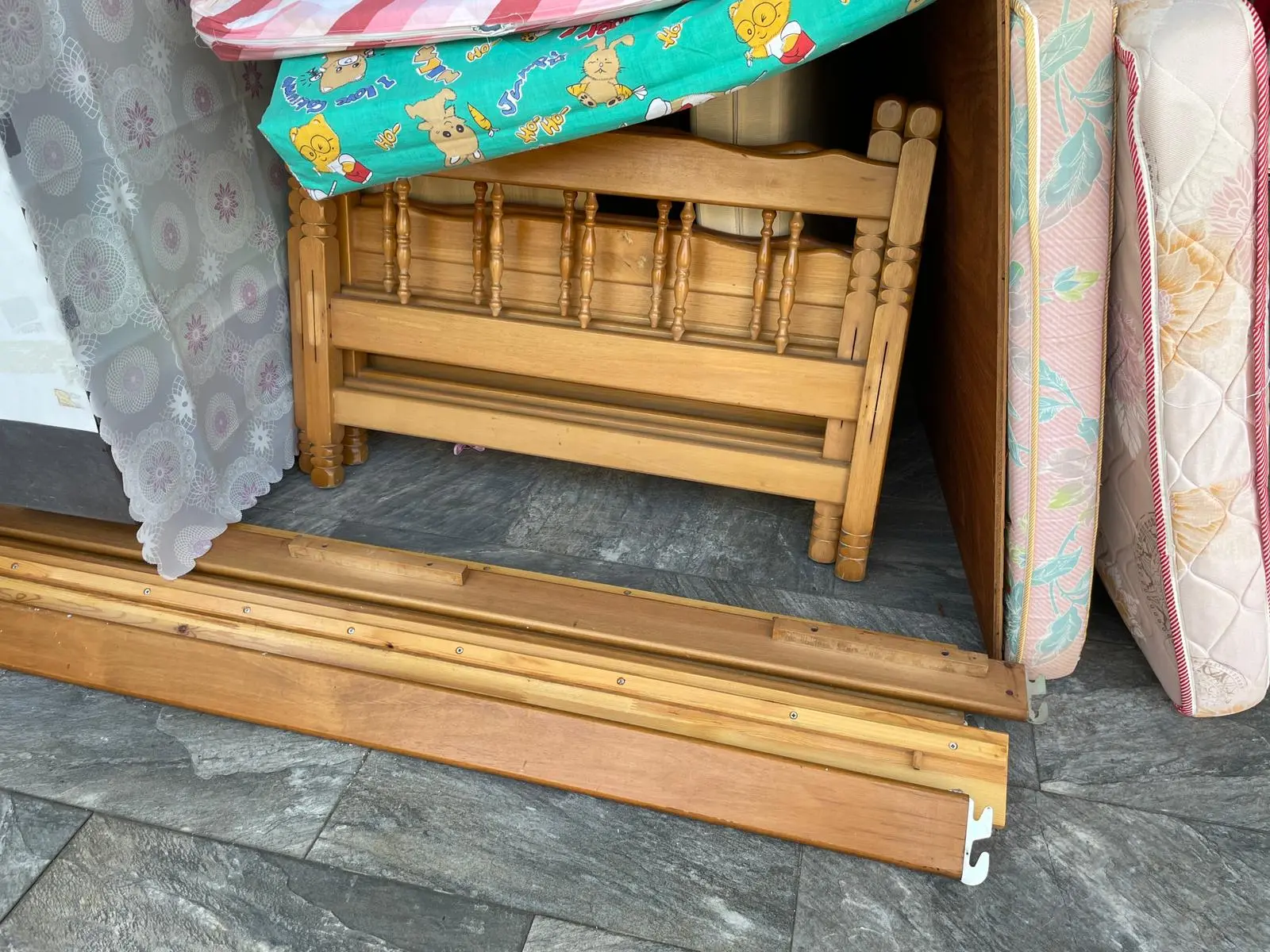
Measure your large furniture now. When you eventually request a quote, being able to share dimensions and photos speeds up the process dramatically. A sectional sofa that disassembles into transportable pieces is a different job from a single-frame monster that needs to navigate a narrow HDB corridor.
Months 4–8: Book Your Disposal Window
This is the sweet spot. You've finalised what's going and what's staying. Book your clearance for a date that gives you breathing room — ideally 2–3 weeks before your actual vacancy deadline. That buffer accounts for the unexpected: a last-minute item you forgot about, a scheduling hiccup, or simply the peace of mind of having an empty unit to do your final clean.
At this stage, send photos via WhatsApp for a free quote. We'll confirm scope, timing, and any applicable surcharges (stairs, after-hours needs, weekend scheduling) upfront.
Key point for HDB en bloc and SERS residents: Your town council's bulky-item collection service requires you to dismantle items first and works on scheduled collection days — not on-demand. For a full-unit clearance with intact furniture, appliances, and accumulated household items, that's rarely practical.
Months 9–11: The Danger Zone
By now, your neighbours are panicking. Everyone's calling disposal services simultaneously. If you haven't booked, you're competing for slots with the entire development.
We've seen this pattern in Clementi, Ang Mo Kio, Jurong — anywhere a collective sale hits a mature estate with hundreds of units. The crews who were available with 48 hours' notice in month four are now booked out a week or more in advance.
The Final Week: What Should Already Be Done
If you've planned properly, your final week involves a walkthrough of a near-empty unit. Maybe a few last bags, some curtain rods, a light fixture. Not a three-bedroom flat's worth of furniture.
If you haven't planned properly — and we say this from experience, not judgement — you're looking at an urgent job that's subject to availability and may carry additional charges for tight-timeline scheduling.
HDB vs Condo: Different Logistics, Same Deadline Pressure
HDB blocks (common in SERS and older en bloc estates): Standard passenger lifts only. No service lift. Corridors can be narrow, especially in older 3-room and 4-room configurations. Items move through common areas shared with neighbours who may also be clearing out the same week. Coordination is informal but necessary — nobody wants two sofas wedged in the same lift lobby.
Condominiums (private en bloc sales): The owner or tenant must request approval from building management and arrange any required lift padding or service-lift booking ahead of the pickup. Every MCST has different rules — some require 48 hours' notice, others a week. Some restrict disposal activities to specific hours. This is your responsibility to arrange before our crew arrives.
For both property types, we handle the heavy lifting, dismantling where needed, and proper routing of materials through responsible disposal and recycling channels.
Common Mistakes We've Seen Over 10+ Years
Assuming the developer will clear everything. They won't — or they will, and they'll charge you for it. The sale agreement typically requires vacant possession, meaning empty. Anything left behind becomes your liability.
Waiting for the "right time" to sort. There is no right time. There's only earlier (easier) and later (harder, more expensive, more stressful).
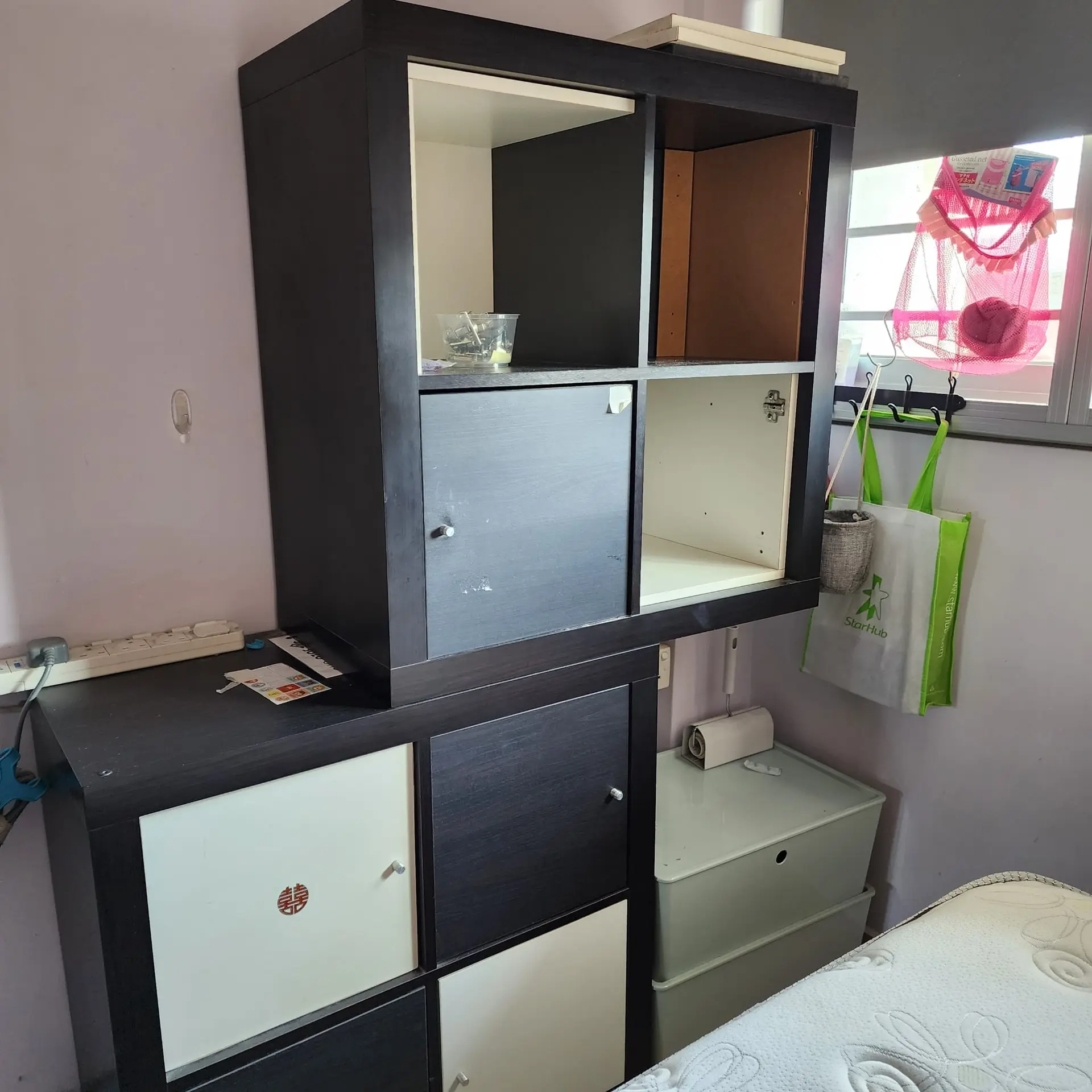
Not photographing items for quoting. A "wardrobe" could be a single-door IKEA PAX or a built-in floor-to-ceiling system that needs dismantling with power tools. Photos eliminate guesswork and get you an accurate quote faster.
Forgetting about storage areas. The bomb shelter. The utility cupboard. The ceiling-height kitchen cabinets full of things you haven't touched in eight years. These add up. Account for them early.
FAQ
Q: Can I get disposal done on a Sunday or public holiday to avoid taking leave? A: Sunday and public holiday jobs are possible by special arrangement, subject to availability. Surcharges apply for these non-standard scheduling windows. Best to discuss during the quoting stage.
Q: What happens to items that are still in good condition? A: Where possible, we route reusable items through secondhand and recycling channels rather than sending everything to landfill. We try to divert what we can — but we're a disposal service, not a resale platform. We don't pay for items collected.
Q: How much notice do you need for a full-unit en bloc clearance? A: Typically 24–48 hours for standard jobs, but for full-unit clearances during peak en bloc vacancy windows, booking a week or more ahead is strongly recommended. The earlier you lock in your slot, the more scheduling flexibility you'll have.
Don't Wait Until Your Whole Block Is Scrambling
The best time to plan your en bloc clearance was the month the sale completed. The second-best time is now. And if your vacancy date has crept up on you, our last-minute move-out clearance is geared for exactly that squeeze.
Send us photos of what needs to go via WhatsApp at 9730 4047 — we'll come back with a free quote and help you lock in a date that doesn't collide with every other unit in your development.
It's planned. It's cleared. It's done.