Renovation Done, Debris Still There — What Singapore Homeowners Should Do Next
By Junk Express Team
Your Renovation Is Done. The Debris Isn't.
You've survived weeks of hacking, drilling, and dust. The new tiles are in. The kitchen looks great. But when the contractor packed up and left, they didn't take everything with them.
If the new tenant moves in tomorrow or the delivery is at 6, residential pickup is the lane for you — same-day capacity is finite, so message early and share access details.
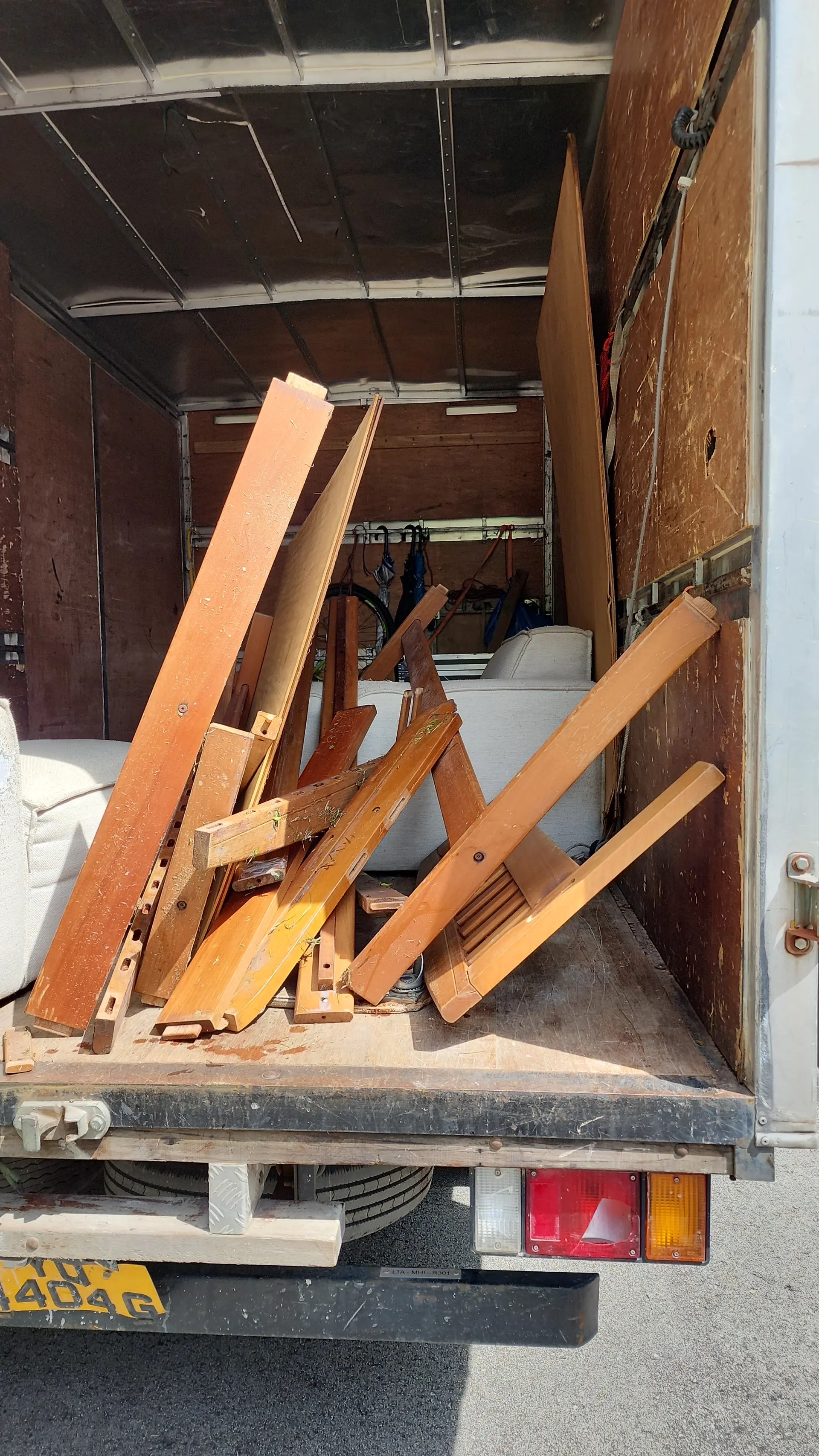
Now you're staring at a pile of broken concrete chunks, splintered timber framing, cracked tiles, ripped-out cabinet doors, and old sanitary fixtures — all sitting in your corridor, your bomb shelter, or worse, blocking the common area outside your flat.
This is the "now what?" moment. And in our 10+ years clearing post-renovation debris across Singapore, we can tell you: it happens far more often than most homeowners expect.
Why the Debris Is Still There
Three scenarios account for almost every call we get:
The contractor disappeared. Job's done, final payment collected, and the crew vanished. The quote may have included "disposal" but the definition was loose. What they actually removed was the stuff they could resell — copper piping, aluminium frames. The concrete rubble? Still yours.
The debris exceeded what was quoted. Renovation scope creep is real. That "minor hacking" of one wall became three walls once the designer changed plans mid-project. The original disposal allowance covered one lorry load. You generated two and a half.
You did partial DIY and underestimated the volume. Pulled out your own built-in wardrobe. Ripped up vinyl flooring yourself to save on labour. Smart move — until you realise a single HDB bedroom's worth of dismantled cabinetry fills more space than you imagined, and none of it fits in the chute.
What Counts as Renovation Debris (And Why Normal Bins Won't Work)
Renovation waste isn't household waste. It's heavier, bulkier, and often sharp or dustite-laden. Here's what we typically encounter:
- Concrete and cement chunks from hacked walls, screeding, or countertops
- Ceramic and porcelain tiles — broken, sharp-edged, heavy
- Timber framing and plywood from dismantled built-ins, door frames, or false ceilings
- Old fixtures — toilet bowls, basins, shower screens, tap assemblies
- Metal components — window grilles, gate sections, bracket hardware
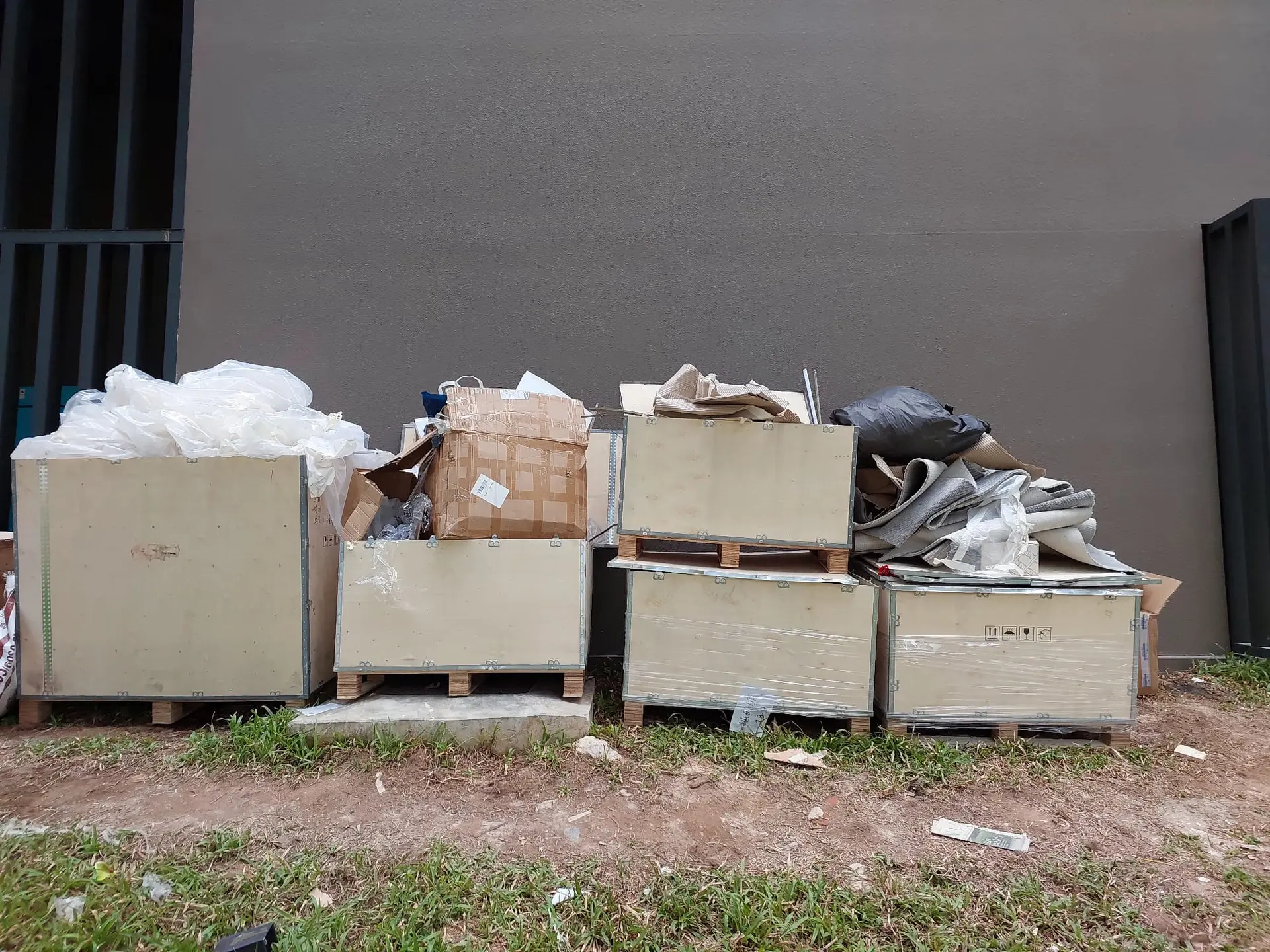
- Mixed bags — plaster dust, grout residue, packaging from new materials
None of this goes down the rubbish chute. None of it belongs at the bin centre downstairs. Your town council's bulky-item collection service requires items to be dismantled first, only runs on scheduled days, and frankly isn't designed for rubble and raw construction waste.
Leaving debris in common areas — corridors, void decks, lift lobbies — risks complaints from neighbours and potential fines from your town council. The clock starts ticking the moment your contractor walks away.
HDB Flats: The Logistics You Need to Know
HDB blocks don't have service lifts. Everything moves through the same passenger lift your neighbours use — or down the stairwell if the lift can't accommodate it.
That means concrete chunks in woven bags need to be sized for the lift car. Long timber pieces may need to go via stairs. And timing matters: nobody wants to share a lift with a trolley of dusty rubble during the morning rush.
In our experience, the smoothest HDB debris clearances happen when:
- Debris is already bagged or stacked in one location (bomb shelter, kitchen floor, corridor)
- The homeowner has a rough sense of volume — even a photo is enough for us to estimate
- We can access the unit without navigating active renovation works (if your contractor is still on-site doing finishing, coordinate the timing)
For walk-up blocks without lift access, surcharges apply — hauling bags of concrete down four or five storeys is genuinely heavy labour.
Condos and Commercial Spaces: Different Rules
If your renovation happened in a condo unit or a commercial tenancy, building management adds a layer.
Most MCSTs require advance notice for debris removal. Some restrict it to specific hours or mandate use of the service lift only. Where lift padding is required by the MCST, that's arranged between you and your building management — not something we handle.
The key point: you, as the owner or tenant, need to secure approval from your condo management or building management before the pickup. Let us know the access constraints when you reach out, and we'll plan the job around them.
Common Mistakes We've Seen Over 10+ Years
Assuming the contractor's "disposal" covers everything. Get it in writing. "Disposal of hacking debris" should specify volume or number of trips. Vague terms leave you holding the rubble — literally.
Waiting too long to act. Debris sitting in common areas attracts town council attention fast. We've had homeowners contact us after receiving warning letters, scrambling to clear within days. Don't let it reach that stage.
Mixing renovation waste with household trash. Stuffing concrete pieces into black bin bags and leaving them at the bin centre doesn't make them disappear. It gets traced back to your unit. Town councils in estates like Ang Mo Kio, Jurong, and Clementi are particularly active on enforcement.
Underestimating weight. A single HDB bathroom's worth of hacked floor tiles can weigh several hundred kilograms. This isn't something you carry down in a few trips with a shopping trolley. It requires proper manpower and a vehicle rated for the load.
FAQ
Can I just leave renovation debris for the town council to collect? Town council bulky-item collection is designed for furniture, not raw construction waste. Even for eligible items, they require you to dismantle them first and only collect on designated days. Concrete, tiles, and timber framing from renovation works generally fall outside their scope entirely.
What if my contractor was supposed to handle disposal but didn't? That's a contractual dispute between you and your contractor. In the meantime, the debris is on your property (or worse, in a common area attracting complaints). We can clear it independently — send us photos via WhatsApp and we'll quote based on volume and access conditions.
Do you handle the disposal routing, or do I need to arrange where it goes? We handle everything from your doorstep onward. Debris is routed through proper recycling channels and licensed intermediaries for responsible disposal. You don't need to find a facility or make separate arrangements.
Get It Cleared
The longer renovation debris sits, the more it becomes your problem — neighbour complaints, town council notices, or simply losing usable space in your own home.
When neighbour complaints or a town council notice are looming, our emergency renovation debris removal is built for exactly this kind of urgent clear-out. Send us a few photos on WhatsApp. We'll estimate the volume, confirm access logistics, and give you a clear quote. No obligation, no guesswork.
WhatsApp us at 9730 4047 — include photos of the debris and your block/unit type, and we'll get back to you with a quote.