Server Rack Disposal in Singapore: What IT Teams Need to Know Before Decommissioning
By Junk Express Team
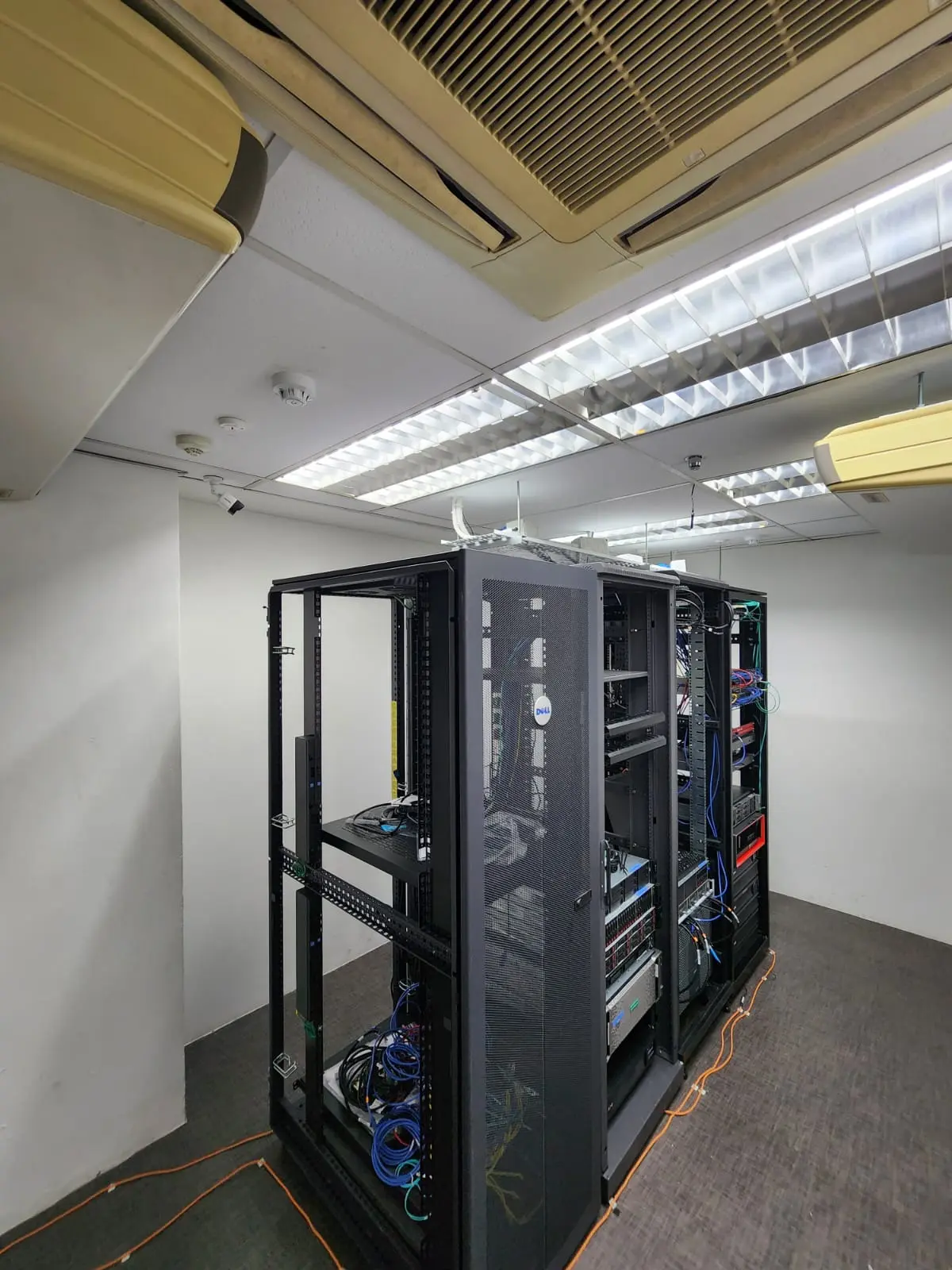
Your cloud migration is finally approved. The workloads are shifted. Now you're staring at rows of 42U racks — each one a 80–120kg steel frame before you even count the switches, patch panels, UPS units, and servers still bolted inside. Loaded, a single rack can tip past 500kg.
When the landlord's clock is ticking, commercial clearance service is the lane: same-day and after-hours slots, photo quote, fast confirmation.
This isn't furniture removal. It's a controlled teardown that touches data security, structural protection, and heavy logistics — all within whatever window your building management will give you.
In our 10+ years clearing server rooms across Singapore's commercial buildings, we've seen IT managers underestimate every stage of this job. Here's how to get it right.
Why This Is Urgent for Singapore Businesses Right Now
On-premise infrastructure is shrinking fast. Lease renewals are forcing the question: keep paying rent on a server room you barely use, or hand it back clean. Landlords in commercial buildings don't want your racks left behind — and the reinstatement clause in your tenancy agreement probably specifies bare-floor return.
The longer decommissioned equipment sits, the more it becomes a liability. Dust accumulates. Batteries in UPS units degrade. And every month that rack stays bolted to your raised floor is another month of wasted square footage you're paying for.
The Decommissioning Sequence: Data First, Steel Last
Stage 1: Data Destruction and Equipment Extraction
Before anything moves, your data has to be destroyed. This is your responsibility — not ours, not your mover's.
Engage your IT security team or a certified data destruction vendor to wipe or physically destroy drives. Once certificates of destruction are issued, the equipment can be safely removed from the racks. Switches, servers, patch panels, cable management arms — all of it comes out and gets sorted.
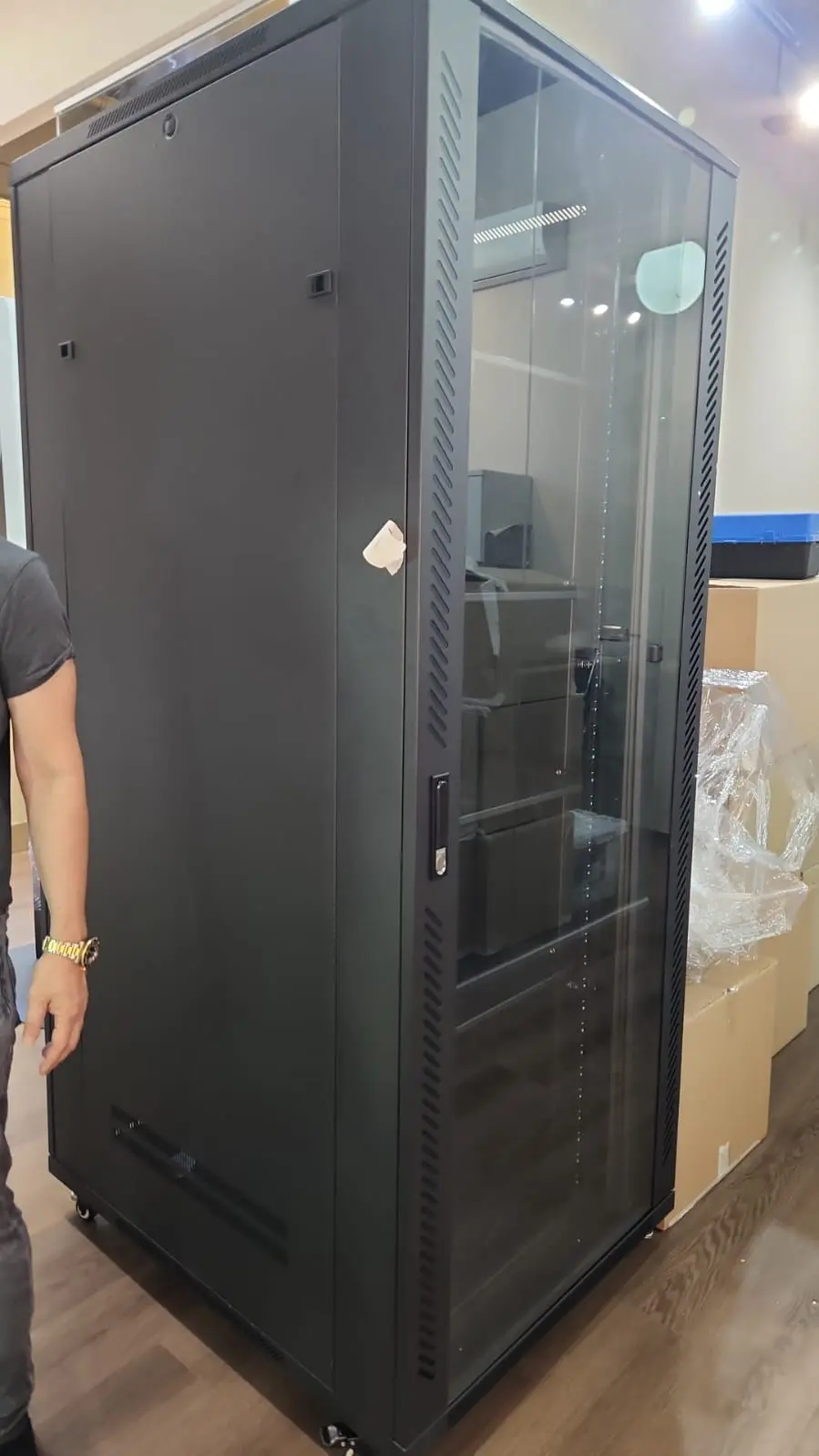
We've arrived at server rooms where the IT team had neatly boxed and labelled everything for us. We've also arrived where nothing was touched and cables were still live. The first scenario takes half the time. Plan accordingly.
Stage 2: Rack Disassembly
Once empty, racks still need to be unbolted from the raised floor or concrete slab. This requires the right socket sets, and often a second pair of hands just to stabilise the frame while bolts are removed.
A standard 42U rack is roughly 2 metres tall. It won't fit through most doorways assembled — side panels come off, and sometimes the frame itself needs partial disassembly to clear corridors and fit into the service lift.
We bring the tools. Adjustable spanners, socket sets, panel pullers. The kind of gear your office doesn't keep in the stationery cupboard.
Stage 3: Removal and Floor Protection
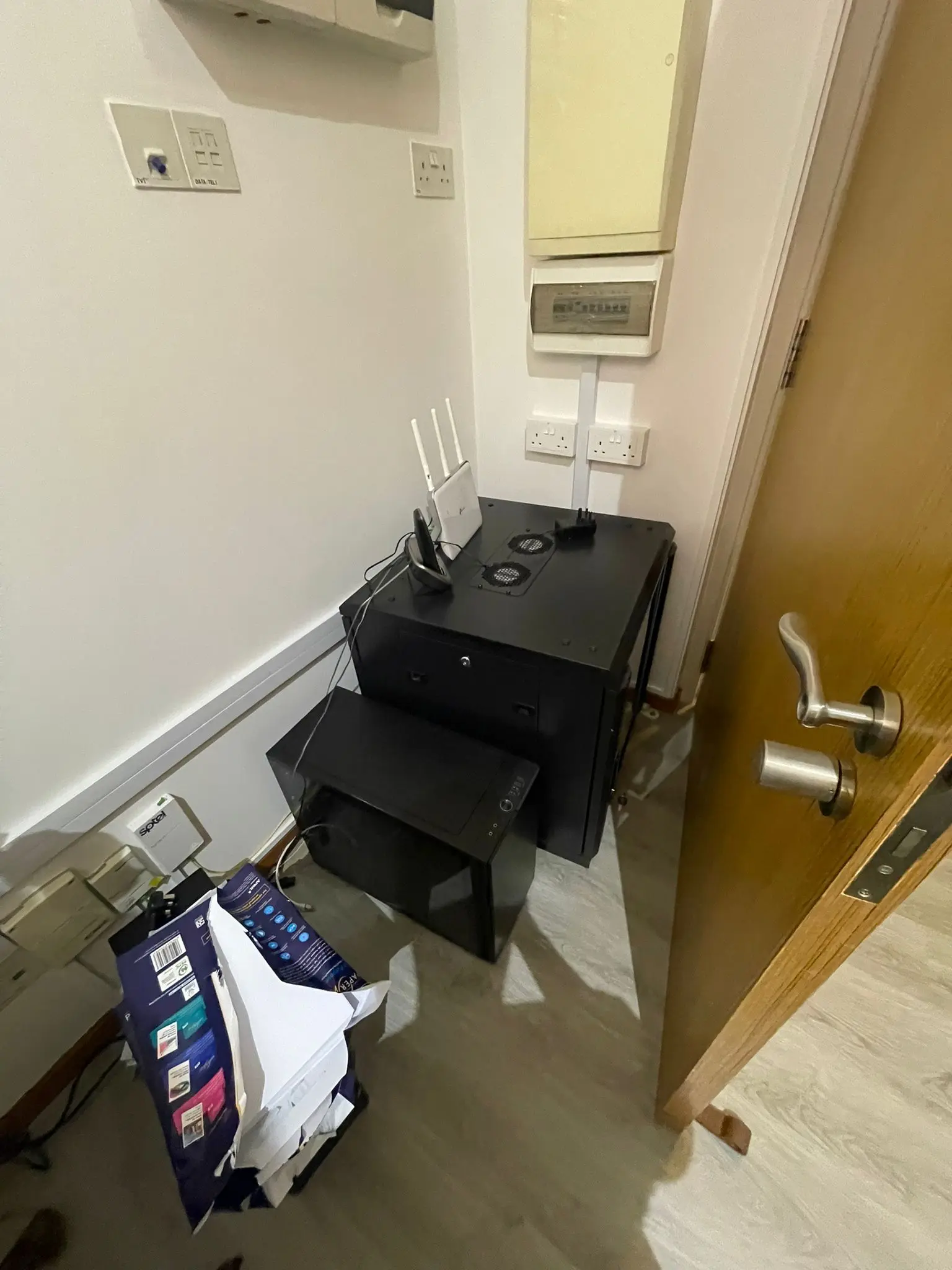
Here's where weight becomes the real issue. Even an empty rack is awkward — tall, narrow centre of gravity, steel edges that will gouge vinyl flooring or crack a raised-floor tile if you drag it.
We use trolleys rated for the load, protect flooring with hardboard or blankets along the route, and work within the service lift booking your building management has allocated. That last part is critical: you need to secure lift access and any required approvals from your building's MCST or management office before we arrive. Rules differ per building. Some require 48 hours' notice. Some want a deposit for the service lift. That's between you and your management — we just need to know the window.
For buildings with loading bays, we coordinate vehicle positioning so the path from lift to truck is as short as possible. For older buildings without a loading dock, we adapt. We've cleared racks from Shenton Way towers with single narrow service lifts and tight basement ramps. It's not glamorous work, but it's work we know.
Common Mistakes We've Seen Over 10+ Years
Underestimating cable removal time. A single rack can have 50+ patch cables, power leads, and fibre runs. If you haven't disconnected and coiled these before we arrive, the job takes significantly longer.
Forgetting the UPS batteries. Those sealed lead-acid batteries in your rack-mount UPS are heavy, awkward, and need proper routing through recycling channels. Don't leave them as a surprise.
No building approval. We've had jobs cancelled on arrival because the facilities team forgot to book the service lift or notify security. Wasted trip. Wasted day.
Trying to DIY with office staff. We've been called in after an in-house attempt left gouges in the raised floor and a rack wedged in a doorframe. Server racks are not IKEA shelves in reverse. The steel is thick, the bolts are torqued, and the weight distribution punishes amateurs.
Mini-FAQ
Do you handle the data destruction? No. Data destruction must be completed by you or your appointed IT security vendor before we touch any equipment. We handle the physical removal and disposal only.
What happens to the metal racks after removal? Steel frames are routed through proper recycling channels via licensed intermediaries. We don't landfill recyclable metal.
Can you remove racks after office hours? Yes — we operate 24 hours on weekdays and Saturdays, subject to availability and prior booking. After-hours and weekend jobs may carry surcharges, confirmed at quote stage.
Ready to Clear Your Server Room?
Racks rarely come out alone — the switches, servers, and UPS units inside them are e-waste too, and our office IT equipment disposal service routes all of it through licensed recycling channels. Send us photos of the racks, the access route, and your preferred timeline. We'll come back with a quote — no obligations, no site visit fee.
WhatsApp us at 9730 4047 with photos of your server room and we'll scope the job within the day.
Surcharges may apply for after-hours access, stairs, or ramp use — all confirmed upfront before you commit.