Built-In Wardrobe Disposal in Singapore: What Dismantling Actually Involves
By Junk Express Team
Your Renovation Can't Start Until the Old Wardrobe Is Gone
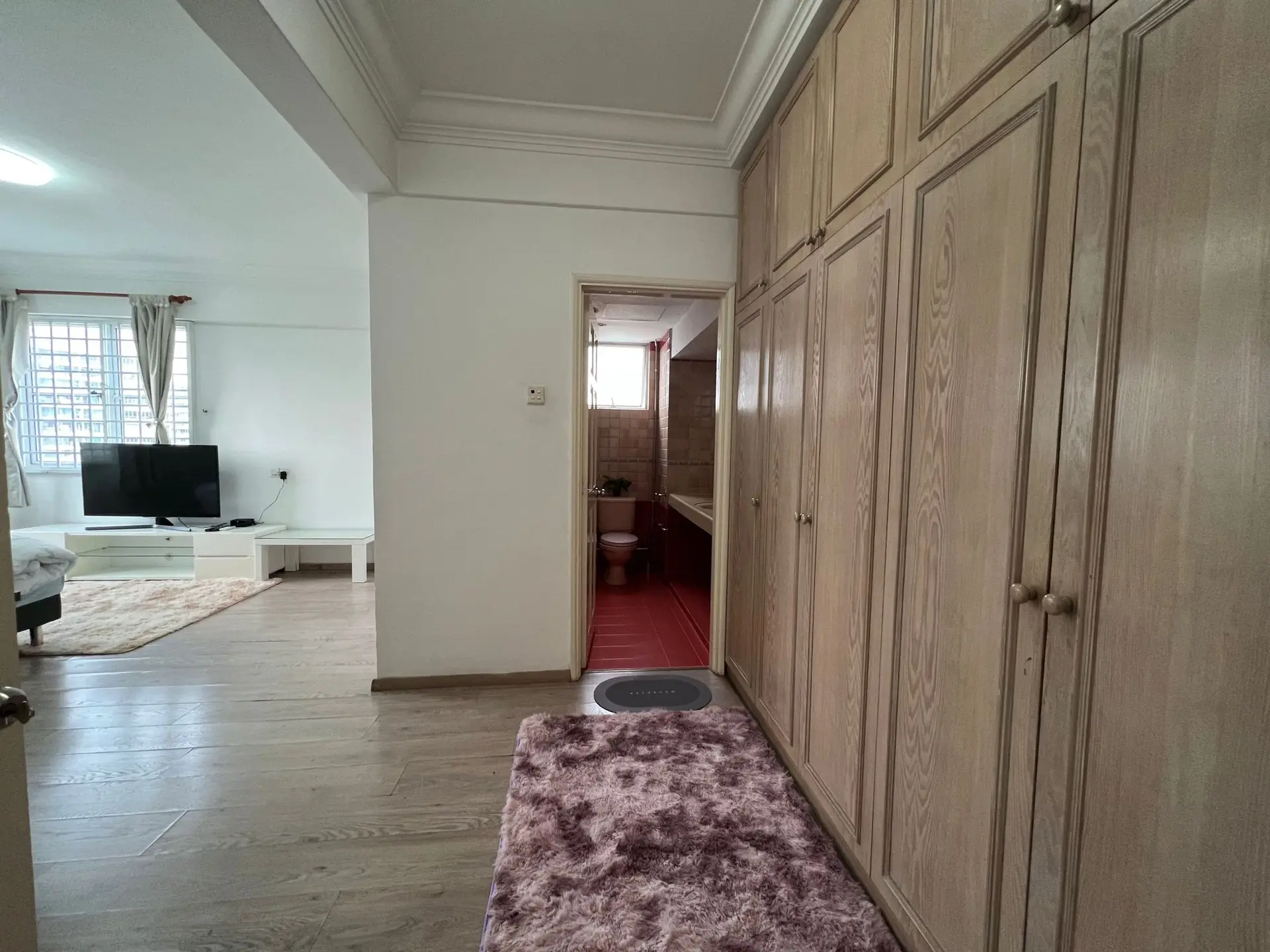
Here's the scenario we see every week: a condo owner has signed the renovation contract, the ID has a timeline, the new carpentry is scheduled — but the existing built-in wardrobe is still bolted to the bedroom wall. Nobody told them it doesn't just "come out." It needs to be dismantled in place, panel by panel, before a single piece leaves the room.
When the clock matters more than the cheapest option, our same-day wardrobe removal is built for it: WhatsApp us photos, location, deadline, and we confirm the fastest available slot.
And once it's broken down? The volume of material is staggering. A standard three-door built-in wardrobe generates enough debris to fill a large lorry bay. Laminated panels, backing boards, drawer runners, shelving brackets, hanging rails — all of it needs to go somewhere.
In our 10+ years clearing Singapore homes and condos, built-in wardrobe removal is one of the most underestimated disposal jobs. Let's break down what's actually involved.
First: Is It Truly Built-In?
This sounds obvious. It isn't. We've had clients insist their wardrobe is built-in when it's actually a freestanding unit pushed flush against the wall. The distinction matters because it changes the job entirely.
Genuinely built-in means:
- The carcass is screwed directly into the wall (often into concrete or brick)
- The top panel may be fixed to the ceiling or a bulkhead
- Side panels are frequently secured to adjacent walls
- There's no backing board visible — the wall is the back
- Flooring often doesn't extend underneath
Freestanding but fitted-looking means:
- It can be pulled away from the wall (even if heavy)
- There's a backing board (usually thin plywood or hardboard)
- Flooring runs underneath, or there's a visible plinth
A freestanding unit can sometimes be carried out whole or tipped onto a trolley. A true built-in? It's coming out in pieces. No exceptions.
What Dismantling Looks Like On-Site
This isn't a five-minute job with a screwdriver. Here's the sequence our crew typically follows:
1. Emptying and stripping internals. Drawers out. Shelves out. Hanging rails unclipped. This alone fills bags — drawer runners, plastic fittings, handles, mirror panels if present.
2. Removing doors. Hinged doors come off at the hinge screws. Sliding doors lift off their tracks. Either way, each door is a full-length laminated panel that needs careful handling to avoid gouging the surrounding wall or floor finish.
3. Detaching the carcass from the wall. This is where it gets physical. Screws driven into concrete a decade ago don't come out cleanly. We use impact drivers, pry bars, and sometimes reciprocating saws to cut through fixings that have seized. Older HDB and condo wardrobes from the 1990s and early 2000s often used heavy-gauge steel brackets that resist standard extraction.
4. Breaking down panels. Once free from the wall, the carcass panels are still too large to fit through doorways or into lifts. We cut or snap panels to manageable sizes on-site.
5. Protecting the room. Floor protection is non-negotiable. Laminate chips, screw heads, and panel edges will scratch parquet or tile in seconds. We lay protective sheeting before cutting begins.
The Volume Problem Nobody Warns You About
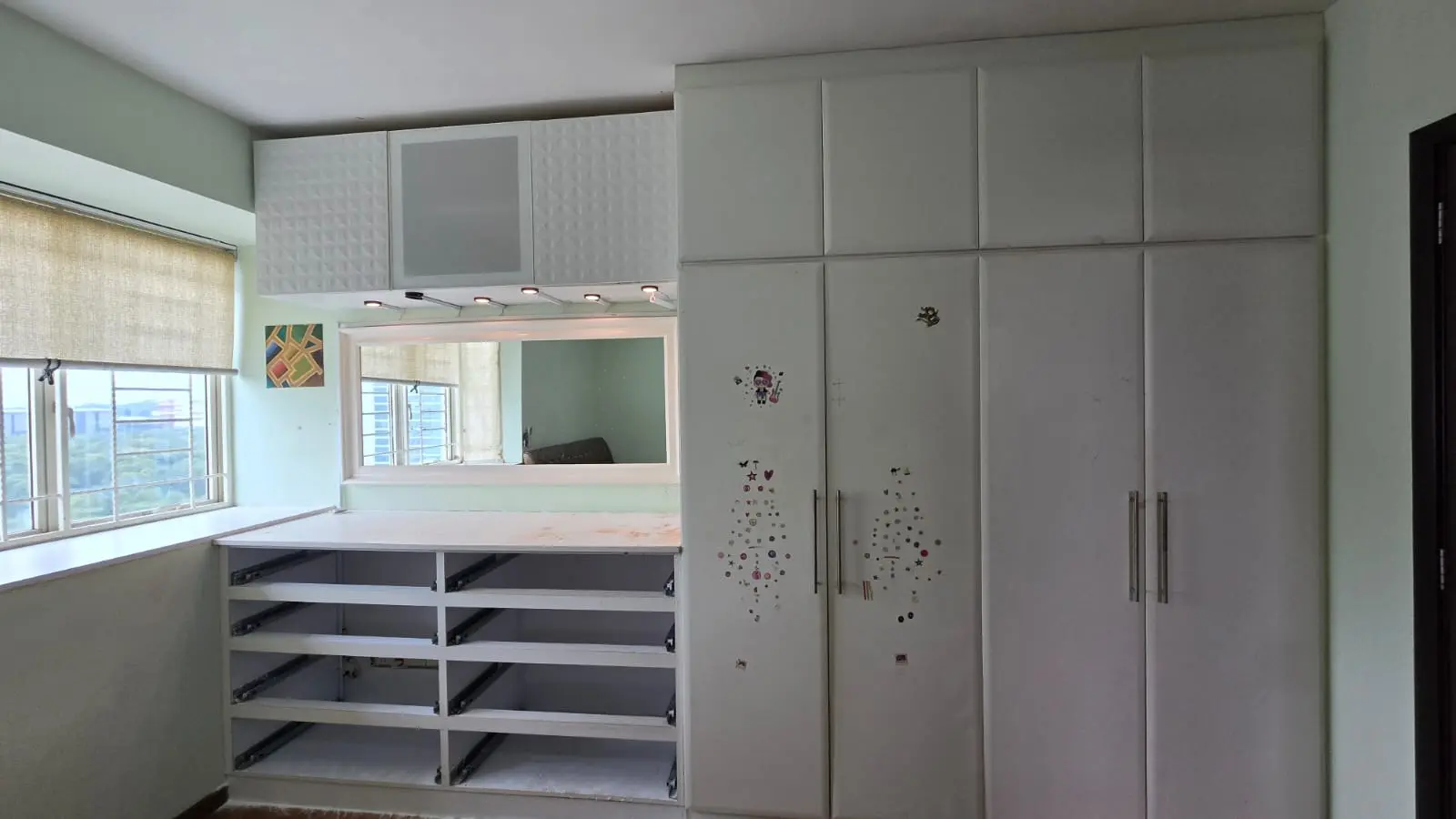
A single built-in wardrobe — the kind that spans one bedroom wall — produces roughly 15 to 20 large panels of chipboard or MDF, plus hardware, plus packaging waste if you're disposing of the new wardrobe's materials simultaneously.
That's not fitting in your car. It's not fitting in a standard bin. And your town council's bulky-item collection? They require you to dismantle it yourself first and leave it at the designated collection point on the scheduled day. If you can't break it down, they won't take it.
We handle the full chain: dismantling on-site, carrying it out through your corridor and lift, loading, and routing the material through proper recycling channels. Metal hardware gets separated. Timber and engineered wood go to intermediaries for further sorting.
HDB vs Condo: Different Logistics, Same Mess
For HDB flats, we're working with standard passenger lifts. Panel sizes need to fit those dimensions — which means more cutting on-site. Corridors are narrow. We plan the extraction path before we start cutting so panels don't need to be re-cut at the lift landing.
For condos, the owner or tenant needs to check with their MCST or building management ahead of our arrival. Some condos require advance booking of the service lift. Some require lift padding to be arranged — that's between you and your management office, not something we handle. Disposal hours may be restricted (no removals during certain windows). Get this sorted before we arrive, and the job flows smoothly.
Mistakes We've Seen Over 10+ Years
Assuming the renovation contractor handles disposal. Many IDs and contractors will hack out the wardrobe but leave the debris piled in the room for you to deal with. Clarify this before signing your reno contract.
Underestimating the timeline. A full-wall master bedroom wardrobe takes a trained crew 45 minutes to two hours to dismantle, depending on construction. DIY attempts with a household toolkit? We've seen homeowners spend an entire weekend and still have panels screwed to the wall.
Forgetting what's behind the wardrobe. Electrical points, data cables, even water pipes can sit behind a built-in unit. We proceed carefully around known services, but if your wardrobe has been there since the flat was built, there may be surprises on that wall.
Not checking the floor underneath. If the wardrobe predates your current flooring, there'll be bare screed or old tiles underneath. Your renovation contractor needs to know this for planning — but you need to know it before you schedule removal, so the exposed area isn't left vulnerable longer than necessary.
FAQ
How do I get a quote for built-in wardrobe removal? Send us photos via WhatsApp — the front of the wardrobe, a shot showing how it meets the wall and ceiling, and the room doorway width. We'll confirm scope and provide a quote, usually within the day.
Can you remove just the wardrobe, or do you handle other renovation debris too? Both. We clear single wardrobes and full-flat renovation waste. If your contractor is generating debris simultaneously, we can coordinate a single collection to save you multiple trips.
Do surcharges apply for walk-up buildings or weekend jobs? Yes. Surcharges may apply for after-hours work, Sundays, public holidays, and buildings without lift access. We confirm all charges at the quote stage — no surprises on the day.
Ready to Get That Wardrobe Out?
Send us a few photos on WhatsApp. We'll tell you exactly what's involved for your specific unit and give you a clear quote — no obligation, no guesswork.
WhatsApp us at 9730 4047 — include photos of the wardrobe and we'll get back to you fast.