Condo Bin Centre & Bulky Items: Why You Can't Just Leave Them There
By Junk Express Team
That Sofa Won't Survive the Night Down There
Here's a scenario we see play out every week: a condo resident replaces their old sectional sofa, hauls it down to the bin centre, and walks away assuming it'll be collected like any other rubbish. Two days later, there's a notice on the lobby board. Sometimes a fine. Sometimes a photo of their item with a polite but firm letter from the MCST.
Most last-minute clear-outs come down to slot availability. residential team works backwards from your deadline — share it in the chat and we'll tell you what's feasible today.
If you've moved from an HDB flat — where leaving bulky items near the void deck for town council collection is relatively normal — this catches you off guard. But condominiums operate under completely different rules.
Why Condo Bin Centres Are Not HDB Void Decks
The bin centre in a condominium is a managed, enclosed space. It's sized for daily household waste collected by the estate's appointed waste contractor — not for ad-hoc furniture dumping. Here's why MCSTs enforce strict rules around it:
Fire safety. A mattress or sofa blocking the bin centre creates a fire hazard. SCDF guidelines require clear access paths. Estate managers take this seriously because their fire safety certificate depends on it.
Pest control. Upholstered furniture left in warm, enclosed spaces attracts cockroaches and rodents fast. One abandoned mattress can undo months of pest management.
Contractor access. The waste collection truck needs to reach the bins on schedule. A sectional sofa wedged between compactor bins means the contractor can't do their job — and the MCST gets charged for a return trip.
Limited space. Unlike HDB common areas, condo bin centres are compact. They're designed for wheelie bins, not wardrobes.
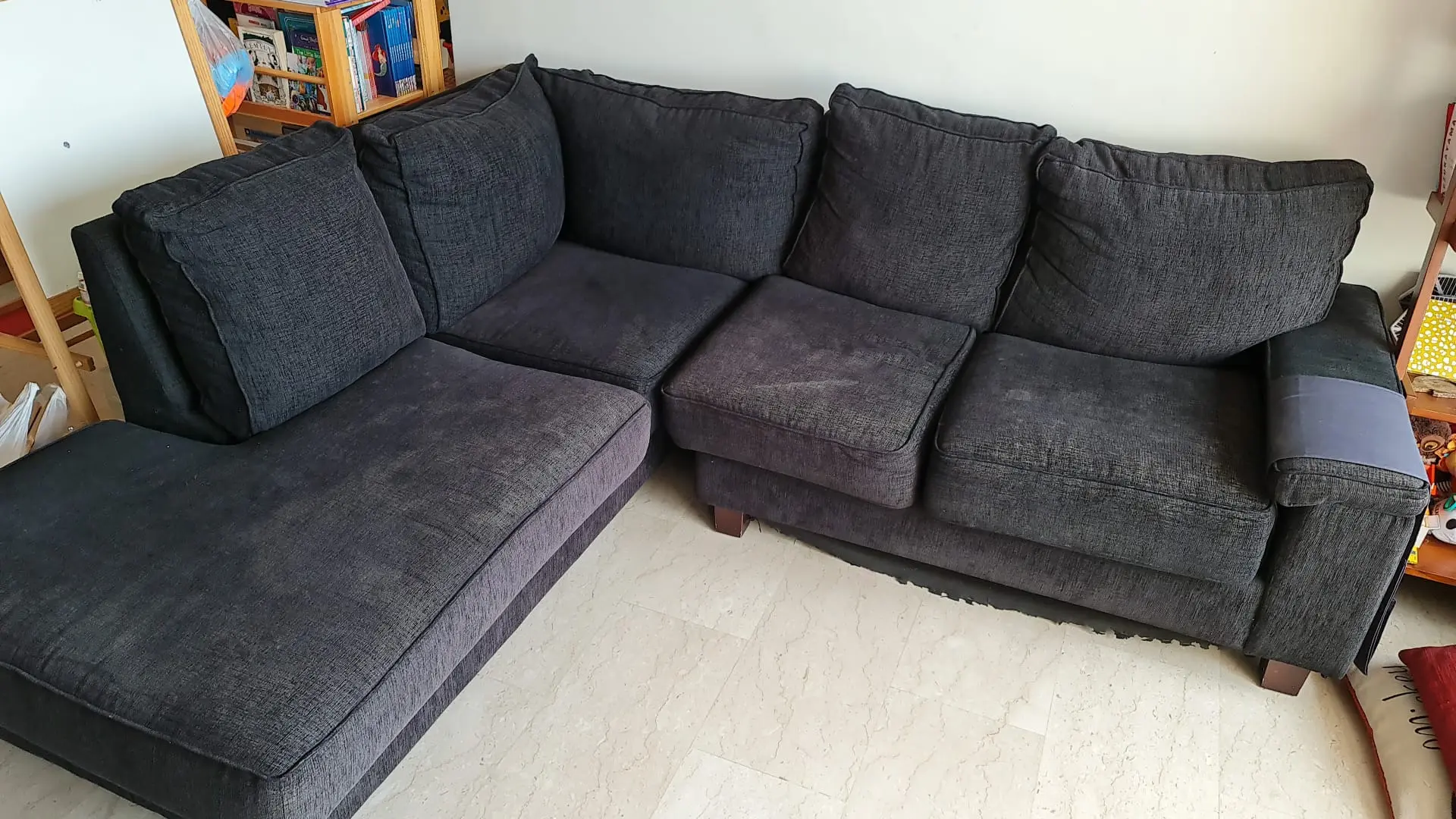
A standard L-shaped sectional like this one? It physically won't fit alongside the bins without blocking access. That's the practical reality before we even get to the rules.
The Typical Penalty
Most MCSTs issue a written warning first, then a fine — commonly in the range of a few hundred dollars per offence, depending on the estate's by-laws. Some estates with persistent problems have installed CCTV at the bin centre specifically to identify offenders. In our 10+ years clearing condominiums across Singapore, we've had clients contact us after receiving the fine, wishing they'd just arranged proper removal in the first place.
The Correct Process for Condo Bulky Item Disposal
Every condominium has its own house rules, but the typical correct process looks like this:
-
Check with your management office. Some estates have a designated bulk collection day (often monthly). Others require you to book a slot and leave items at a specific loading bay area during approved hours.
-
Get written approval if required. Many MCSTs need a form submitted or an email confirmation before any bulky item enters the common area — even temporarily.
-
Arrange your own removal. Unlike HDB town councils, most condo MCSTs do not provide a free bulky item collection service. The responsibility sits with you, the resident.
-
Coordinate lift and loading bay access. If your building requires service lift booking or loading bay reservation, that's on you to arrange with management ahead of the pickup. We cannot liaise with your building management on your behalf — but once you've secured the slot, we work within it.
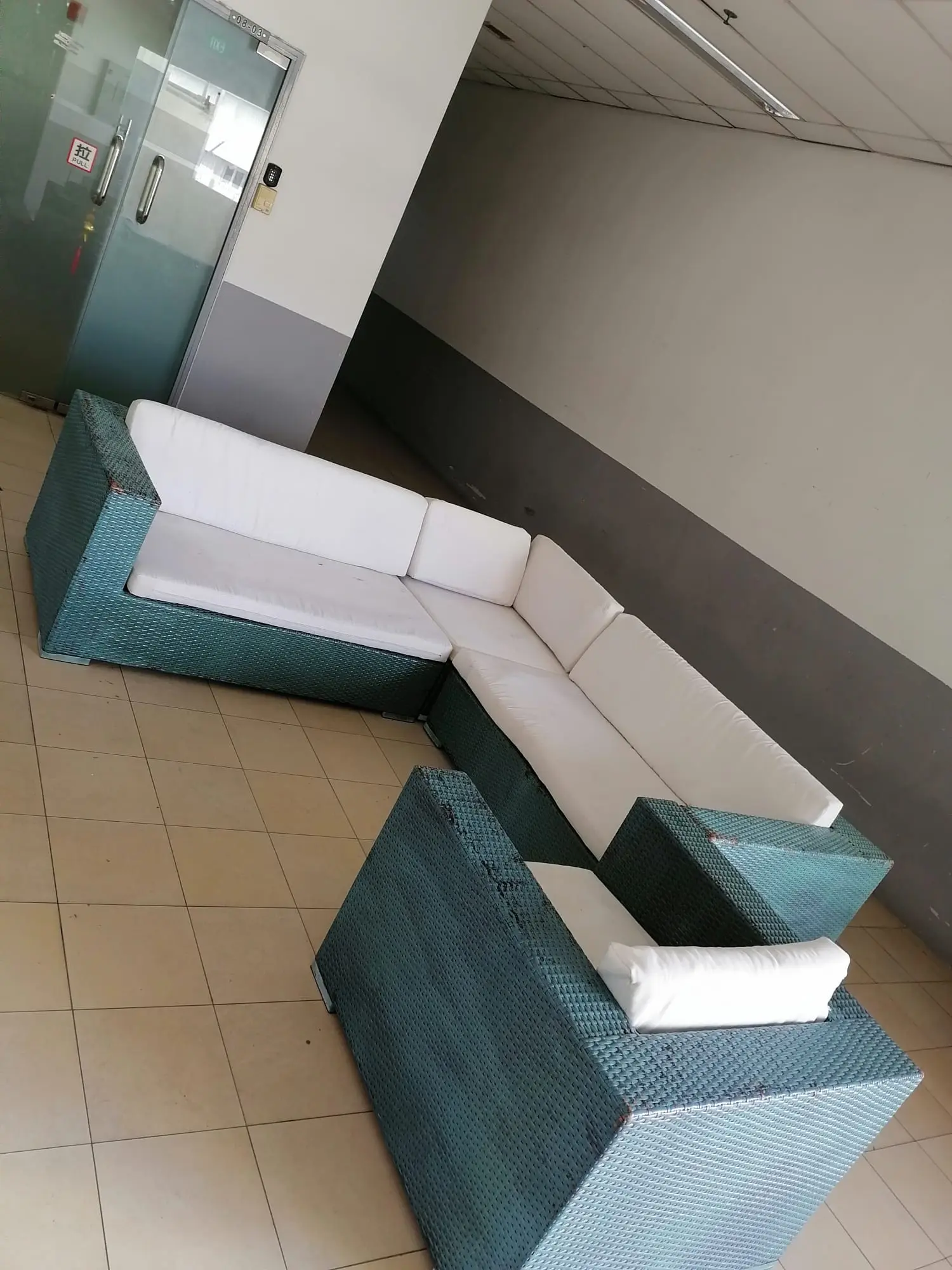
This is what a proper clearance looks like — items staged at an accessible collection point, removed in one sweep. No overnight stays in the bin centre. No fines.
HDB vs Condo: The Key Difference
In HDB estates, town councils do collect bulky items — but only if you've dismantled them first and placed them at the designated collection point on the scheduled day. It's not instant, and it's not effortless.
In condos, there's usually no equivalent service at all. The MCST expects you to handle disposal privately. That's the gap most residents don't realise until they're staring at a penalty notice.
Common Mistakes We've Seen Over 10+ Years
- Assuming the bin centre is "fair game" after office hours. CCTV doesn't clock off.
- Leaving items "just for one night." One night becomes a pest issue and a contractor complaint.
- Not checking if lift padding is required. Some MCSTs require padding in the service lift for any furniture movement. The building management provides this — you arrange it with them, not us.
- Forgetting weekend restrictions. Many estates prohibit bulky item movement on Sundays entirely.
FAQ
Can I leave bulky items at my condo bin centre if I tell the management office? It depends entirely on your estate's by-laws. Some allow temporary staging at the bin centre with prior written approval. Others require items to go directly from your unit to the removal vehicle. Check with your management office first.
Will the condo's waste contractor take my old furniture? Almost never. The appointed waste contractor handles daily household refuse only. Bulky items fall outside their scope and contract.
Do you handle the building management approval for me? No. The owner or tenant must secure any required approvals, service lift bookings, or loading bay reservations directly with their building management. Once that's confirmed, we show up at the agreed time and clear everything efficiently.
Skip the Fine. Get It Cleared Properly.
Send us a few photos on WhatsApp — the item, the access route, and any building constraints you know about. We'll quote you fast, and we'll work within whatever time slot your management has approved.
Surcharges may apply for after-hours, Sundays, public holidays, or stair-carry access — all confirmed at quote stage. No surprises.
WhatsApp us at 9730 4047 for a free photo-based quote.