Walk-Up Apartment Disposal in Singapore: Why Surcharges Apply and How to Prepare
By Junk Express Team
You've booked a disposal service. You've sent the photos. The quote comes back — and it's higher than your neighbour's identical job in a lift-access block two streets away.
If you're working against a delivery or move-out deadline, residential disposal service prioritises same-day and urgent slots — send photos, location, and the time you need to be done by.
Welcome to the walk-up surcharge. It's not arbitrary. It's physics.
Why Walk-Up Buildings Change Everything
Singapore still has thousands of walk-up apartments. Older HDB blocks without lifts. Conservation shophouses along Joo Chiat, Tiong Bahru, Tanjong Pagar. Pre-war terraces converted into multi-storey flats. If you live in one, you already know the daily cardio of hauling groceries up four or five flights. Now imagine hauling a queen-size mattress down those same stairs.
In our 10+ years clearing walk-up properties across Singapore, we've encountered stairwells barely 900mm wide, 90-degree landings with zero clearance, and timber banisters that splinter if you so much as brush them with a wardrobe edge. Every item that would take two minutes in a lift-access building takes ten to fifteen minutes of careful manoeuvring down a staircase. Sometimes longer.
That's why surcharges apply.
The Three Factors Behind Walk-Up Pricing
1. More Hands on the Job
A standard two-person crew can handle most lift-access removals efficiently. Walk-ups demand three or four — one at each landing to pivot bulky items around corners, plus someone spotting from below. More personnel means higher labour cost. Simple maths.
2. Time Multiplied
A six-item clearance in a lift-access HDB flat might take 30 to 45 minutes. The same six items from a fourth-floor walk-up? Easily 90 minutes or more. Each trip down is slow, deliberate work. Rush it and you damage the walls, the banister, or the item blocks the stairwell for other residents.
3. Damage Risk to the Building
Narrow staircases weren't designed for a three-seater sofa to pass through. Walls get scuffed. Handrails take knocks. Paint chips. In conservation shophouses, original plasterwork and tile can be irreplaceable. Our crew takes extra care — protective wrapping, controlled angles, slower pace — but that care costs time, and time costs money.
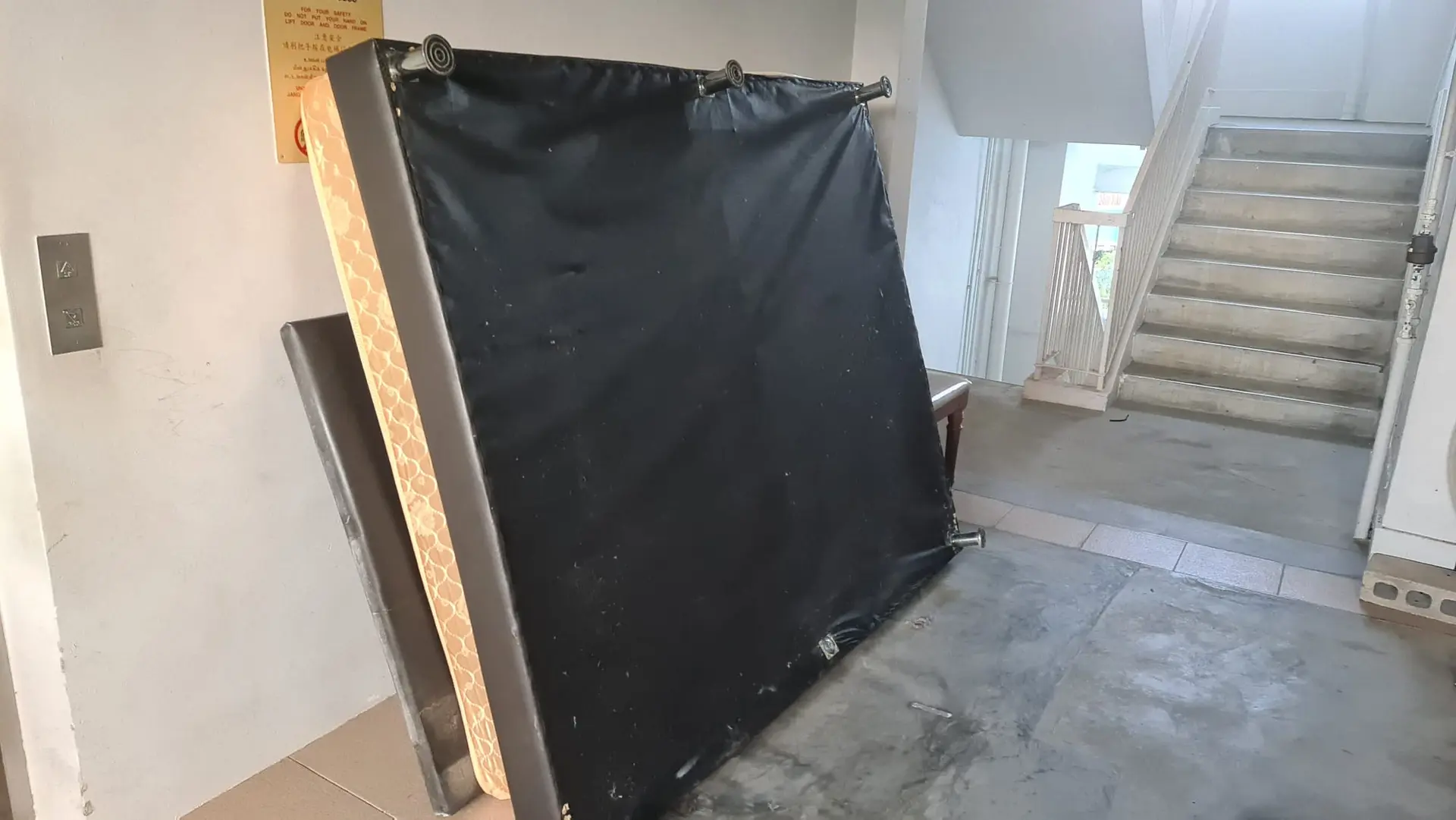
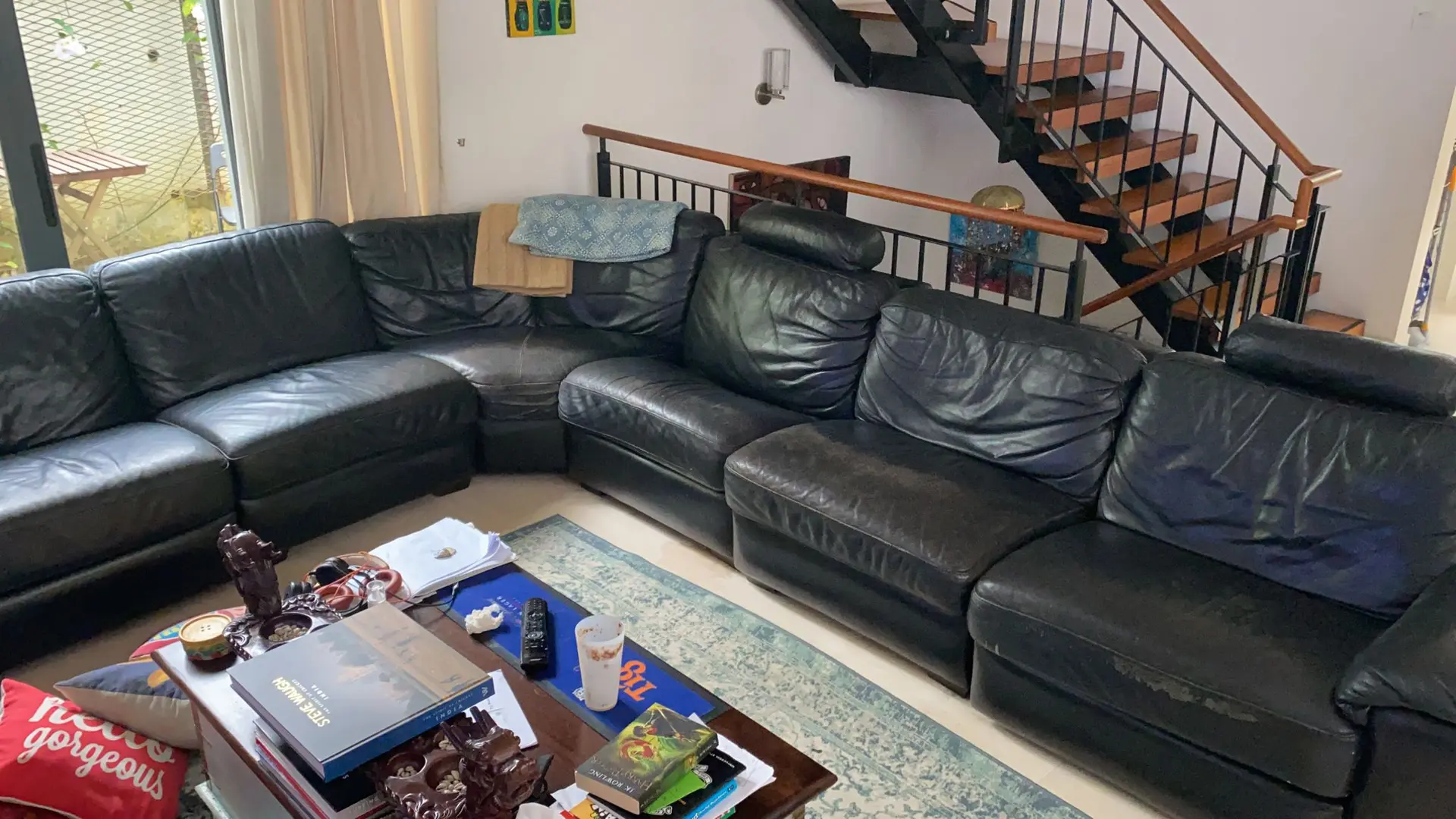
Look at those dimensions. A sectional sofa that barely fits through a standard doorframe becomes a genuine puzzle when you add a tight stairwell landing into the equation. We've had jobs where dismantling on-site was the only option — the assembled piece simply could not navigate the turn.
What You Can Do to Keep Costs Down
You can't install a lift. But you can reduce the time and effort the job demands.
Clear the stairwell. Potted plants, shoe racks, bicycle frames, drying racks — anything in the common corridor or on the landing slows us down and increases the chance of accidental damage. Move what you can before we arrive.
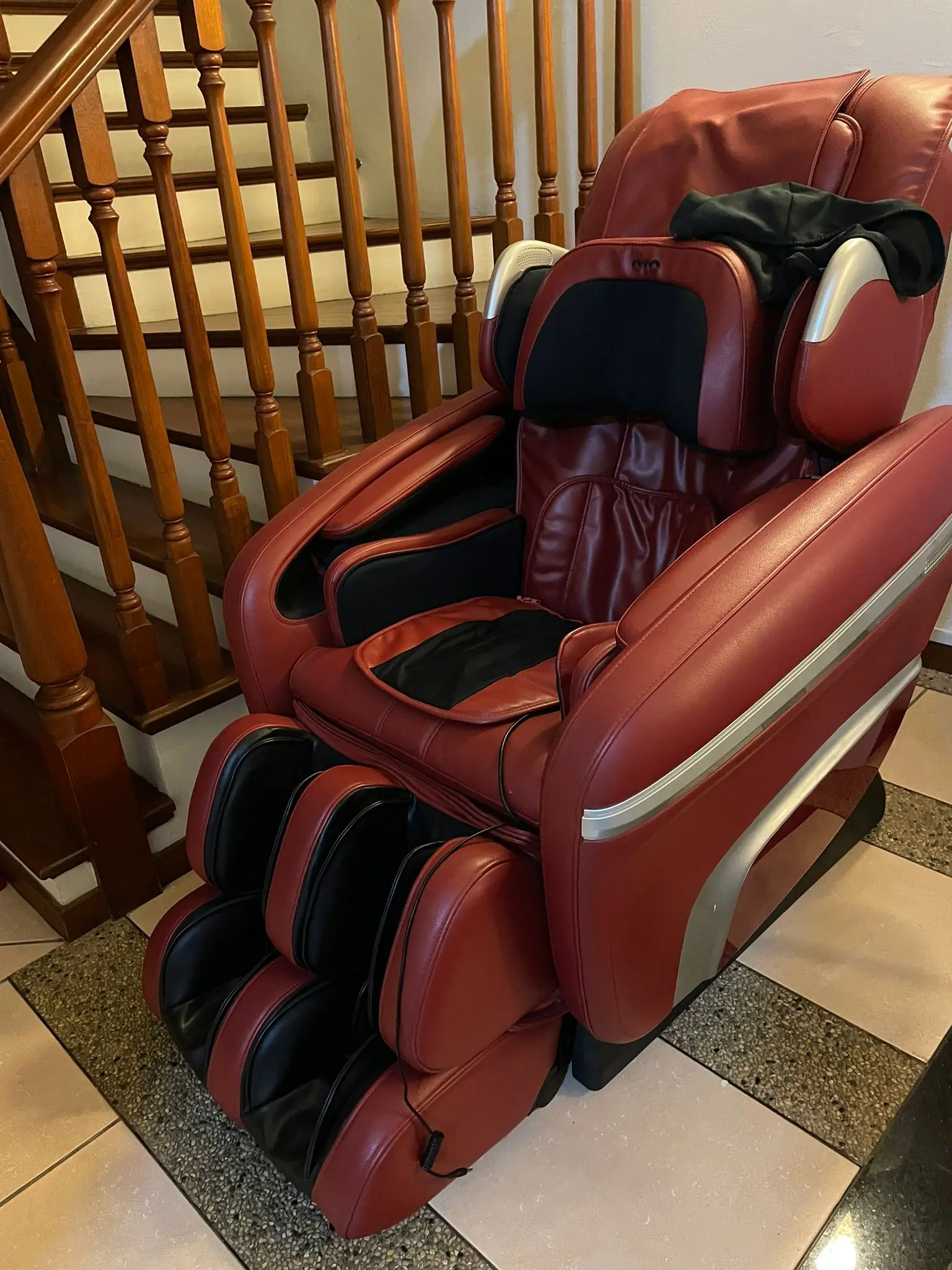
Dismantle what you can. A bed frame in pieces is far easier to carry than an assembled queen divan. Remove legs from tables. Detach headboards. If you have the tools and the confidence, take wardrobes apart at the panel joints. Every centimetre of width you shave off makes the stairwell more navigable.
Be honest about floor level and staircase width. When you send photos for your quote, include a shot of the stairwell — especially the tightest landing. This lets us crew the job correctly the first time rather than arriving short-handed and needing to reschedule.
HDB Walk-Ups vs Shophouse Walk-Ups
Not all walk-ups are equal.
Older HDB walk-ups (typically four to five storeys, built before the lift-upgrading programme) have relatively standardised stairwells — concrete, reasonably wide, robust. The main challenge is repetition: multiple trips, multiple flights, no shortcut.
Conservation shophouses are a different beast. Spiral staircases. Timber treads that flex under load. Ornamental railings you absolutely cannot scratch. Ceiling heights that vary floor to floor. We've cleared third-floor shophouse offices in Chinatown where the only viable path for a filing cabinet was out the window and lowered by rope. Not every job is that dramatic — but the point stands. Shophouse stairwells demand extra planning.
For either type, there's no service lift, no goods lift, no alternative. It's the stairs or nothing.
Common Surprises From 10+ Years of Walk-Up Jobs
"But the town council picks up bulky items for free." They do — if you dismantle the item yourself and bring it to the designated collection point on the scheduled day. For a walk-up resident, that means you're still doing the staircase carry yourself, with a dismantled wardrobe, on the town council's timetable, not yours.
"I didn't think a washing machine would be that hard." A front-loader weighs 70–80kg. On a flat surface with a trolley, manageable. Down four flights of narrow stairs with no lift? That's a two-person careful descent, step by step. Weight matters more than size in walk-ups.
"Can you just throw it over the parapet?" No. Apart from the obvious safety issue, items dropped from height shatter unpredictably. Glass, splinters, metal fragments — it's a hazard to residents below and creates a mess that takes longer to clean than a careful carry-down would have taken.
Mini-FAQ
Q: How much extra does a walk-up surcharge add? We don't publish fixed prices — every job depends on floor level, number of items, stairwell width, and item weight. Send us photos via WhatsApp and we'll give you a transparent quote that accounts for the staircase factor upfront. No surprises on the day.
Q: Do surcharges also apply for ramp access or basement units? Yes. Any non-lift access that requires additional manual effort — stairs, ramps, or long corridor carries — may attract a surcharge. We confirm this at the quote stage so you know exactly what you're paying before you book.
Q: Can I get same-day removal from a walk-up? Urgent jobs are subject to availability and may incur additional charges. Walk-ups require more crew, so scheduling is tighter. Give us as much notice as you can — typically 24 to 48 hours — and we'll work to the tightest window your job allows.
Ready to Get a Quote?
Send us a few photos — the items, the stairwell, and the landing — via WhatsApp. We'll come back with an honest quote that reflects the actual work involved. No hidden fees. No shock on arrival day.
WhatsApp us at 9730 4047 for a free, no-obligation quote.
It's manual. It's careful. It's done right.