What Actually Happens to Your Junk After We Collect It in Singapore
By Junk Express Team
You've watched the crew load your old fridge, the wardrobe that's been gathering dust, and three bags of renovation offcuts onto the lorry. The flat is clear. You close the door.
Most commercial deadlines come down to one access window. commercial clearance service confirms inside that window or tells you what's actually feasible — no vague promises.
Then the thought hits: where does all of it actually go?
It's a fair question. And in our 10+ years of clearing homes and offices across every district in Singapore, it's one we hear more often than you'd think — especially from customers who genuinely care about whether their items end up in a landfill or get a second life.
Here's the honest answer. Not a greenwashed brochure. The real routing.
Why This Matters More Than Ever
Singapore's only landfill — Semakau — has a finite lifespan. Every tonne diverted from incineration and landfill extends that runway. For environmentally conscious residents and businesses, knowing your disposal partner actually sorts and routes materials responsibly isn't a nice-to-have. It's a baseline expectation.
But here's the tension: not everything can be recycled. Claiming otherwise would be dishonest. What a responsible operator does is maximise diversion at every stage. That's the commitment we make — and the process we'll walk you through below.
Stage 1: Collection and Initial Sorting
When our crew loads items onto the vehicle, they're already making mental notes. Metal bed frames go in one section. Cardboard and paper in another. Appliances with recoverable components get handled differently from a pile of broken drywall.
This isn't random. It's ten years of muscle memory.
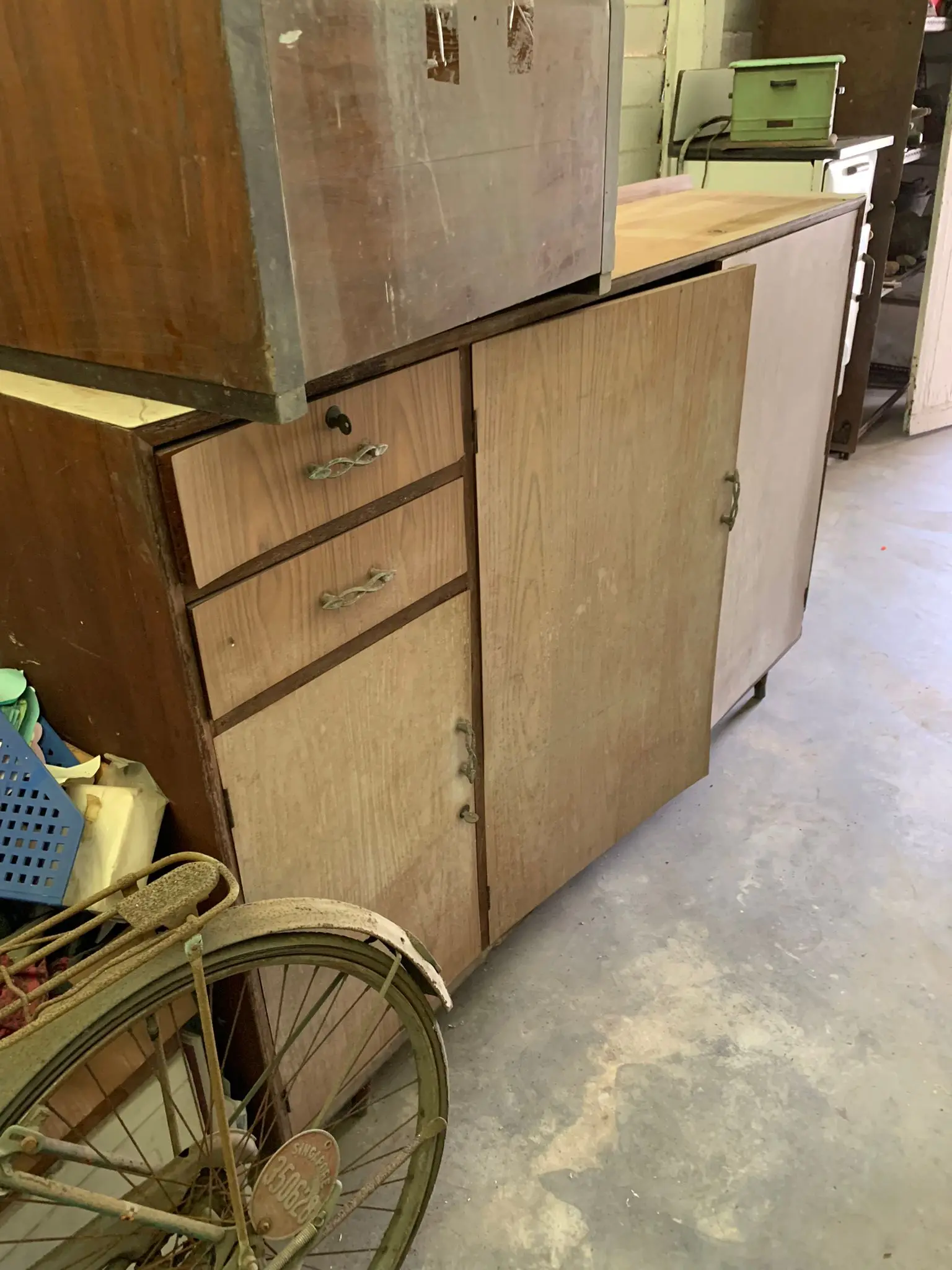
A typical residential clearance — like this Clementi job with a fridge, washing machine, and assorted household items — produces a mix of recyclable metals, recoverable components, and residual waste. The key is separating them before they reach the next stage.
Stage 2: Intermediate Facilities — Where the Real Sorting Happens
Here's what most people don't realise: items collected by disposal services in Singapore rarely go directly to incineration plants. They pass through intermediate sorting facilities first.
At these facilities, trained workers and (increasingly) mechanical processes separate materials into streams:
Metals — steel frames, aluminium components, copper wiring from appliances. These have genuine commodity value and get channelled into metal recycling.
Paper and cardboard — packing materials, old documents from office clearances, cardboard boxes. Baled and sent to paper recyclers.
Reusable items — furniture or appliances in working condition get diverted where possible. We won't name specific partners, but items that still have functional life get routed away from destruction when the opportunity exists.
Certain plastics — not all plastics are recyclable in Singapore's current infrastructure, but specific grades (particularly rigid plastics from appliance housings) can be processed.
Residual waste — everything that can't be economically recycled or reused. This is the fraction that moves to the next stage.
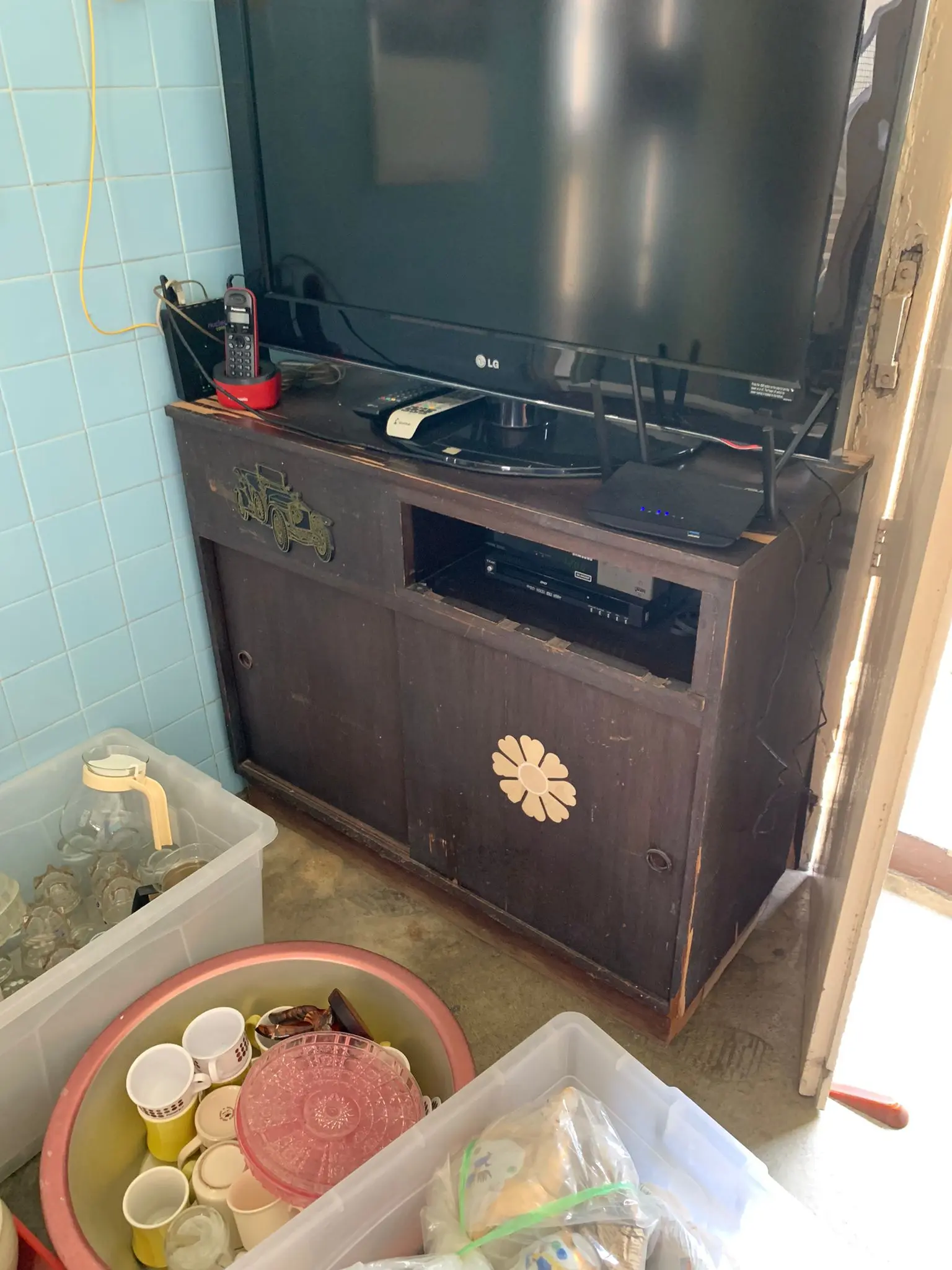
Stage 3: Incineration and Semakau
Let's be direct. Residual waste — the fraction that can't be diverted — goes to one of Singapore's waste-to-energy incineration plants (Tuas, Senoko, or similar facilities). Incineration reduces volume by roughly 90%, and the ash is what ultimately reaches Semakau Landfill.
This isn't ideal. But it's the reality of Singapore's waste infrastructure. The goal isn't zero landfill contribution — that's not achievable with current technology for mixed bulky waste. The goal is minimising what reaches that final stage through aggressive sorting upstream.
The Honest Numbers
We won't fabricate a recycling percentage. What we can tell you:
- Metal components from appliances and furniture frames — almost always recovered
- Paper and cardboard — consistently diverted to recycling channels
- Whole items in working condition — routed for reuse where feasible
- Mixed renovation debris, broken composites, contaminated materials — these are the hardest to divert
In our experience, a typical residential clearance yields somewhere between 30–60% divertable material by weight, depending heavily on what's being cleared. An office decommission with metal desks and filing cabinets? Higher. A post-renovation debris haul? Lower.
What About Specific Item Types?
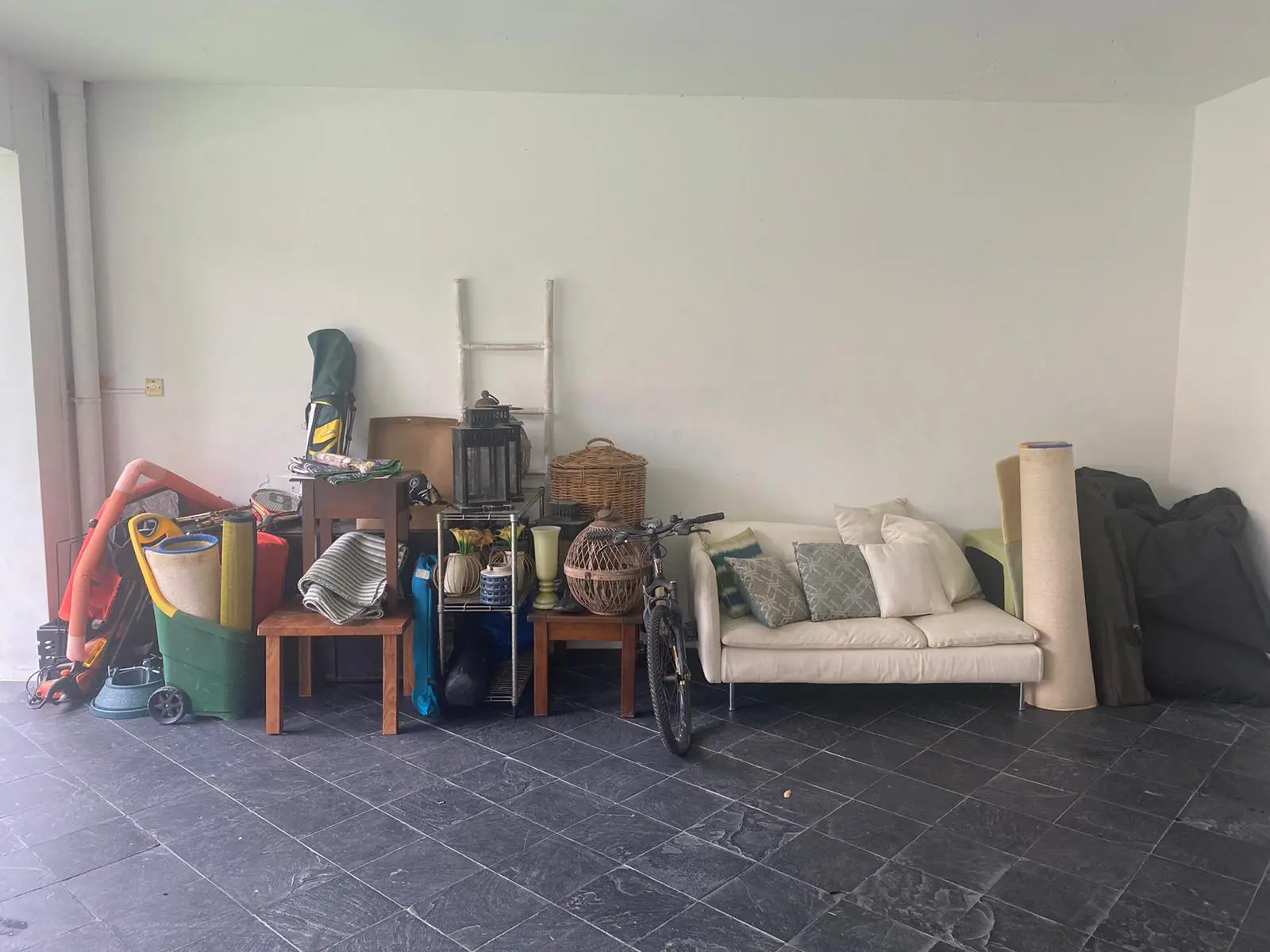
Furniture like sofas and mattresses — these are among the hardest items to recycle. A sectional sofa contains mixed materials: wood frame, metal springs, foam padding, fabric. Some components (the metal springs, the wood) can be separated. The foam and fabric typically cannot be economically recycled in Singapore and end up incinerated.
Appliances — fridges, washers, air-con units contain recoverable metals and (in the case of fridges) refrigerant gases that need proper handling. These get routed through proper recycling channels for component recovery.
E-waste — computers, monitors, TVs contain both valuable materials and hazardous components. These are channelled through appropriate recycling streams for responsible processing.
Renovation debris — concrete and tiles can sometimes be processed into aggregate. Drywall, mixed timber with paint, and composite materials are harder to divert.
Common Surprises From 10+ Years on the Job
"I assumed everything just goes to the dump." Many customers are genuinely surprised that sorting happens at all. It does — and it's economically motivated, not just environmentally. Recovered metals and paper have real market value.
"Can I separate items myself to help?" You can, but you don't need to. Our crew and the downstream sorting facilities handle separation. What does help: letting us know at quote stage if you have large quantities of a single material (e.g., "it's mostly metal shelving" or "all cardboard boxes"). That helps us route more efficiently.
"Is it better to leave items at the void deck for town council?" HDB town councils do collect bulky items — but they require you to dismantle items first, and collection happens on scheduled days. There's no sorting or recycling routing involved in that process. Items collected by TC go directly into the general waste stream.
Mini-FAQ
Q: Do you guarantee that my items will be recycled? No. We guarantee they'll be sorted through responsible channels that maximise material recovery. But we won't greenwash — residual waste that can't be diverted will be incinerated. What we can promise is that nothing skippable goes straight to destruction without being assessed first.
Q: What if my item is still in good working condition? Let us know. Items with functional life get prioritised for reuse diversion rather than material recovery. A working washing machine has more value intact than broken down for scrap metal.
Q: Does it cost more to have items recycled vs just dumped? No difference in pricing to you. Responsible routing is built into how we operate — it's not a premium add-on. Your quote covers collection, transport, and proper downstream handling regardless of where individual items end up.
Want to Know More About a Specific Job?
Every clearance is different. If you're clearing a home, decommissioning an office, or handling post-renovation debris and want to understand how your specific items will be routed, we're happy to walk you through it.
Send us photos of what needs clearing via WhatsApp at 9730 4047 — we'll provide a free quote and can answer any questions about the disposal routing for your particular items.
It's transparent. It's honest. And it's how we've operated for over a decade.