How to Photograph Your Junk for an Accurate Disposal Quote
By Junk Express Team
The Photo That Costs You Time (and Money)
Here's what happens at least three times a week: someone sends us a single dark photo of a pile of items crammed into a corner. We can't tell if that's a two-seater sofa or a three-seater sectional. We can't see whether the corridor is wide enough for the item to pass without tilting. We don't know if there are stairs involved.
When the landlord's clock is ticking, Commercial Clearance is the lane: same-day and after-hours slots, photo quote, fast confirmation.
So we ask follow-up questions. They reply hours later. We ask one more thing. Another delay. What could have been a quote in minutes stretches into a day-long back-and-forth — and by then, the collection slot you wanted might be gone.
In our 10+ years clearing homes and offices across Singapore, the single biggest factor in quote accuracy isn't the item itself. It's the quality of the photos we receive.
Why This Matters More Than You Think
An inaccurate quote isn't just an inconvenience. It creates surprises on collection day — the kind where our crew arrives and discovers the "small bookshelf" is actually a floor-to-ceiling built-in unit that needs disassembly, or the "easy ground-floor access" involves three steps and a narrow gate.
When the job scope changes on-site, the price changes too. Nobody enjoys that conversation. The fix is simple: send better photos upfront.
What to Photograph: The Four-Shot Method
1. Each Item — Full Body, From a Distance
Step back. We need to see the entire item in one frame, with enough surrounding context to gauge its size. A mattress leaning against a wall? Stand far enough back that we can see it top to bottom.
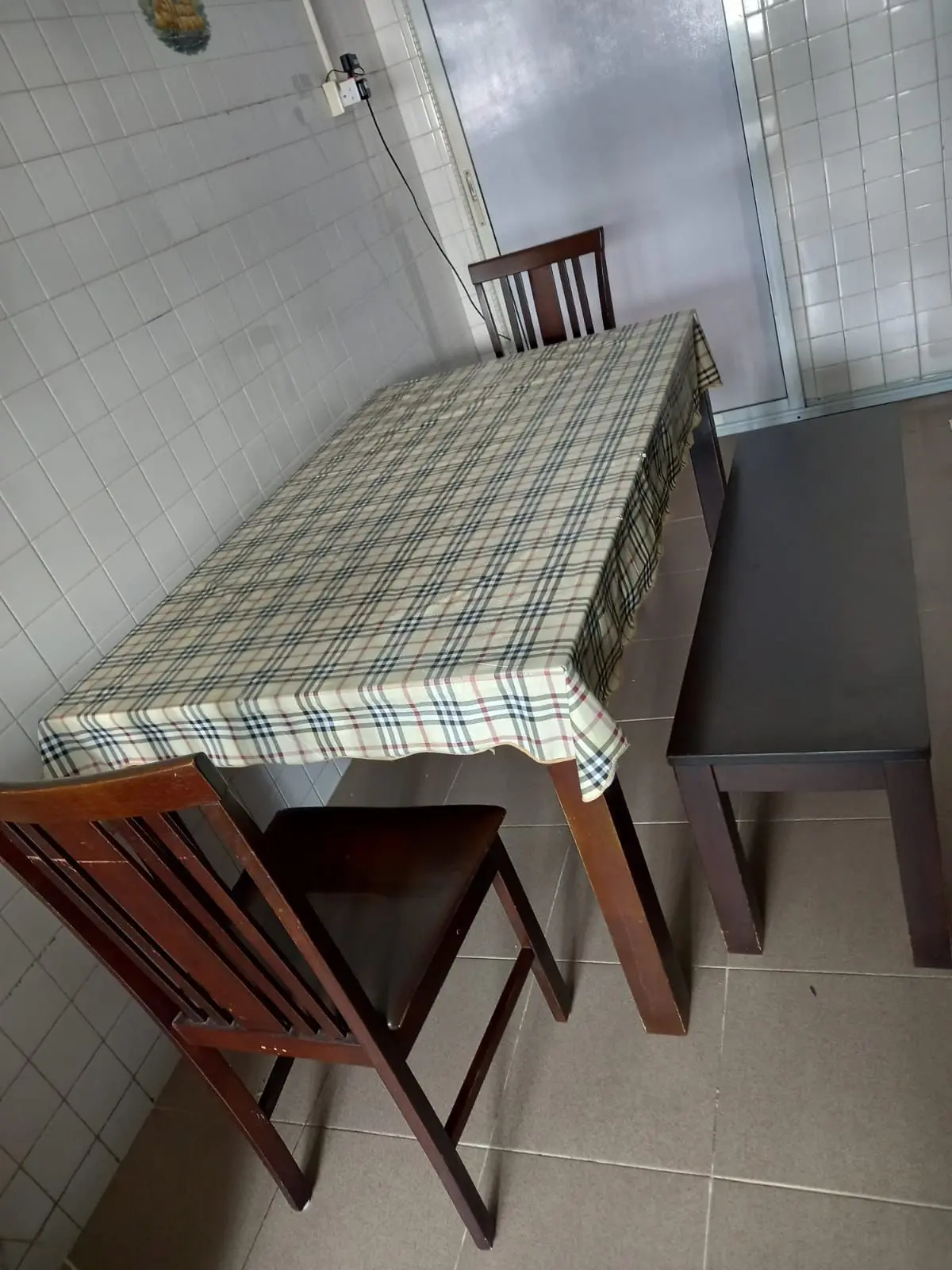
See how dimensions matter? A sectional sofa isn't just "a sofa." It might be 3.2 metres across and need to be manoeuvred through a 90-degree HDB corridor turn. That single detail changes the crew size and time required.
Pro tip: If the item is modular or comes apart, mention it in your message. "This L-shaped sofa separates into two pieces" saves us guessing.
2. The Access Path — Corridor, Lift, Stairs
This is the photo most people forget. And it's the one that matters most for logistics.
For HDB flats: Shoot your corridor from your front door outward. Show the width. If you're on a high floor, confirm there's a working passenger lift — or tell us the floor number if it's a walk-up block. Walk-up access means additional effort, and surcharges apply.
For condos and commercial buildings: The service lift dimensions are critical. Snap a photo inside the lift with something for scale (stand in it yourself, or place a broom handle across the width). Note that if your MCST requires lift padding or has specific move-out booking slots, that's something you'll need to arrange with your building management before our collection date.
For landed properties: Show us the path from the item's current location to where our vehicle can park. Gates, steps, gravel paths, tight side gates — all relevant.
3. Damage or Disassembly Needs
Broken glass panel on a display cabinet? Wardrobe bolted to the wall? Bed frame with a cracked slat that might splinter during removal? Photograph it. Close-up is fine here.
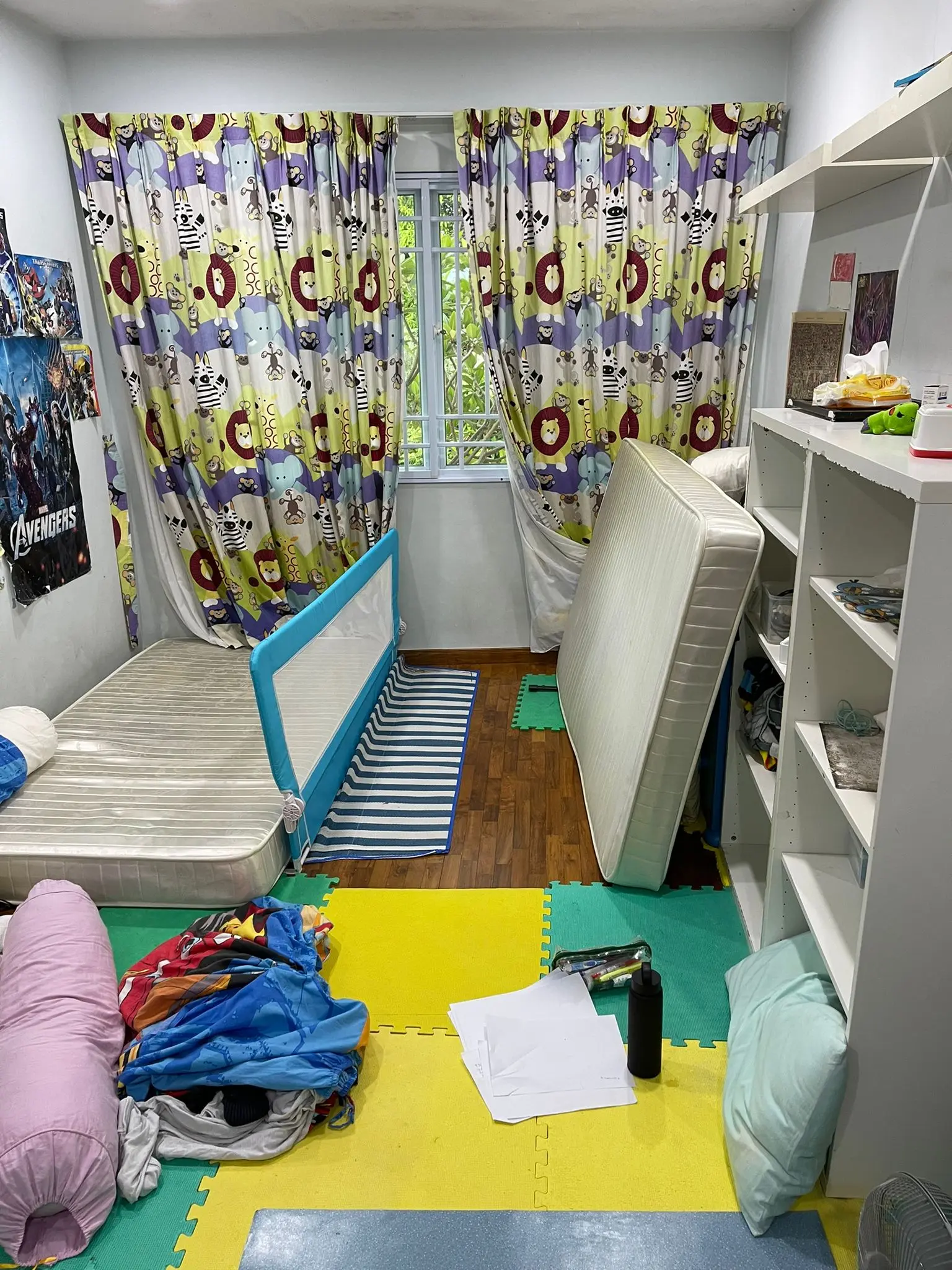
Items like heavy solid-wood tables or bar counters often need partial disassembly to fit through doorways. If you already know the legs unbolt, tell us. If you're not sure, the photo helps us plan.
4. The Wide Shot — Total Volume
Finally, step back and capture everything that's going in one frame. We price based on volume and effort. Three items scattered across different rooms look very different from three items stacked neatly by the door.
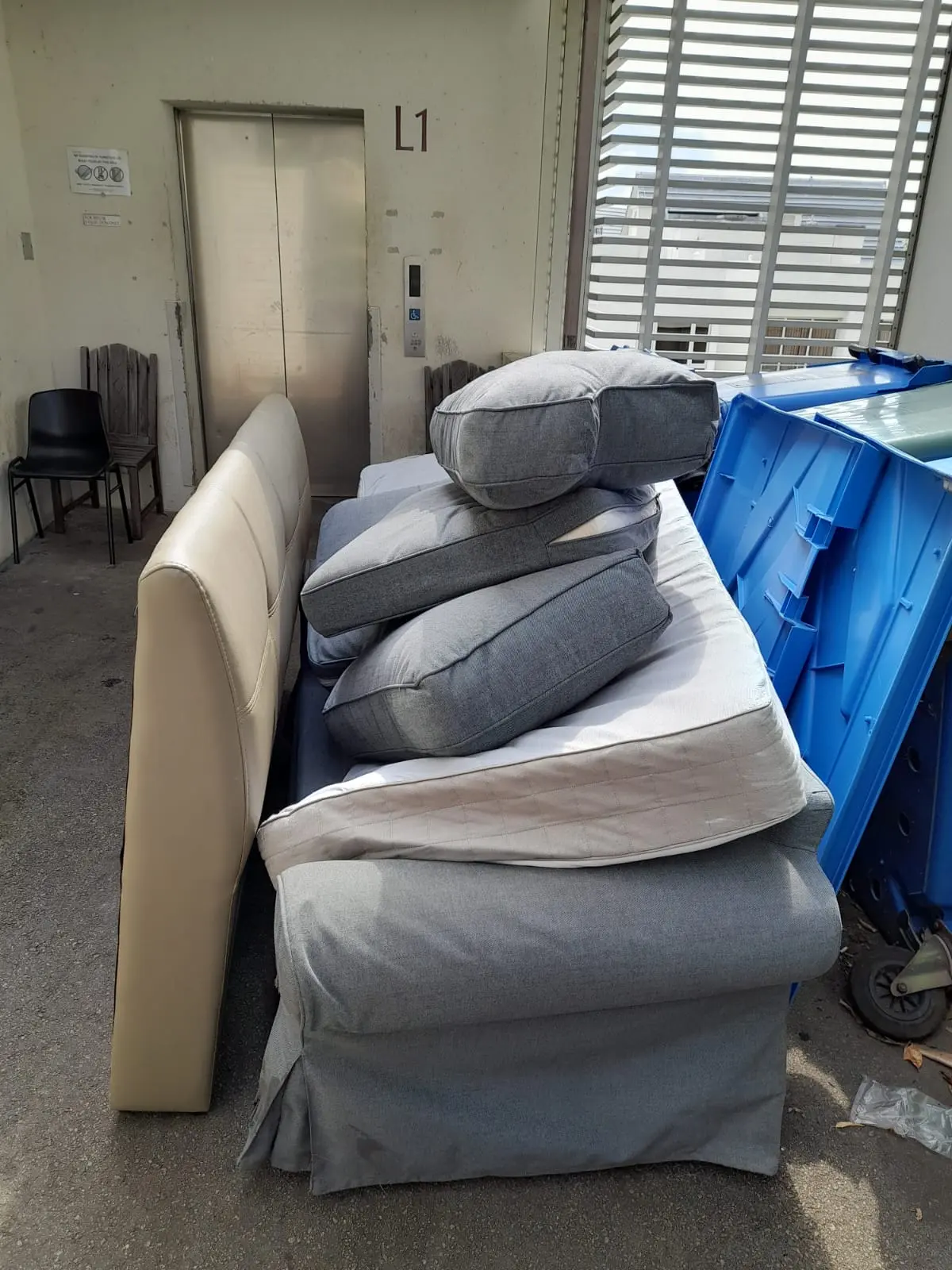
If items are spread across multiple rooms, send one wide shot per room. Label them: "living room — 3 items," "bedroom — mattress + frame."
Common Mistakes We've Seen Over 10+ Years
The "zoomed-in mystery shot." A close-up of fabric. Is that a curtain? A sofa arm? A carpet roll? We genuinely can't tell.
The "everything's behind other stuff" angle. If you're clearing five items but only two are visible because the rest are buried behind boxes, pull them out briefly for the photo — or at minimum, list what's hidden.
No mention of the floor level. "Blk 123" tells us nothing about whether we're carrying a washing machine down four flights of stairs in a walk-up block. Always state your floor.
Forgetting the timeline. If you have a deadline — lease handback, renovation starting Monday, BTO key collection — mention it in your first message. We work to the tightest window your job allows, subject to availability, though urgent requests may incur additional charges.
Quick FAQ
Q: How many photos should I send for a single-item removal? Two minimum — one of the item (full body, showing size) and one of the access path. Three if there's damage or disassembly involved.
Q: Can I send a video instead? Absolutely. A slow 15-second pan of the room showing all items and the corridor works brilliantly. Just keep it steady and well-lit.
Q: What if my quote changes on collection day? If the photos accurately represent the job, the quote holds. Changes happen when there's a significant discrepancy — hidden items, undisclosed stairs, or access issues that weren't visible in the photos. That's exactly why good photos protect you.
Ready to Get Your Quote Right the First Time?
Send your photos to us on WhatsApp at 9730 4047 with a short note: what's going, which floor, and when you need it done. We'll get back to you with an accurate quote — no guesswork, no surprises.