Disposal During Renovation Coordination: When to Schedule Removal So Your Contractor Stays on Track
By Junk Express Team
Your Contractor's Waiting. Your Old Furniture's Still There.
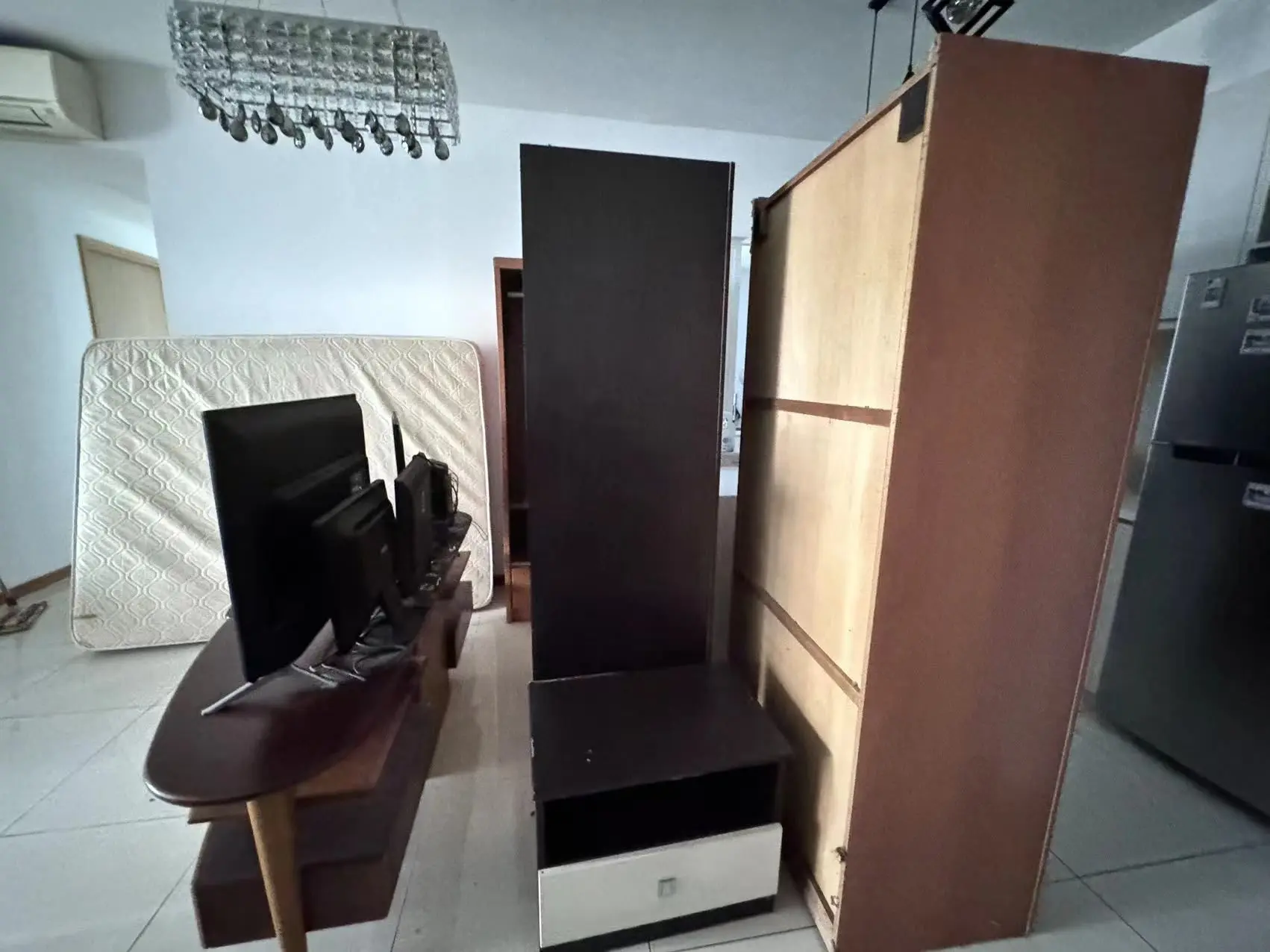
Here's a scenario we see at least twice a week: a homeowner signs a renovation contract, the hacking crew shows up on Day 1, and there's still a full bedroom set, a wardrobe, and three shelving units blocking the walls that need to come down.
For urgent residential pickups where every hour matters, residential pickup confirms a window from your photos and works to it.
The contractor won't move your stuff. That's not their job. And now you're burning a day — sometimes two — of a renovation timeline that was already tight. Renovation schedules here are tight, and condos layer their own MCST rules on top. A single day of delay cascades fast.
In our 10+ years of clearing Singaporean homes mid-renovation, we've learned that when you schedule disposal matters almost as much as what you're disposing of. Get the timing right, and your contractor walks into a blank canvas. Get it wrong, and you're paying idle labour while someone scrambles to find a last-minute removal crew.
The Three Phases Where Disposal Fits Into Your Renovation
Think of your renovation as three distinct windows where items need to leave. Each has different logistics, different urgency, and different coordination requirements.
Phase 1: Pre-Renovation Clearance (Before Hacking Starts)
This is the big one. Old wardrobes, bed frames, dining sets, shoe cabinets — everything that currently occupies the space your contractor needs to hack, rewire, or replaster.
Why timing is critical here: Most contractors quote based on an empty unit. If they arrive and can't access walls because your old built-in wardrobe is still bolted in place, they either wait (and charge you) or work around it (and charge you differently). Neither outcome is good.
The smart move: Schedule your pre-renovation clearance 1–3 days before your contractor's start date. Not a week before — you still need somewhere to sleep if you're living in the unit. Not the same morning — too much can go wrong with scheduling overlap.
For HDB flats, remember that everything moves through the standard passenger lift and common corridors. A king-size bed frame and a three-door wardrobe going down at the same time means we may need to stage items at the void deck. That's fine — we plan for it. But your contractor's material delivery crew arriving at the same time? That's a bottleneck nobody needs.
Phase 2: Mid-Renovation Debris Removal (After Hacking, Before Installation)
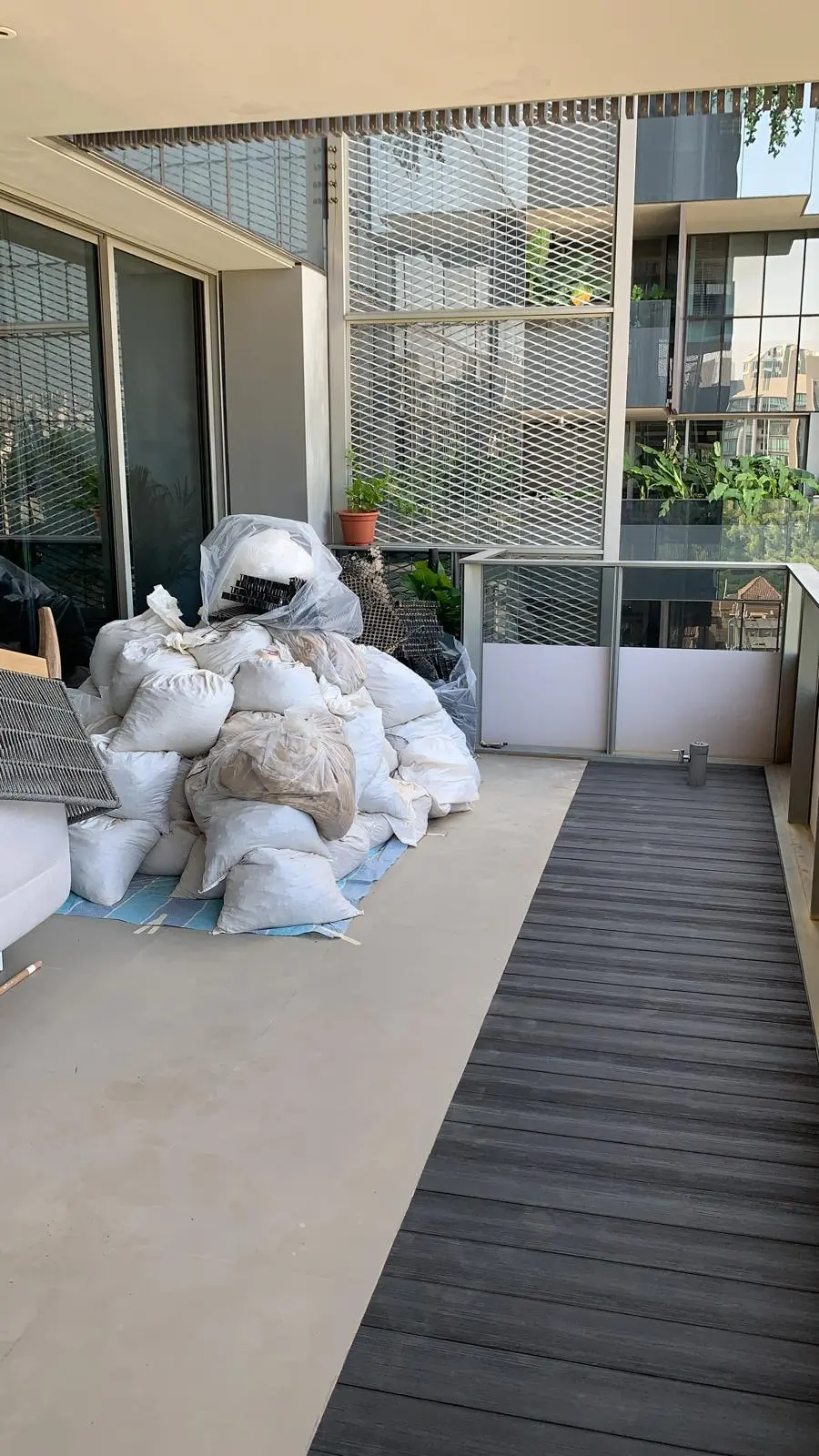
Your contractor hacks the old tiles, tears down the kitchen cabinets, rips out the false ceiling. Now there's a pile of concrete chunks, broken tiles, drywall fragments, and twisted metal framing sitting in what's supposed to become your new living room.
Some contractors include debris removal in their quote. Many don't — or they'll leave it in bags stacked in one room until they "get around to it." That pile blocks the next trade from starting. Your carpenter can't measure for new cabinets when there's half a demolished wall on the floor.
Coordinate with your contractor explicitly: Ask them on Day 1 — "When will hacking be done, and who's removing the debris?" If the answer is vague, that's your cue to arrange a mid-reno removal.
Typical timing: 1–2 days after hacking completes. The debris needs to be bagged or at least consolidated (your contractor should do this), and then we come in to haul it out. For condos, this is where the service lift booking becomes critical — your contractor may already have it reserved for their own material movements, so the owner or tenant needs to coordinate an additional slot with building management.
Phase 3: Post-Renovation Final Cleanup
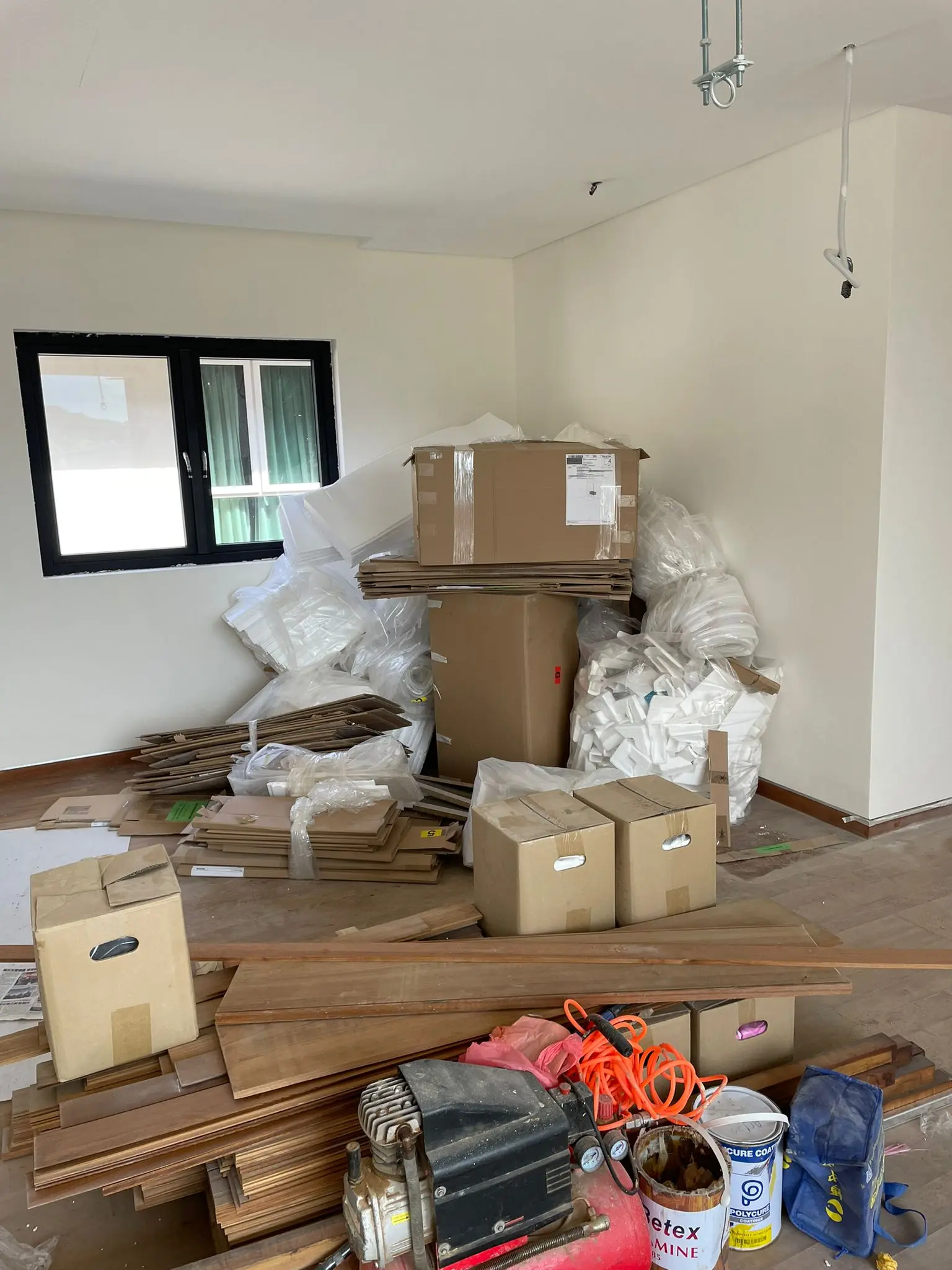
The renovation's done. The new cabinets are in. But there's leftover packaging — styrofoam blocks, cardboard, plastic wrap — plus any protective floor coverings, paint buckets, and maybe that one old appliance you forgot about behind the utility room door.
This phase is less urgent but still matters if you're moving back in on a deadline. A quick clearance of leftover materials means your cleaning crew (or you, on your hands and knees) can actually access every surface.
HDB vs Condo: The Logistics Differ More Than You Think
For HDB flats:
- No service lift. Everything goes through the passenger lift — which your neighbours are also using. Off-peak slots tend to be less disruptive for everyone.
- Town councils do collect bulky items, but only if you've dismantled them first and placed them at the designated collection point. A full wardrobe? They won't take it whole. And their collection schedule may not align with your contractor's timeline at all.
- Corridor space is limited. We can't stage 15 items outside your unit for an hour while we shuttle loads down. We work fast and clear in batches.
For condos and commercial units:
- Service lift access is controlled by the MCST. The owner or tenant must request approval and book the lift ahead of the pickup — this isn't something we arrange on your behalf.
- Some MCSTs require lift padding for furniture moves. Where required, the padding comes from building management — again, arranged by the owner or tenant directly.
- Many buildings only allow moves on set days or within set hours, and the rules vary per MCST. Know your building's rules before you lock in dates with your contractor.
Common Mistakes We've Seen Over 10+ Years
Mistake 1: Booking disposal for the same morning as contractor start. If we hit any delay — traffic, a previous job running long, your lift being occupied — your contractor is standing idle. Buffer a day.
Mistake 2: Assuming the contractor handles everything. Some do. Many don't. And "we'll clear it" sometimes means "we'll stack it in your bomb shelter and deal with it eventually." Clarify in writing what's included in their scope.
Mistake 3: Forgetting about the items inside built-in furniture. That old wardrobe isn't just wood panels. It's full of clothes, boxes, forgotten documents. We remove the furniture — but you need to empty it first, or we're waiting while you sort through 10 years of accumulated stuff.
Mistake 4: Not accounting for surcharges. If your renovation timeline forces a Sunday or after-hours removal, surcharges may apply. Plan for weekday slots where possible — confirmed at quote stage so there are no surprises.
Mini-FAQ
Q: Should I schedule disposal before or after I confirm my renovation start date? After. Lock in your contractor's start date first, then work backwards. We typically need 24–48 hours' notice for a standard pre-renovation clearance, so once you have the contractor's Day 1, reach out to us 3–4 days ahead to confirm a slot.
Q: Can you coordinate directly with my contractor on timing? We're happy to work around a timeline you share with us — send us your contractor's schedule and we'll find the window that fits. But the coordination between parties is managed by you as the homeowner.
Q: What if my renovation gets delayed and I need to reschedule the disposal? Reach out as early as you know. We understand renovations shift — it's Singapore, it happens. Rescheduling with reasonable notice isn't a problem.
Don't Let Disposal Become the Bottleneck
Your contractor has a sequence. Electrician after hacking. Plumber before tiling. Carpenter after plastering. Disposal fits into that sequence too — and when it's out of place, everything downstream shifts.
And if the hacking debris is piling up faster than planned and threatening to stall the next trade, our emergency renovation debris removal can clear it on a tight turnaround. Send us a few photos of what needs to go, tell us your contractor's start date, and we'll work backwards to find the right window. It's that straightforward.
WhatsApp us at 9730 4047 with photos and your renovation timeline for a free quote.